

Overview
Low-code development is a trend that has been gaining popularity in recent years due to its ability to streamline the development process and reduce the need for traditional coding. It is a visual approach to application development that allows users to create software applications through drag-and-drop interfaces and pre-built modules, rather than writing code from scratch.
As with any technology, low-code development has its advantages and disadvantages. In this blog post, we'll explore the pros and cons of low-code development for business applications.
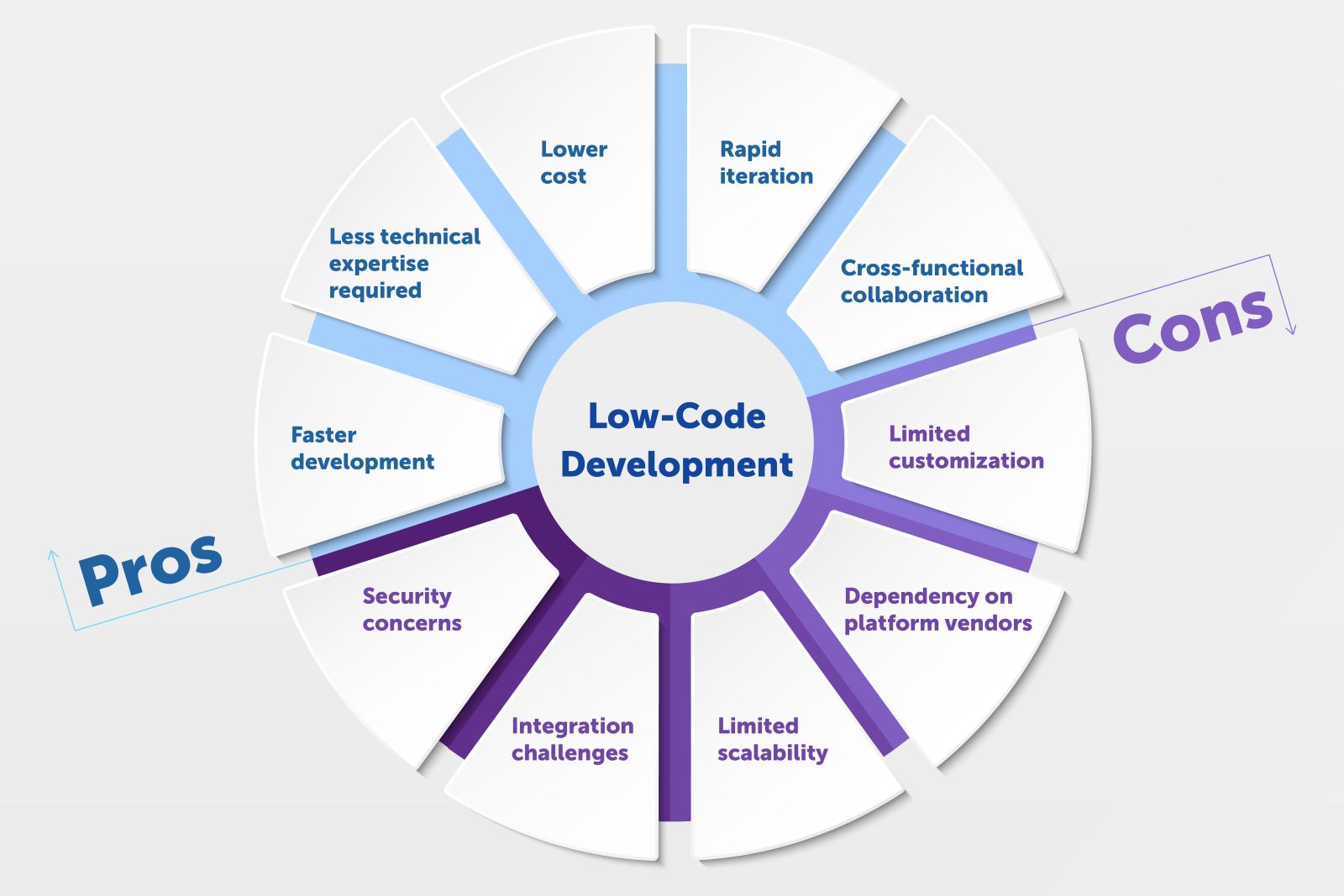
Pros of Low-Code Development
- Faster Development: One of the biggest advantages of low-code development is the speed with which applications can be created. Low-code platforms often come with pre-built templates, components, and integrations that can help developers create applications in a matter of hours rather than days or weeks. This reduces development time and accelerates time-to-market, giving businesses a competitive edge. Additionally, faster development can lead to increased innovation, as businesses can experiment with new ideas and features more quickly.
- Less Technical Expertise Required: Low-code platforms are designed to be user-friendly, with a visual interface that doesn't require advanced coding knowledge. This allows less technical team members to participate in the development process, leading to a more collaborative and efficient workflow. By democratizing the development process, low-code platforms can improve communication between different teams, enabling cross-functional collaboration and reducing the risk of miscommunication.
- Lower Cost: With less coding required, low-code development can be a cost-effective solution for businesses. It reduces the need for specialized developers, which can save on hiring costs. Moreover, pre-built components and integrations reduce development time and maintenance costs, leading to a lower overall cost of ownership. This makes low-code development an attractive option for small to medium-sized businesses looking to reduce costs while still delivering high-quality software applications.
- Rapid Iteration: Low-code platforms are designed to be flexible, allowing developers to quickly iterate and make changes to the application. This allows businesses to respond quickly to changing market conditions or user feedback, which is critical in today's fast-paced digital world. The ability to iterate rapidly can also help businesses experiment with new ideas and features, improving the quality and usability of their applications.
Considering Low-Code vs Custom Development?
Make the right choice for your business applications. Our experts will help you evaluate whether low-code platforms meet your needs or if custom development is the better approach for your specific requirements and long-term goals.
Cons of Low-Code Development
- Limited Customization: While low-code development platforms offer pre-built templates and components, they may not be flexible enough to meet the specific needs of all businesses. Customization may require more advanced coding knowledge, which defeats the purpose of using a low-code platform. Therefore, businesses with unique requirements may need to consider other development approaches, such as custom coding, to meet their specific needs.
- Integration Challenges: Integrating a low-code application with existing systems can be challenging. Custom integrations may require advanced coding knowledge or external resources, whether you need to hire Vue.js developers for modern API connections or backend specialists for legacy system bridges. This can increase costs and slow down the development process, particularly for older systems lacking native low-code compatibility. Therefore, businesses should carefully evaluate both their platform's integration capabilities and potential need for supplemental expertise before starting a low-code project.
- Security Concerns: With low-code development, there is a risk that non-technical team members may create applications without considering the security implications. This can lead to vulnerabilities that could compromise the security of the application and the business. Therefore, businesses must ensure that their low-code development platform has adequate security features and that team members receive adequate training on security best practices.
- Limited Scalability: While low-code platforms can be a quick and cost-effective solution for small to medium-sized businesses, they may not be able to support the scale and complexity of larger enterprises. High-traffic applications, for example, may require more sophisticated infrastructure and customized integrations to support their needs. Therefore, businesses should consider the scalability of their chosen platform before investing in low-code development.
Conclusion
Low-code development can be a game-changer for businesses looking to streamline their development process, reduce costs, and speed up time-to-market. However, it is not a one-size-fits-all solution, and businesses should carefully evaluate the pros and cons before deciding if it's right for them.
If you're considering low-code development for your business, Softellar can help. Our team of experienced developers provides end-to-end support – from low-code prototyping to custom website development service for advanced functionality. Contact us to learn how we can meet your specific needs.