
TypeScript Project Example: Enhancement Of The React-Based Communication Platform
Full-scale refactoring initiative that unlocked long-term business and technical advantages
Client
HostMy
Location
United States
Platform
Web (React-based SPA)
Engagement Model
Staff Augmentation
Team Size
1 specialist
Duration
3 months
Industries
Technologies
About The Customer
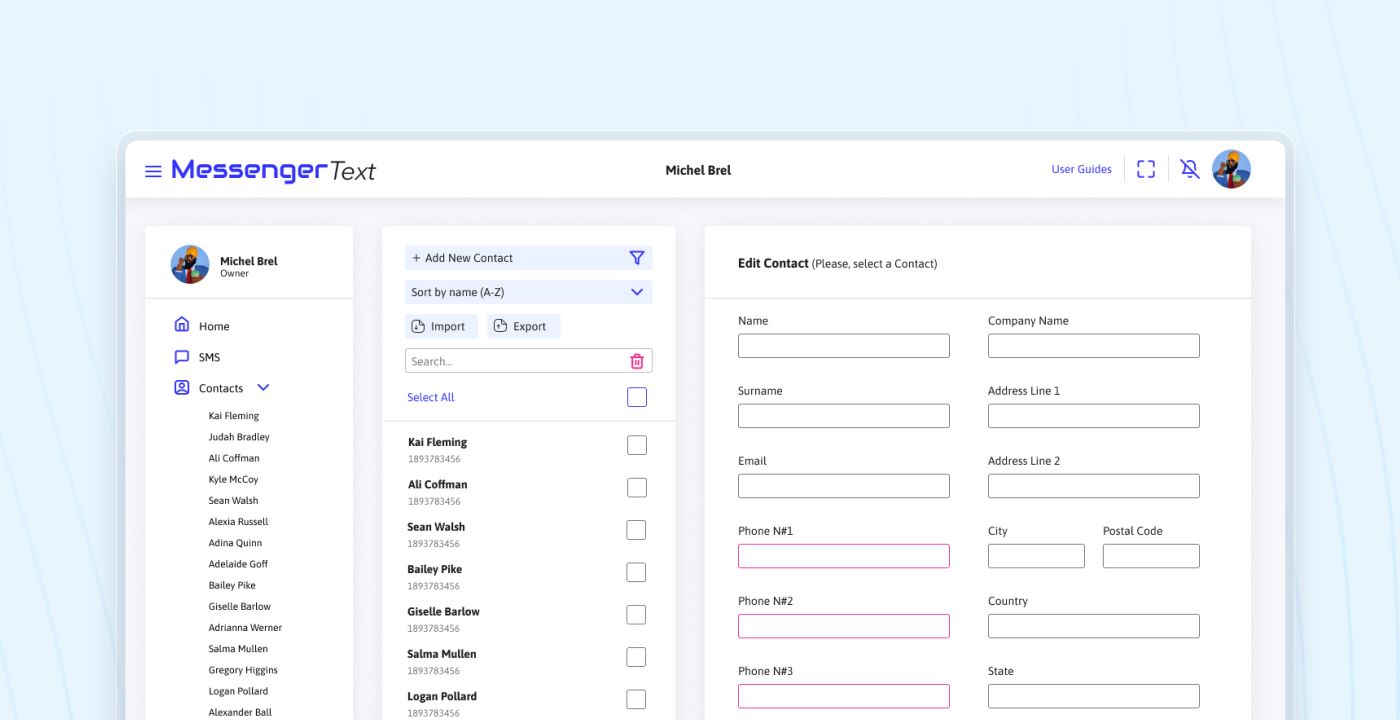
HostMy is a U.S.-based company specializing in hosted communications services. They offer a range of solutions including customer care, communications technology, and expert consulting. Known for their commitment to delivering top-notch service and innovative solutions, they play a critical role in helping businesses enhance their communication infrastructure.
Key Highlights
- Re-architected legacy React SPA into a modular and scalable codebase
- Enforced coding standards and implemented automated quality checks
- Introduced TypeScript to reduce runtime issues and improve safety
- Boosted app performance using React Suspense and virtual lists
- Added unit testing coverage with React Testing Library
- Integrated Storybook and documentation for all UI components
The Challenge
HostMy initially approached Softellar with a simple goal: add unit test coverage to their React-based web application. However, our initial code audit uncovered significant architectural and quality concerns that would compromise the impact of testing alone.
The frontend relied on an outdated MVC-inspired structure, which lacked the modularity and flexibility that React applications typically require. The codebase was also inconsistent in formatting and style, with little to no static code analysis or code quality tooling in place. Performance bottlenecks were apparent in parts of the platform dealing with large datasets and asynchronous components. These types of challenges are common in web development projects, and without addressing these technical debts first, any testing effort would be ineffective or counterproductive.
We proposed a comprehensive remediation and modernization strategy, laying the groundwork for stable development, maintainable code, and a better end-user experience.
Project Team Composition
- 1 Lead Frontend Developer (React, Redux Toolkit, TypeScript, architecture refactoring)
Web Application Solution
Softellar executed a deep technical enhancement of the HostMy communication platform by introducing architectural restructuring, performance optimization techniques, code quality controls, and modern UI development standards. The solution not only enabled effective unit testing but also ensured the system could evolve safely and efficiently over time.

We replaced the legacy architectural patterns with a React-native "Components, Store, Containers" design, enforced consistent coding guidelines across the entire codebase, and transitioned the platform incrementally to TypeScript. Several bottlenecks in rendering and asynchronous behavior were resolved using modern frontend techniques like virtual lists and React Suspense.
Modern Frontend Architecture
We replaced the rigid MVC-like structure with a more React-aligned component-driven architecture. This separation of concerns into reusable components, containers for data orchestration, and Redux-based state management made the codebase significantly more testable and maintainable. Each UI element was encapsulated with clearly defined logic and styling, minimizing unintended side effects.
ESLint, Prettier, and CI Tooling
Softellar introduced a strict set of ESLint rules and integrated Prettier formatting across the project. We implemented pre-commit hooks to ensure every commit adhered to the coding standards, reducing time spent on reviews and rework. A CI pipeline was connected to perform static analysis and enforce code quality checks automatically.
Migration to TypeScript
To enhance runtime safety and enable IDE-assisted development, we initiated migration to TypeScript. Starting with simple prop typing and utility modules, the process was structured to avoid disrupting ongoing development while delivering early benefits in terms of code clarity and safety.
Component Styling with SCSS Modules
Global CSS was gradually replaced with modular SCSS files, isolating styles per component. This change eliminated cross-component conflicts, enabled easier debugging, and brought better structure to UI styling. Variables, mixins, and nesting patterns were introduced to make the styles reusable and maintainable.
Performance Optimization
Softellar improved frontend performance by integrating virtual scrolling (virtual lists) in dashboards and admin views. This allowed the app to handle large datasets without blocking rendering. We also utilized React Suspense for async loading of heavy components and enhanced perceived performance using skeleton loaders and spinner fallbacks.
Test Infrastructure and Coverage
React Testing Library was introduced for writing unit tests focused on end-user behavior. Testable components were structured around isolated logic and predictable inputs. This increased confidence during refactoring and sped up the feedback loop for new feature rollouts.
Design System and Storybook
To improve consistency and onboard new developers faster, we documented all reusable components using Storybook. Each UI element included props documentation, variations, usage guidelines, and visual examples. This helped ensure design consistency and streamlined team communication.
Our Approach
We followed a phased approach over 3 months, ensuring safe and measurable improvements at every stage:
- Audit & Planning
Conducted a deep dive into existing architecture, performance bottlenecks, and technical debt
Defined modernization roadmap and prioritized components for refactoring - Architecture Refactoring
Migrated to a container/component-based React architecture
Modularized state and side-effects using Redux Toolkit - Tooling & Quality Gates
Integrated ESLint, Prettier, pre-commit hooks, and CI static analysis
Setup testing infrastructure and CI pipelines for test runs - Performance & UX Optimization
Implemented React Suspense and virtual lists
Introduced scoped SCSS styling and skeleton loaders - Documentation & Final Handover
Created Storybook documentation for component library
Trained internal developers on new patterns and tooling
Results & Impact
Softellar's modernization efforts resulted in a well-structured, testable, and performant web platform. What started as a request for testing grew into a full-scale refactoring initiative that unlocked long-term business and technical advantages.
Business Outcomes
- Boosted development speed and reduced time spent on bug fixing
- Improved developer onboarding through standardized architecture and documentation
- Enhanced end-user satisfaction due to smoother interactions and fewer bugs
Technical Outcomes
- React component architecture improved modularity and reusability
- Static code quality tools enforced consistent practices across the team
- React Suspense and virtual lists significantly reduced rendering lag
- Test coverage increased with user-centric unit tests
- TypeScript introduced better code safety and reduced runtime errors
- Documentation via Storybook accelerated knowledge transfer
Tools & Technologies
React, Redux Toolkit, ESLint, Prettier, React Testing Library, TypeScript, SASS/SCSS, React Suspense, Virtual Lists, Storybook
Enhance Your Frontend with TypeScript and Scalable Architecture
We help teams refactor legacy codebases into high-performing, maintainable React applications.
Related Case Studies

Custom Miner Management Solution For A Cryptocurrency Startup
Industries:
Technologies:
Accounting Platform Modernization: Cloud-Native SaaS for a U.S. Payroll Software Provider
Industries:
Technologies:

Case Study: Microsoft Azure-Powered SaaS Invoice Recognition System
Industries:
Technologies: