United States
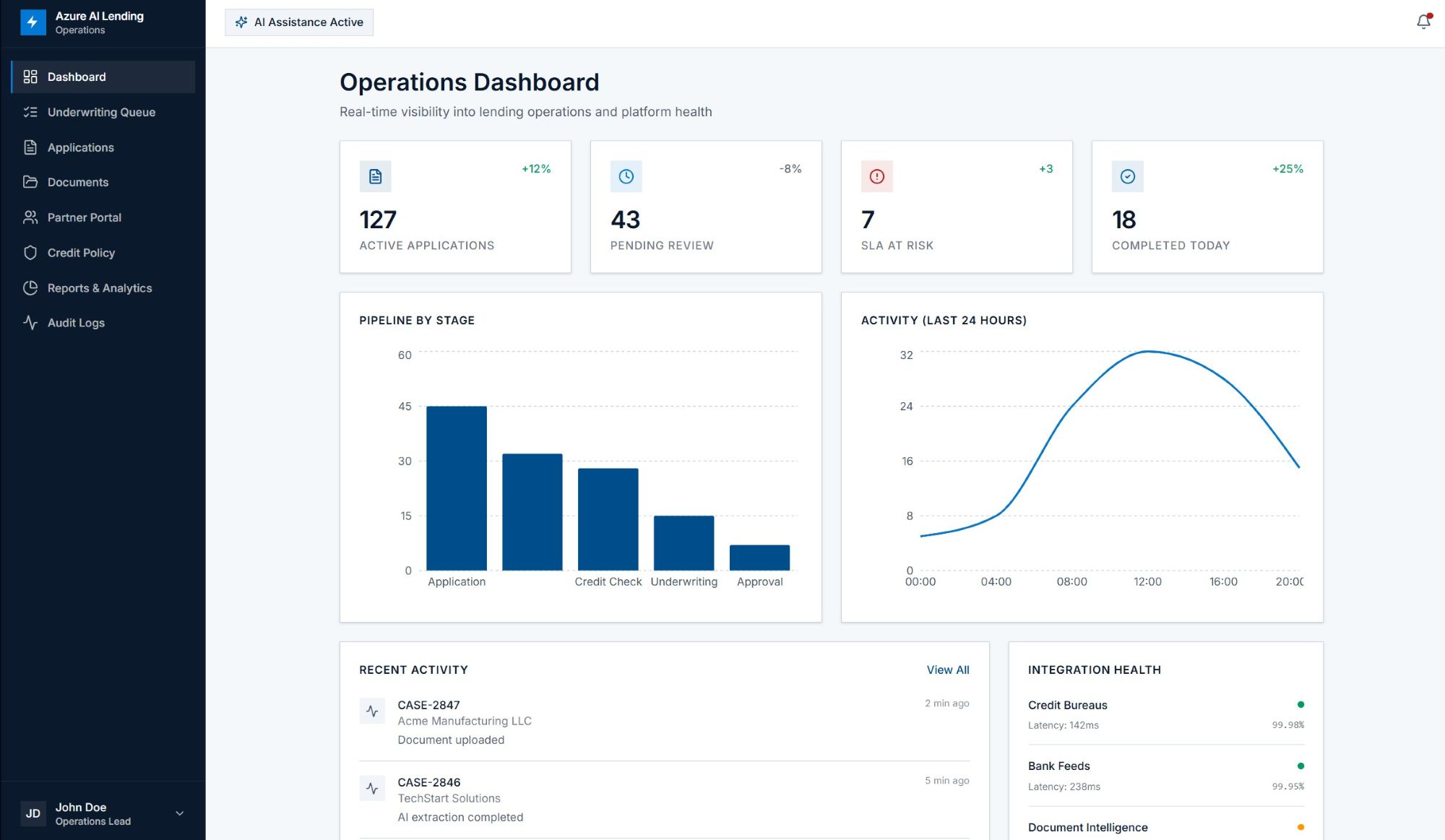
Fintech lender: credentials in Key Vault, raw bureau data kept off the browser
Outcomes
- Faster cycle times on cleared applications
- Fewer rework loops on document packages
- Higher borrower completion rates
- .NET
- Angular
- Azure
- Azure OpenAI


Security Consulting Services
We review how your application handles sign-in, data and secrets, fix what we find, and get it ready for a penetration test or a customer's security review.
We reply within 24 hours
 Multi Radiance Medical
 Loma Lux Laboratories
 WellVu
 Commercial Capital Group
 Grand Auto
 HostMy
 Land Base
 Auto Tuning
Eight places an application can be attacked, and the control that closes each one.
The risk
Stolen or shared accounts, and partners who can see more than they should.
What we shipped
Entra ID sign-in with route guards aligned to groups, and partners onboarded with least privilege.
The risk
A signed-in user asks for another customer's records by changing an ID.
What we shipped
An explicit tenant and organization scope on every API boundary, and throttling and authentication at API Management.
The risk
One query forgets a filter and returns every tenant's rows.
What we shipped
Row-level filters for partner scope on shared tables, global query filters against cross-tenant reads, encryption at rest.
The risk
A malicious file arrives disguised as a bank statement.
What we shipped
Virus scanning and content-type checks before any extraction job reads the file.
The risk
A connection string in a config file, or a key that never changes.
What we shipped
Every credential in Key Vault with rotation, no keys in configuration files, least-privilege managed identities.
The risk
Internal systems that can be reached from the internet.
What we shipped
Internal systems and public-facing services isolated by network segmentation, with a site-to-site VPN during the move.
The risk
Personal data copied into logs, and history that can be quietly edited.
What we shipped
Telemetry tuned so payloads never include raw personal data, and tamper-evident audit history.
The risk
Engineers with standing admin rights to production.
What we shipped
Break-glass access that is time-boxed, logged and needs dual control, plus periodic access reviews.
Controls we designed and built into products that handle credit, patient, payroll and tenant data.
United States
Outcomes
United States
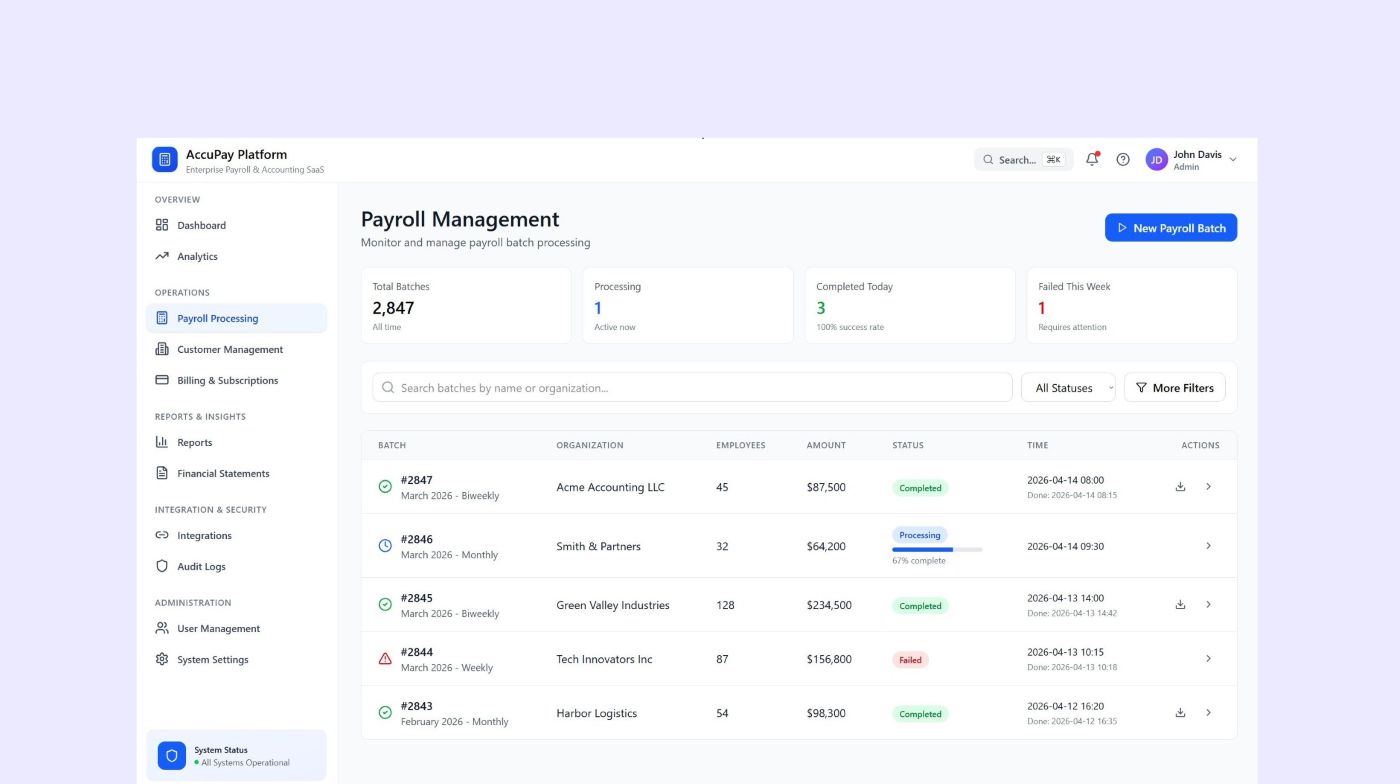
Accounting SaaS: tenant scope on every API boundary

United Arab Emirates
Healthcare provider: patient data de-identified before it is shared
North America
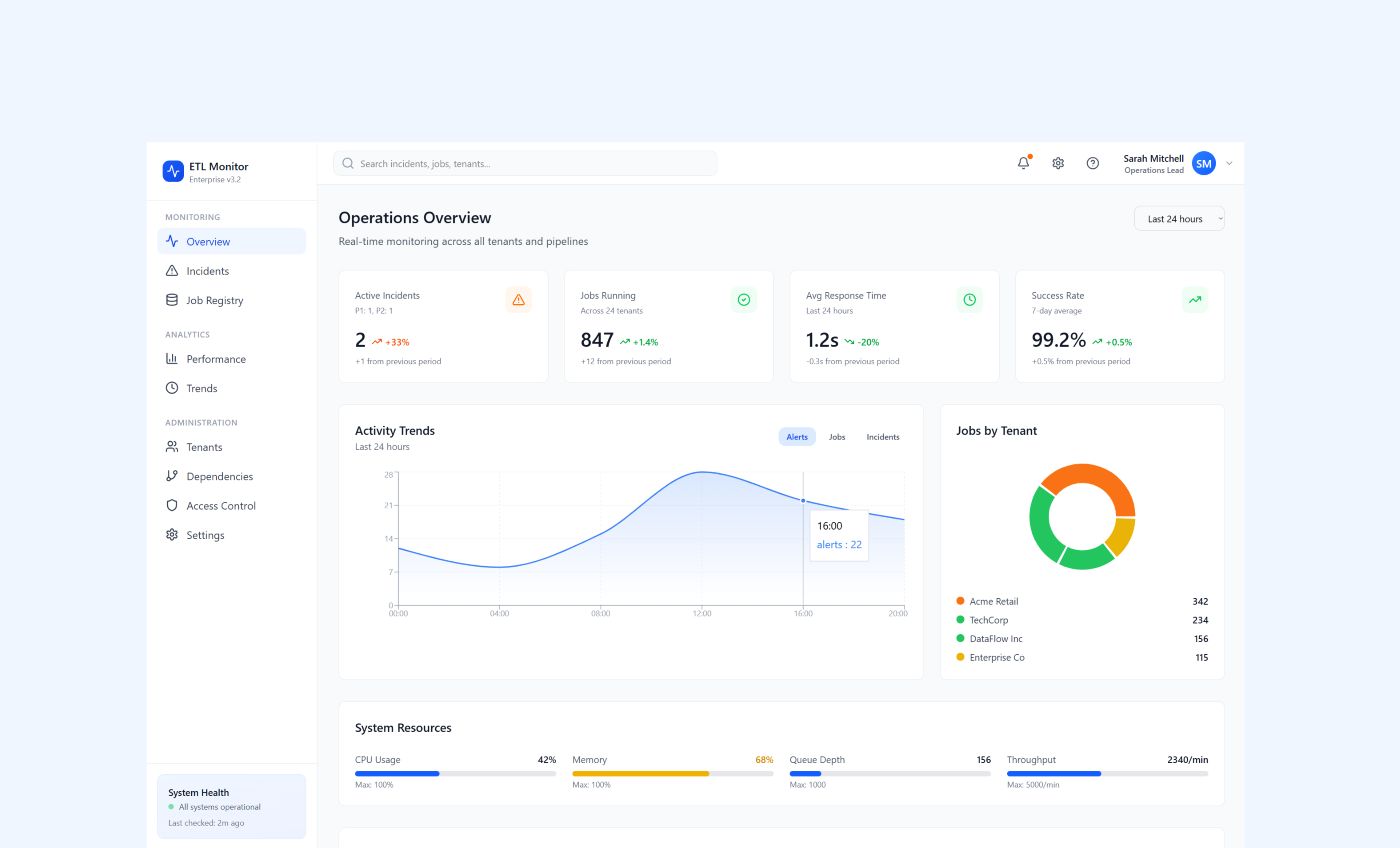
Data provider: AI fixes limited to pull requests and approvals

United States
Real estate lender: role-based access for clients, lenders and staff
Three clients whose access, audit or network controls we built, each linked to the project behind it.
They took the time to understand our business needs and provided a cloud native solution with microservice architecture that exceeded our expectations.
Eugene Baronetsky
Managing Director, Commercial Capital Group LLC
Their innovative solutions helped us streamline our processes and gain valuable insights that have positively impacted our business.
Max Kanarsky(LinkedIn profile, opens in a new tab)
CEO, Multi Radiance Medical
Their attention to detail and thorough planning ensured a smooth transition, and we were up and running all the time.
Gerti Morell(LinkedIn profile, opens in a new tab)
Marketing Director, Loma Lux Laboratories
Our security consulting works on the application itself: sign-in, how customers’ data is kept apart, where secrets live and what gets logged. We build the controls an assessor checks, and fix what they find.
The goal
A security review your team answers with evidence, not promises.
Not us
Tests the application from outside and certifies it against the standard you follow.
What we do
Designs the controls, reviews the design and code, fixes what is found and prepares the evidence.
Not us
Owns the security policy, decides which risks to accept, and signs off on each release.
Not included: penetration tests run by us, compliance certification, 24/7 monitoring and incident response. Those stay with your assessor or your operations team.
Six ways to start, from one review before an assessment to an engineer who stays on your team.
The design, code and configuration of one application, read by engineers who build the same kind of system.
The ways a new product or integration can be misused, drawn before the code is written.
Identity, tenant isolation, secrets and logging fixed in your code, not listed in a report.
Preparation before your assessor arrives, then triage of the findings and the fixes.
What reaches the model, what comes back, and who approves an action before it runs.
A senior engineer who joins your team and treats security as part of every feature.
A penetration test is only useful once its findings are fixed. We put each one in your sprint board.
A partner can list another partner’s applications
GET /partners/{id}/applications
The usual outcome: a PDF report that nobody schedules, and the same findings in next year’s test.
01
Your assessor's report lands, usually as a PDF with a list of findings.
02
Each finding becomes a work item with a risk, an effort and an owner.
03
Fixes ship in normal sprints, reviewed and tested like any feature.
04
The work item points to the change, so the next assessor can check it.
“Penetration findings from the Customer's third-party assessor were triaged into the same sprint board as product work so fixes shipped with traceability.”Lending platform
“Penetration findings fed back into the same work-item graph so remediation stayed traceable.”Accounting SaaS
Four kinds of data where a leak costs far more than the fix, and the control each one got in production.
At stake
Bureau reports and bank statements from business borrowers.
The control
APIs return only the derived fields the interface may show, never raw bureau payloads. Consent scopes per applicant, and document bundles watermarked for their channel.
At stake
Medical information shared within the clinics and outside them.
The control
Names, contact details and dates masked, tokenized or encrypted before data leaves the server, by rules that meet the HIPAA and GDPR standards this client follows.
At stake
Payroll runs and payments, where one retry could pay twice.
The control
Signed requests, stored idempotency keys and explicit state machines, so retries never double post.
At stake
Pipeline events from many customers, held in one platform.
The control
Every table and API path designed with tenant_id first, so an isolation mistake does not leak events across customers.
Tell us who asked and by when, and an engineer will tell you what to fix first before the assessor arrives.
We reply within 24 hours and can sign an NDA first.
From agreeing the scope to answering the assessor's questions, with every finding tracked to the change that fixed it.
01
We agree which application, environments and integrations are in scope, and what access we get. An NDA comes first if you need one.
02
We draw how data moves through the application and where it crosses a boundary, then list how each crossing can be misused.
03
Engineers read the code and the cloud configuration against the threat model: sign-in, tenant scope, secrets, uploads and logs.
04
Every finding gets a risk, an effort and a proposed fix, so your team can decide what ships first and which risks to accept.
05
We fix in your code alongside product work, and each change is linked to the finding it closes, so nothing is fixed only on paper.
06
When your penetration test or audit runs, we answer the technical questions and triage what it finds into the same board.
What may reach the model is an allow-list enforced by a gateway, not a sentence in a prompt.
Azure OpenAI in the customer's own tenant, behind private endpoints, with egress to unapproved hosts denied.
Payloads that are too long, contain path-like tokens or match patterns for secrets are rejected.
Prompt and output logging stays off unless someone turns it on.
Suggested fixes arrive as pull requests, and changed loan terms need an approval first.
The tools we secure applications with, grouped by the control they serve, on Azure and GitHub.
 Microsoft Entra ID
 Azure Key Vault
 Azure API Management
 Azure Virtual Network
 Application Insights
 OpenTelemetry
 GitHub Actions
 Playwright
Headquartered in Warsaw, Poland, with a client office in New York. A European engineering team that works in your hours, with a US point of contact.
Headquarters
Engineering and delivery, and the main contact point for clients in Europe.
Client office
Kickoffs, contracts and account management for North American clients.
Clients in Europe share the full working day with the team.
8 AM to 12 PM New York time, 2 PM to 6 PM in Warsaw.
Fixed price for a defined review or sprint, time and materials when the work will grow, invoiced in US dollars.
We take responsibility for one defined piece of security work, such as a review, a threat model or a hardening sprint.
Best for
A review or readiness work before a set date.
Engineers working only on your product, who build security controls into every feature instead of adding them later.
Best for
Products that handle sensitive data over years.
A senior engineer joins your team to review and fix security issues while your people stay in charge.
Best for
Teams with a penetration test coming up.
Not sure which model fits your security work? Tell us what the application does and who is asking about its security, and we'll suggest where to start. The consultation is free.
Book a free consultationTopDevelopers' Top Software Developers 2024, next to our Clutch, TechReviewer and GoodFirms recognition.

Top Software Developers 2024
TopDevelopers

Top Software Developers 2026
TechReviewer

Champion, Fall 2024
Clutch

Global Leader, Fall 2024
Clutch

Best Company to Work With
GoodFirms
Related reading
Guides from our team on the OWASP Top 10, security practices for web applications and code reviews.
29 min readAudio version available
Practical web security best practices for every stage: secure coding, testing, deployment, and monitoring, plus a pre-release checklist.

9 min readAudio version available
Web application security safeguards business reputation and customer trust. This guide reveals how development teams implement proactive measures against OWASP Top 10 vulnerabilities.

3 min readAudio version available
Code reviews are powerful tools for building stronger teams and better software. This guide reveals how successful teams create a culture of continuous improvement.
Answers to common questions about our security consulting services and how we work.
Have a different question? Talk to our team
Tell us what the application does and who has asked about its security.
We reply within 24 hours, and we can sign an NDA before you share details.
Talk to the people who will scope your project

