
Softellar

AWS Development Company

AWS Development Built Around the Limits

Every AWS service has numbers it will not go past: a payload size, a timeout, a number of functions running at once. We design each part of the product around them from the first build, so traffic meets a plan instead of an error.

Discuss your AWS product

We reply within 24 hours

Companies we have built software for

  • Multi Radiance Medical
  • Loma Lux Laboratories
  • WellVu
  • Commercial Capital Group
  • Grand Auto
  • HostMy
  • Land Base
  • Auto Tuning

One Import, Six Limits

Take a B2B SaaS on Fargate, RDS, S3 and a few Lambda functions. A customer imports a large file, and each step meets an AWS limit:

  1. Step 1: The customer uploads the file

    The file goes straight to S3

    API Gateway

    Request payload

    10 MB

    First build: The file, posted to the APIRebuilt: The API returns an upload link

    What breaks

    The browser posts the file to the API, and API Gateway rejects anything over 10 MB before any code runs.

    What we build instead

    The API returns a presigned URL, and the browser uploads the file straight to S3: up to 5 GB in one request, 50 TB in parts.

  2. Step 2: The app confirms the import

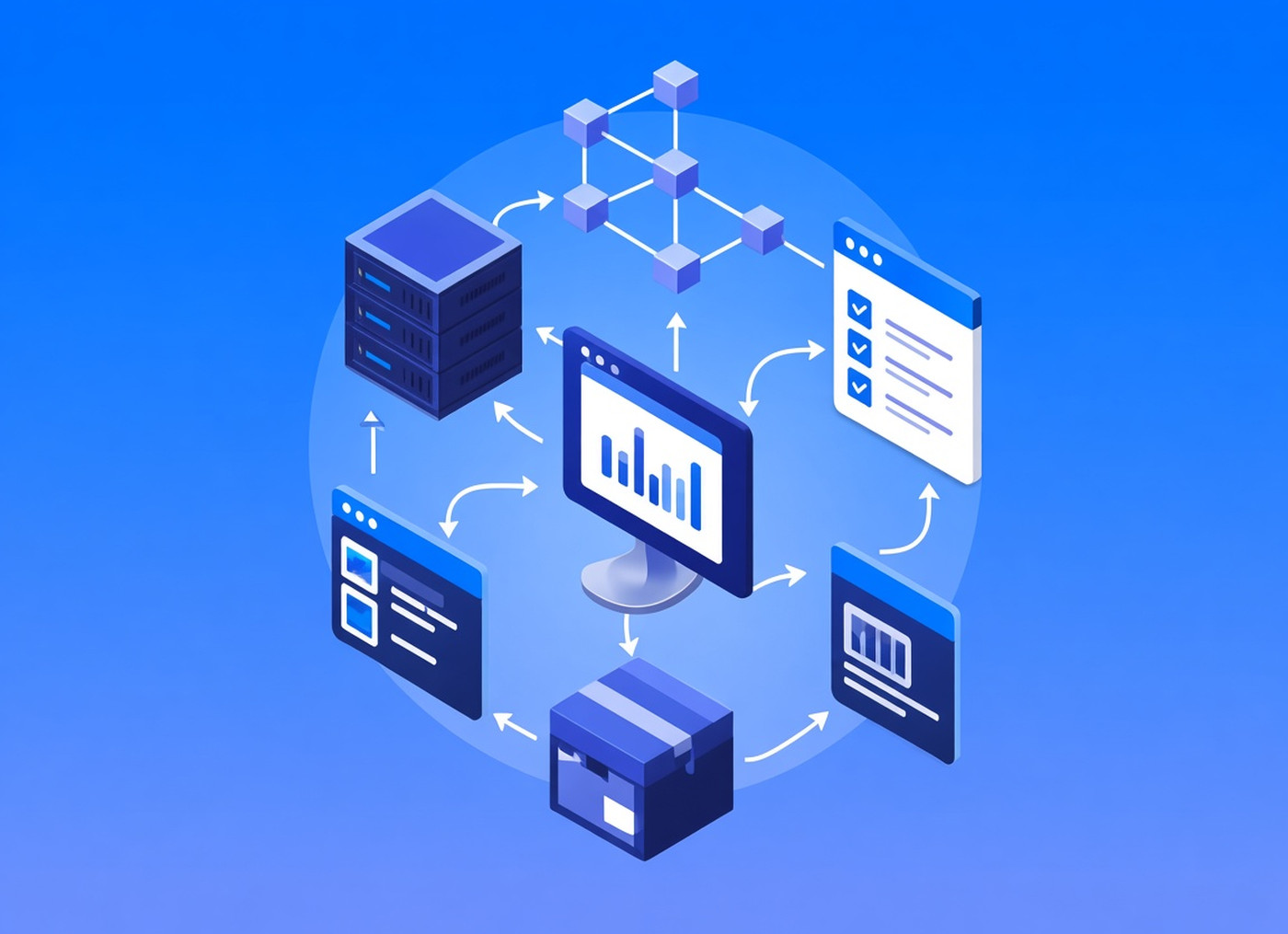
    Answer at once, queue the work

    API Gateway

    Integration timeout

    29 seconds

    First build: Reading the whole file firstRebuilt: An import ID, sent back at once

    What breaks

    The API reads the whole file before it answers. API Gateway gives up after 29 seconds, and the customer sees an error while the work goes on.

    What we build instead

    The API answers at once with an import ID and puts one message on SQS. The screen shows progress while workers do the rest.

  3. Step 3: A worker picks up the message

    Every handler is safe to run twice

    SQS

    Delivery of a standard queue message

    At least once

    First build: Rows written againRebuilt: Second delivery skipped

    What breaks

    A worker writes half the rows and crashes. SQS delivers the message again, and the first half is written a second time.

    What we build instead

    Each chunk carries the import ID and its number. A write is skipped when that pair is already stored, so a second delivery changes nothing.

  4. Step 4: The rows are processed

    Split the file, and run the rest on Fargate

    Lambda

    One function run

    30 minutes

    First build: The whole file in one functionRebuilt: One chunk per run

    What breaks

    One function reads the whole file. Lambda stops it at 30 minutes, and the import is left half done with no record of where it stopped.

    What we build instead

    Step Functions splits the file into chunks that each finish well inside one run, and tracks every chunk. A step that can’t be split runs as a Fargate task, which has no time limit.

  5. Step 5: The import is recorded

    One item per chunk, the rows in S3

    DynamoDB

    One item

    400 KB

    First build: Every row in one itemRebuilt: Status and counts for one chunk

    What breaks

    The import is saved as one DynamoDB item with every row in it. The write fails once the item passes 400 KB.

    What we build instead

    One item per chunk holds its status and counts, and the rows themselves sit in S3 under a key the item points to.

  6. Step 6: Every chunk runs

    The queue sets the pace

    Lambda

    Functions running at once, per Region

    1,000

    First build: One function per chunk, all at onceRebuilt: A set number at a time

    What breaks

    Every chunk starts a function at once. The account runs out of its 1,000 concurrent functions, the web app’s own functions are throttled, and the database gets a connection from each.

    What we build instead

    The chunks wait on SQS, and a maximum concurrency on the queue lets a set number run at a time. The database sees a steady load, and the rest of the product keeps its share.

The Same Patterns, in Production

Products we built with work handed to a queue, handlers safe to run twice, long jobs split into steps and bursts paced by a broker.

United States

Desktop payroll suite rebuilt as subscription SaaS

Outcomes

  • Self-serve activation instead of manual license keys
  • Continuous releases instead of annual media drops
  • Pay-cycle spikes absorbed without over-provisioning
  • .NET
  • React
  • Azure
  • Stripe

How Long Each Service Waits

Every AWS service gives up after a set time. Put the SaaS’s own work on the same ruler, and each job finds its service:

  • API GatewayOne request

    29 seconds
  • Step FunctionsOne Express workflow

    5 minutes
  • LambdaOne function run

    30 minutes
  • SQSA message a worker holds

    12 hours
  • EventBridgeRetries for one event

    24 hours
  • SQSA message left in the queue

    14 days
  • Step FunctionsOne Standard workflow

    1 year
  • FargateOne task

    No limit

Bars on a log scale, from one second to one year.

  1. 1A clickAPI Gateway and one function answer it.
  2. 2The importStep Functions runs it, one chunk per function.
  3. 3The nightly reportEventBridge starts a Fargate task for it.
  4. 4An approval that takes daysA Standard workflow waits for the answer.

Clients on the Cloud Systems We Built

A serverless financing pipeline, a real estate platform on Kubernetes and a laboratory’s services in containers, each quote linked to its project.

What AWS Development Covers

Designing and building software that runs on AWS: the APIs, the background work, the data and the sign-in, each on the service that fits it. We size every part against the service limits it will meet, define the infrastructure in code and hand over the code and the accounts.

The goal

Every limit met by design, before real traffic finds it.

Run the code
Lambda, Fargate, ECS, EKS, EC2
Take requests
API Gateway, CloudFront, Cognito
Move the work
SQS, SNS, EventBridge, Step Functions
Keep the data
S3, DynamoDB, RDS, Aurora, ElastiCache
Lock it down
IAM, KMS, CloudTrail
Define and watch it
CloudFormation, CDK, Terraform, CloudWatch

Which Limit Comes First?

Tell us what the product does, how big its files get and how busy its busiest hour is. We will say which AWS limit it meets first.

We reply within 24 hours and can sign an NDA first.

Have files or a long brief? Use the full form

Fixed, or Raised on Request

Some AWS limits stay where they are for every account, and the design has to live with them. Others AWS raises, if you ask in time:

Design around it

No request changes these, so the product is built to stay under them.

  • API Gateway

    Request payload

    Files go to S3 through a presigned URL.

    10 MB

  • Lambda

    Synchronous request and response

    Functions pass an S3 key, not the data.

    6 MB

  • Lambda

    One function run

    Work is split into chunks, or runs on Fargate.

    30 minutes

  • Step Functions

    Input or output of one step

    Steps hand each other a pointer to S3.

    256 KiB

  • SQS

    Message size

    Messages carry IDs, never the rows.

    1 MiB

  • DynamoDB

    One item

    Large records are split, or kept in S3.

    400 KB

Ask AWS to raise it

Defaults per account and Region. The product is sized for them, or the increase is in before launch.

  • Lambda

    Functions running at once, per Region

    Asked for before launch, sized from the load test.

    1,000

  • API Gateway

    Requests per second, per account and Region

    Asked for when the busiest hour comes near it.

    10,000

  • API Gateway

    Integration timeout

    Raised for one Regional API only, and it can lower the account’s throttle.

    29 seconds

The check before launch

  1. Step 1

    List the quotas the product will reach

    Each service the product uses, the quota its busiest hour comes near, and the number the account has today.

    Lambda quotas
  2. Step 2

    Ask for increases ahead of launch

    Small increases are approved on their own. Larger ones go to AWS Support and take time, and new accounts start below the defaults.

    Requesting a quota increase
  3. Step 3

    Load test at the expected peak

    The busiest hour, run against staging, shows which quota is reached first and what the product does there.

    Lambda quotas
  4. Step 4

    Set alarms below each quota

    A CloudWatch alarm on each quota the product uses goes off while there is still time to ask for more.

    Quota alarms

Someone has to watch the quotas after launch. An AWS DevOps team runs the accounts, the alarms and the increase requests.

See the AWS DevOps team

What These Patterns Delivered

Steady processing under spikes, retries that never post twice and 80% less manual work, by pattern:

  1. 01

    Steady under batch spikes

    A broker and durable workflows keep processing steady when batch windows arrive all at once.

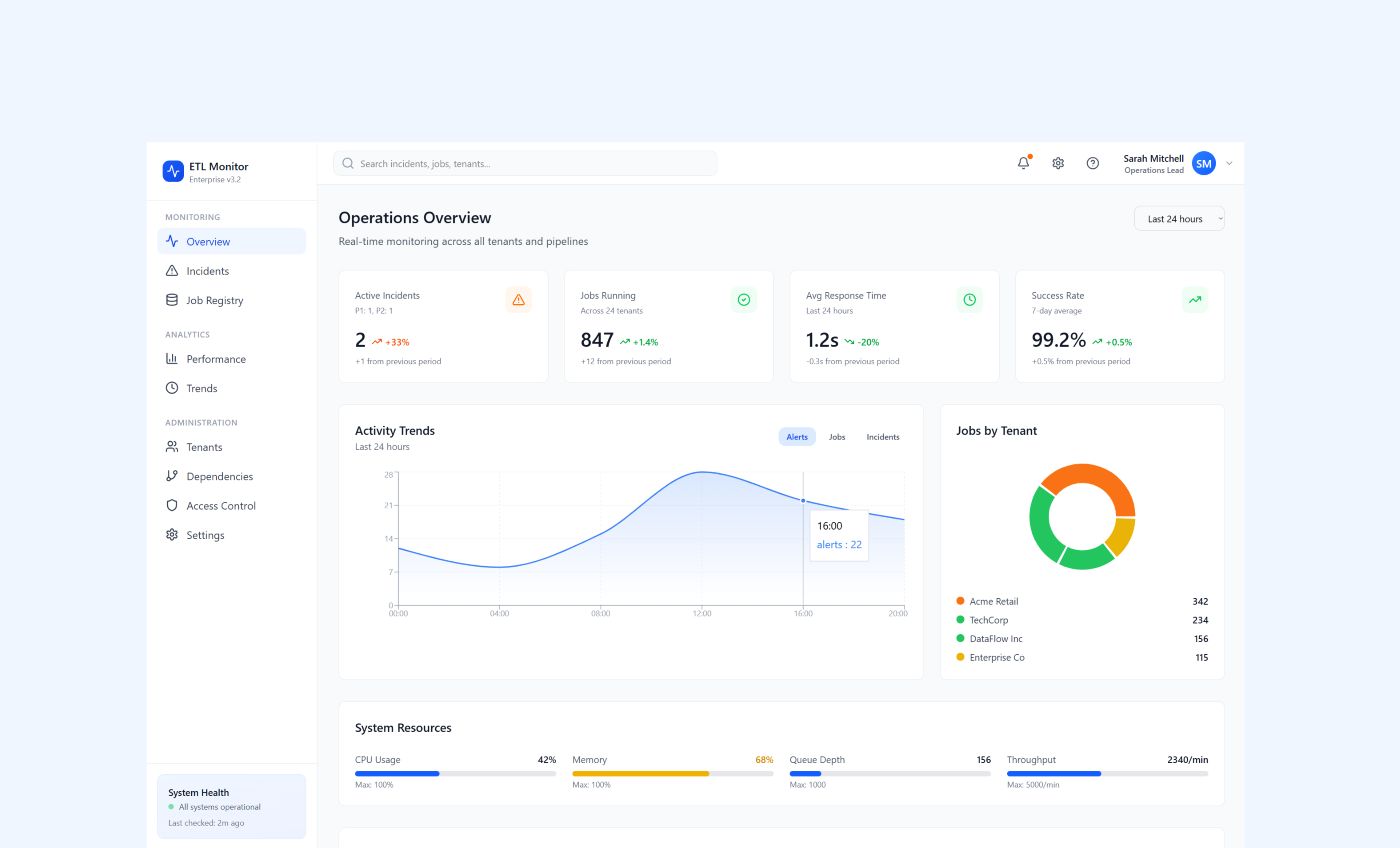
    The queue sets the pace: the ETL monitoring console
  2. 02

    Retries that never double post

    Durable messaging and idempotent integrations survive provider timeouts without posting twice.

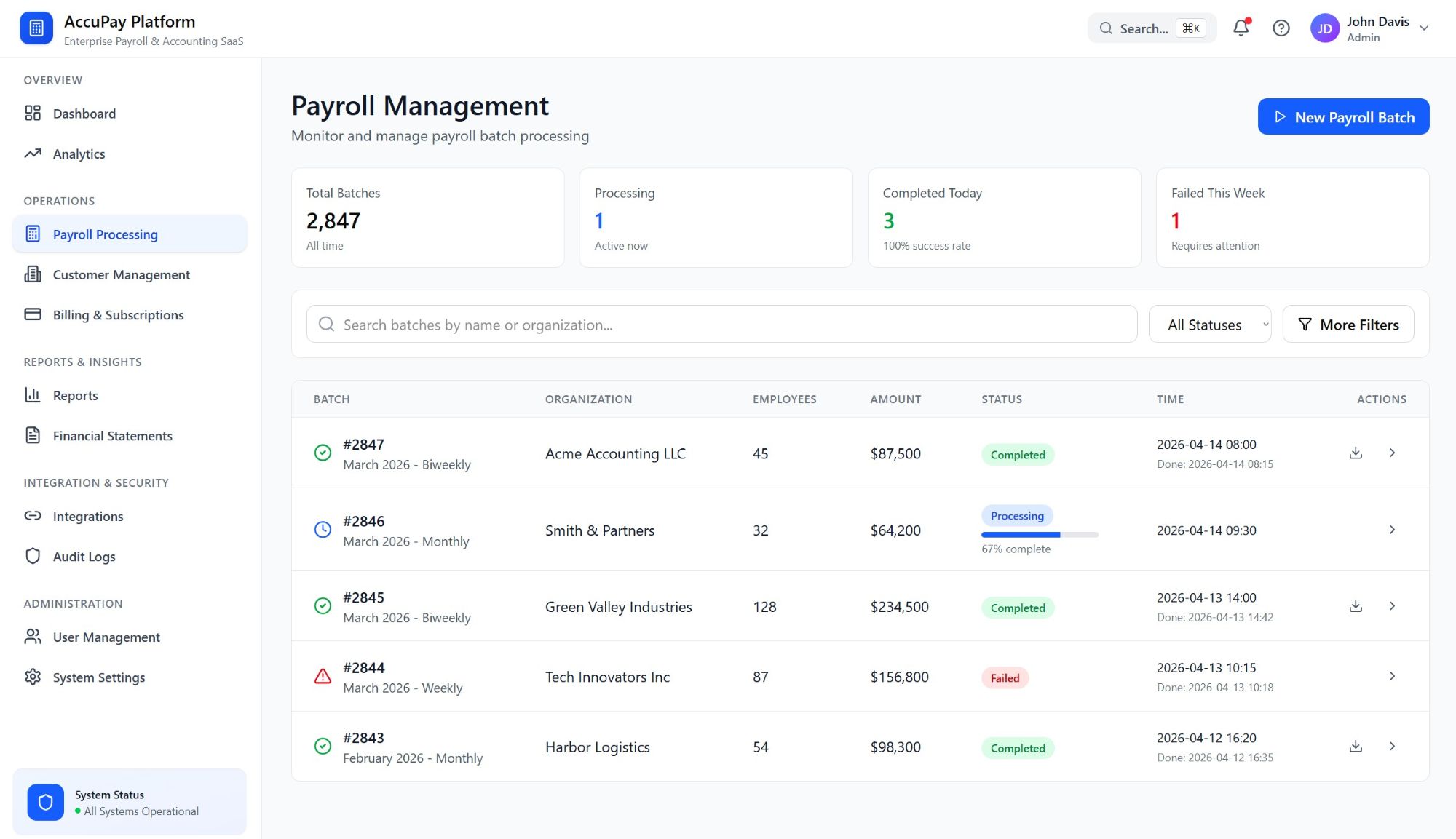
    Every handler is safe to run twice: the cloud accounting suite
  3. 03

    Storage that keeps costs predictable

    Operational data stays in SQL and audit artifacts move to blob storage, so relational costs stay predictable.

    One item per chunk, the rows in S3: the cloud accounting suite
  4. 04

    80% less manual processing

    A serverless pipeline that syncs on a schedule cut manual processing time by 80%.

    Split the file, and run the rest on Fargate: the vehicle financing portal
  5. 05

    Integrations that recover

    Retriable workers handle the slow calls, with their health visible in monitoring.

    Answer at once, queue the work: the AI lending platform
  6. 06

    Invoices processed up to 80% faster

    Services on a message bus cut invoice processing time by up to 80%, with faults kept apart.

    The queue sets the pace: the invoice recognition SaaS

US Office, European Engineering

Headquartered in Warsaw, Poland, with a client office in New York. A European engineering team that works in your hours, with a US point of contact.

Headquarters

Warsaw, Poland

Engineering and delivery, and the main contact point for clients in Europe.

Client office

New York, United States

Kickoffs, contracts and account management for North American clients.

Shared hours with North America

Clients in Europe share the full working day with the team.

8 AM to 12 PM New York time, 2 PM to 6 PM in Warsaw.

Ranked for Cloud Consulting

Top cloud consulting on TechReviewer, The Manifest, TopDevelopers and GoodFirms, and top software developers on TechReviewer.

Related reading

Read Before You Build

Guides from our team on modernizing an application, enterprise transformation and the software development life cycle.

All Insights

Frequently Asked Questions

Questions teams ask before they put a product on AWS, or once it starts meeting the limits.

Have a different question? Talk to our team

How Big, How Long?

Tell us how large the product’s files get, how long its jobs run and how often its traffic spikes.

We reply within 24 hours, and we can sign an NDA before you share details.

Talk to the people who will scope your project