Rebuild aging business applications for modern cloud platforms without stopping the business.
We modernize legacy systems one piece at a time, so your product keeps shipping while the old system is retired. Most of our work is .NET on Azure. We also run modernization projects on AWS and Google Cloud.
Application modernization is the process of updating legacy software so it runs on modern platforms and can change quickly. Depending on the application, that means moving it to the cloud, restructuring the code, splitting a monolith into services or rebuilding it on a current stack.
The goal is a business outcome: faster releases, lower maintenance costs, better security and room for new features, including AI.
Most of our modernization projects start with a call from an engineering lead who has run out of workarounds. Sound familiar?
A two-line change needs a full regression pass and a weekend deployment window. You ship once a month, if you're lucky.
No automated tests, no current docs, and dependencies nobody wants to touch. Every new feature takes longer than the last one.
On-premise hardware refreshes, expiring licenses and contractors who still know the old framework. Legacy systems get more expensive every year you keep them.
Unsupported frameworks stop getting patches. If you sell to healthcare or finance, a failed HIPAA or PCI DSS audit can stall a deal for months.
The developer who understood the billing logic left two years ago. Now the code is the only documentation.
Legacy architecture rarely has clean APIs. Adding AI capabilities or a new partner integration turns into a project of its own.
Free consultation available·Response within 24 hours·Engineering in Warsaw, Poland·Client office in New York
Hire us for a single piece, like an assessment or a database migration, or for the whole modernization journey through launch and ongoing support.
We review each application for business value, technical debt and cloud readiness. You get a modernization roadmap with priorities, cost ranges and risks, whether or not you hire us for the next step.
We replatform and refactor existing systems so they benefit from the cloud: managed databases, autoscaling, PaaS hosting, infrastructure as code. Not just the same servers in someone else's data center. See our cloud migration services.
We split large applications by business domain. Old and new code run side by side, and traffic moves over one module at a time.
Docker images, AKS, EKS or GKE clusters, Terraform, and CI/CD pipelines your team can own after handover.
Batch jobs, scheduled tasks and event-driven workloads move to Azure Functions or AWS Lambda. You stop paying for idle servers.
.NET Framework to modern .NET. Desktop products to web apps and multi-tenant SaaS. This is the work we do most often. See our .NET migration services.
SQL Server and other on-premise databases move to Azure SQL or other managed cloud databases. We restructure the schema, sync data during the transition and validate it before cutover.
Once the application has clean APIs and data, we add AI where it pays off, like document intake, matching or assistants for internal teams.
After go-live we monitor performance, apply security updates and tune cloud costs. Or we hand everything over to your engineering team with documentation and training.
Not every application needs a rewrite. We use the AWS 7 Rs as a starting point, score each application on business value and technical health, then pick the cheapest path that still meets your business goals.
| Approach | What changes | Good fit when | Effort |
|---|---|---|---|
| Retire | Switched off or archived | It no longer provides business value | Low |
| Retain | Stays where it is, for now | It works, or moving would cost more than it saves | None |
| Rehost | Moves to the cloud without changes | You need to exit a data center quickly | Low |
| Relocate | Moves to another platform, region or account | You change hosting without touching the app | Low |
| Repurchase | Replaced by another product, often SaaS | The function is common, like HR or CRM | Varies |
| Replatform | Moves with some optimization, like a managed database | You want lower operating effort without rewriting the core | Low to medium |
| Refactor or re-architect | Architecture changes to use cloud-native features | The app is core to revenue and must scale or change faster | Medium to high |
When the code is too tangled to repair, we also consider a rebuild: writing the application again on a modern stack. AWS doesn't list it separately, but frameworks like Microsoft's Cloud Adoption Framework do. Rehosting is often the first step for apps with a deadline, though on its own it doesn't fix problems in the code or architecture.
Running in the cloud and being cloud-native are not the same thing. Depending on what the application needs, we make it cloud-ready, optimize it for cloud services or redesign selected components.
The app runs on cloud infrastructure. Configuration is externalized and deployments go through a CI/CD pipeline.
Managed databases and queues replace self-hosted ones. Autoscaling handles traffic spikes, and cost tagging shows what each service spends.
The parts that need independent scaling or frequent change are redesigned as services or functions. The rest can stay as it is.
These are options, not mandatory steps. Many systems get what they need from the first or second. Before we redesign anything at scale, we put the foundation in place: networking, identity, pipelines with automated testing and security checks, monitoring. Skipping it is the most common reason modernization projects create new technical debt.
Many organizations do both: migrate first to exit the data center, then modernize the applications that drive revenue.
| Cloud migration | Application modernization | |
|---|---|---|
| Goal | Move workloads off on-premise hardware | Change the application to get real value from the cloud |
| Code changes | Minimal | Moderate to full |
| Timeline | Weeks to a few months | Several months, delivered in increments |
| Result | The same app on new hosting | Faster releases, lower maintenance, room for new features |
Real legacy systems our team has rebuilt for the cloud, with the business running throughout.
Send us a short description and an architect will tell you which approach we'd take.
We deliver in small increments. The legacy system keeps running until each replacement part has proven itself in production.
Interviews with your team, a code and infrastructure audit, a dependency map. You get an assessment report and an application portfolio scorecard.
Approach per application, target architecture, budget and risks. You get a roadmap with an estimate for phase one.
Cloud environment, CI/CD, automated testing, monitoring and security checks built into the pipeline. Catching issues here costs far less than fixing them after launch.
We replace legacy functionality module by module. Every release is small enough to roll back quickly.
Data mapping, transformation and validation, plus functional, performance and security testing. Data loss and broken integrations are the most common failures in modernization, so this step gets its own test plan.
Production deployment with backup and recovery in place. Traffic moves to the new version according to the agreed plan, with monitoring and a rollback option. If a maintenance window is needed, it is scheduled with you.
Performance tuning, cloud cost reviews, security updates and technical support. Or a full handover to your internal teams.
During the assessment we record a baseline for each metric. After every phase we report against it, so you see what the investment changed.
| Metric | What it tells you |
|---|---|
| Release frequency | How often you can ship changes to production |
| Lead time for changes | How long a change takes from approved to live |
| Infrastructure and maintenance cost | What you spend to keep the system running each month |
| Incidents and recovery time | How often things break and how fast service comes back |
| Performance under peak load | Response times when traffic is highest |
Ship changes to production more often, with a shorter path from approved to live. Small increments replace weekend deployment windows.
Clean APIs and well-structured data let you add AI capabilities and partner integrations without another rebuild.
Managed cloud services replace on-premise hardware refreshes, expiring licenses and contractors who still know the old framework.
Autoscaling handles traffic spikes. Our travel portal client moved off on-premise servers that went down at peak and now serves 50,000+ daily users on Azure.
Supported platforms receive patches again, and security checks run in the delivery pipeline from the first sprint.
Documentation, automated tests and CI/CD pipelines your team can take over after handover, with training included.
Modernization is what makes AI possible in an old product. We built AI-assisted underwriting and document intake into a lending platform on Azure OpenAI, and we plan the same room for it in every system we rebuild.
Clean APIs and well-structured data let you add AI capabilities later without another rebuild.
Matching, document intake and assistants for internal teams, with human review where decisions carry risk.
Azure, AWS and Google Cloud are the three largest public cloud platforms. We pick one based on your existing contracts, team skills and compliance needs, not our preference.

Where most of our modernization work runs. App Service, AKS, Azure Functions, Azure SQL, Service Bus, API Management.

Containers and serverless workloads on AWS. EKS, Lambda, Terraform.

Containers, serverless and data on GCP. GKE, Cloud Run, BigQuery.
Multi-cloud and hybrid setups are fine too. Containers, Terraform and open standards keep your options open and help you avoid vendor lock-in where it matters.
The right tools take the guesswork out of assessment and migration. These are the ones we work with most, and the paths we take legacy systems through.
Map dependencies, check compatibility and move data safely. Azure Migrate, Data Migration Assistant, GitHub Copilot modernization.
Automated pipelines and tests that make small releases safe. GitHub Actions, Azure DevOps, Playwright, xUnit.
Speed up upgrades and refactoring, with engineers reviewing every change. GitHub Copilot, Azure OpenAI.
See how the new system behaves before and after every release. Application Insights, OpenTelemetry.
Repeatable environments described as code. Docker, Kubernetes, Terraform.
Databases and pipelines for the modernized system. SQL Server, PostgreSQL, MongoDB, Redis, Kafka.
| From | To |
|---|---|
| .NET Framework | Modern .NET (ASP.NET Core) |
| Licensed desktop software | Web apps and multi-tenant SaaS |
| Point-to-point and SOAP integrations | REST and gRPC APIs, event-driven integration |
| On-premise SQL Server | Azure SQL and managed cloud databases |
| Virtual machines | Containers on Kubernetes |
| Scheduled jobs and background services | Azure Functions, AWS Lambda |
| Manual releases | CI/CD with GitHub Actions or Azure DevOps |
Languages and frameworks: .NET, Java, Node.js, Python, React, Angular, TypeScript.

.NET

Java

Node.js

Python

React

Angular

TypeScript
Azure
AWS
Google Cloud

Docker

Kubernetes

Terraform

SQL Server

PostgreSQL

MongoDB

Redis

Kafka
An assessment is the fastest way to get a real number: you get the approach, timeline and cost range in writing.
Desktop-to-SaaS rebuilds, multi-tenancy, subscription billing.
Lending and accounting platforms with audit trails, KYC and document intake.
HIPAA-aware architecture, data analytics and secure handling of patient data.
Booking platforms that survive seasonal traffic spikes.
Investment and property management systems with complex reporting.
Data workflows and integrations moved to the cloud.
It depends on the size of the system and the approach. Rehosting a single app is a different budget than rebuilding a core platform. An assessment is the fastest way to get a real number: you get the approach, timeline and cost range in writing.
Softellar is headquartered in Warsaw, Poland, with a client office in New York. You get a senior European engineering team that works in your hours, with a US point of contact.
Warsaw is six hours ahead of New York, so the team overlaps with US Eastern Time at least 4 hours every working day. Stand-ups, demos and urgent calls happen in your hours.
Kickoff meetings and account management run through our office at 353 Lexington Ave. We sign contracts and invoice in US dollars.
As an EU company we work under GDPR, one of the strictest data protection laws in the world. We sign an NDA before we see your code.
70% of our engineers are senior. A dedicated team stays on your system for the whole program, so knowledge doesn't leave with a rotation.
Tell us what you're running and what's not working. You'll talk to an engineer, not a salesperson.
Fixed price for a well-defined scope, time and materials when scope will change. Pick the team format that fits. Pricing is fixed price or time and materials, in US dollars.
End-to-end delivery of a defined modernization project, with planning, QA and risk management on our side.
Best for: Clear scope, like an assessment or one application
A stable team that works only on your system, learns your domain and stays with it through a long program.
Best for: Modernization programs of a year or more
Modernization specialists who join your engineering team and work in your process.
Best for: Filling a specific skill gap
Tell us about your application and constraints, and we'll suggest the engagement model that fits the scope and your team. The consultation is free.
Schedule Free ConsultationHear from clients who trusted us with their modernization and cloud projects.
"We were looking for a solution to automate our daily routine operations, and Softellar provided us with a custom development service. The solution they provided was not only efficient and accurate, but also integrated seamlessly with our existing internal system."
"Thanks to the expertise and dedication of the team at Softellar, we were able to take our data management to the next level. Their innovative solutions helped us streamline our processes and gain valuable insights that have positively impacted our business."
"Working with Softellar was a great experience. They consistently demonstrated their commitment to delivering a successful outcome. The team was very responsive, communicated effectively, and were always available to address any questions or concerns we had."
"We were looking for a solution to automate our daily routine operations, and Softellar provided us with a custom development service. The solution they provided was not only efficient and accurate, but also integrated seamlessly with our existing internal system."
"Thanks to the expertise and dedication of the team at Softellar, we were able to take our data management to the next level. Their innovative solutions helped us streamline our processes and gain valuable insights that have positively impacted our business."
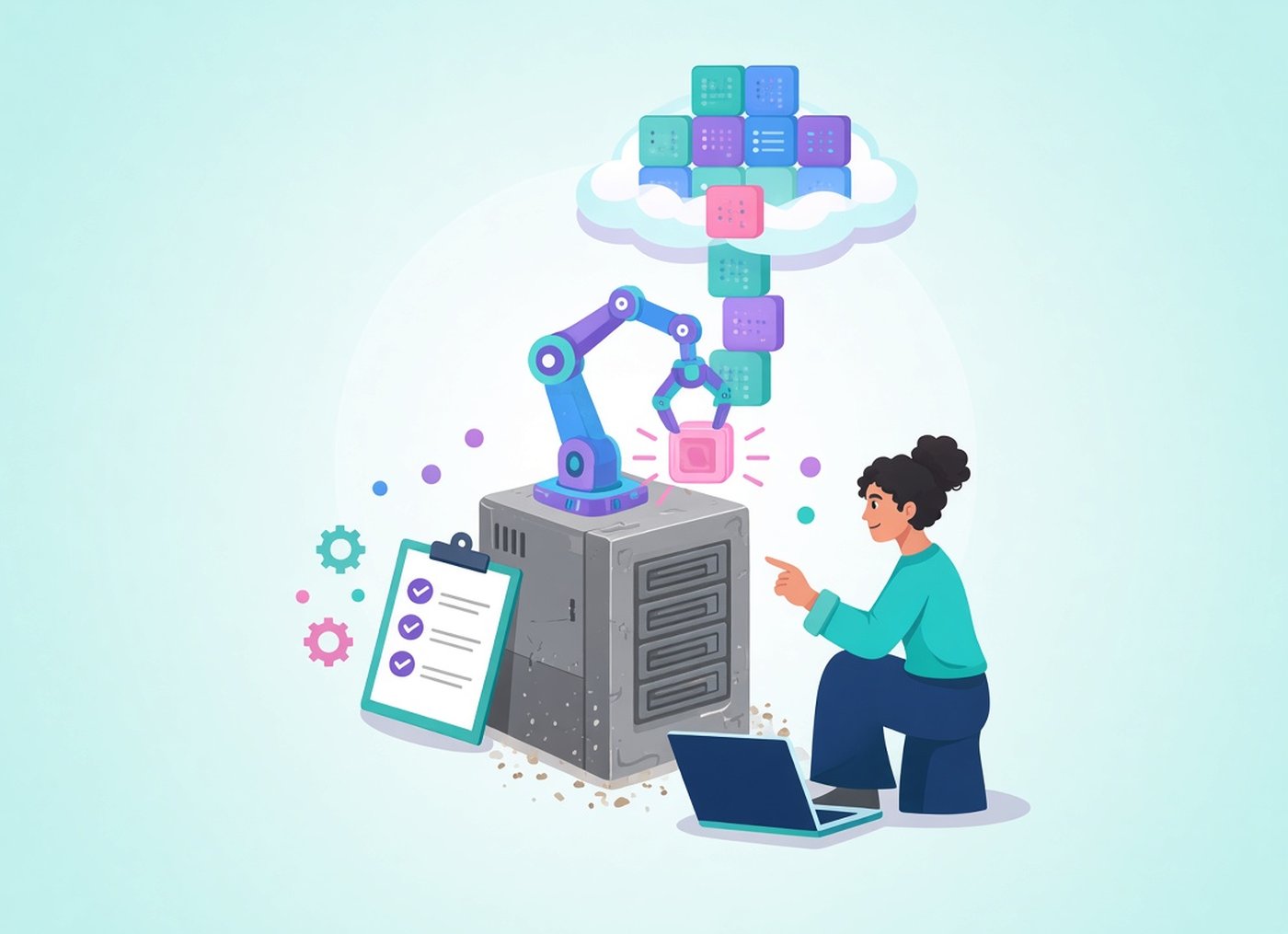
A server migration tool will not untangle a monolith. An AI coding assistant will not tell you whether an application is still worth keeping. Both can help with modernization, but they solve different problems.

Ernest Karapetau
CEO & Founder, Softellar
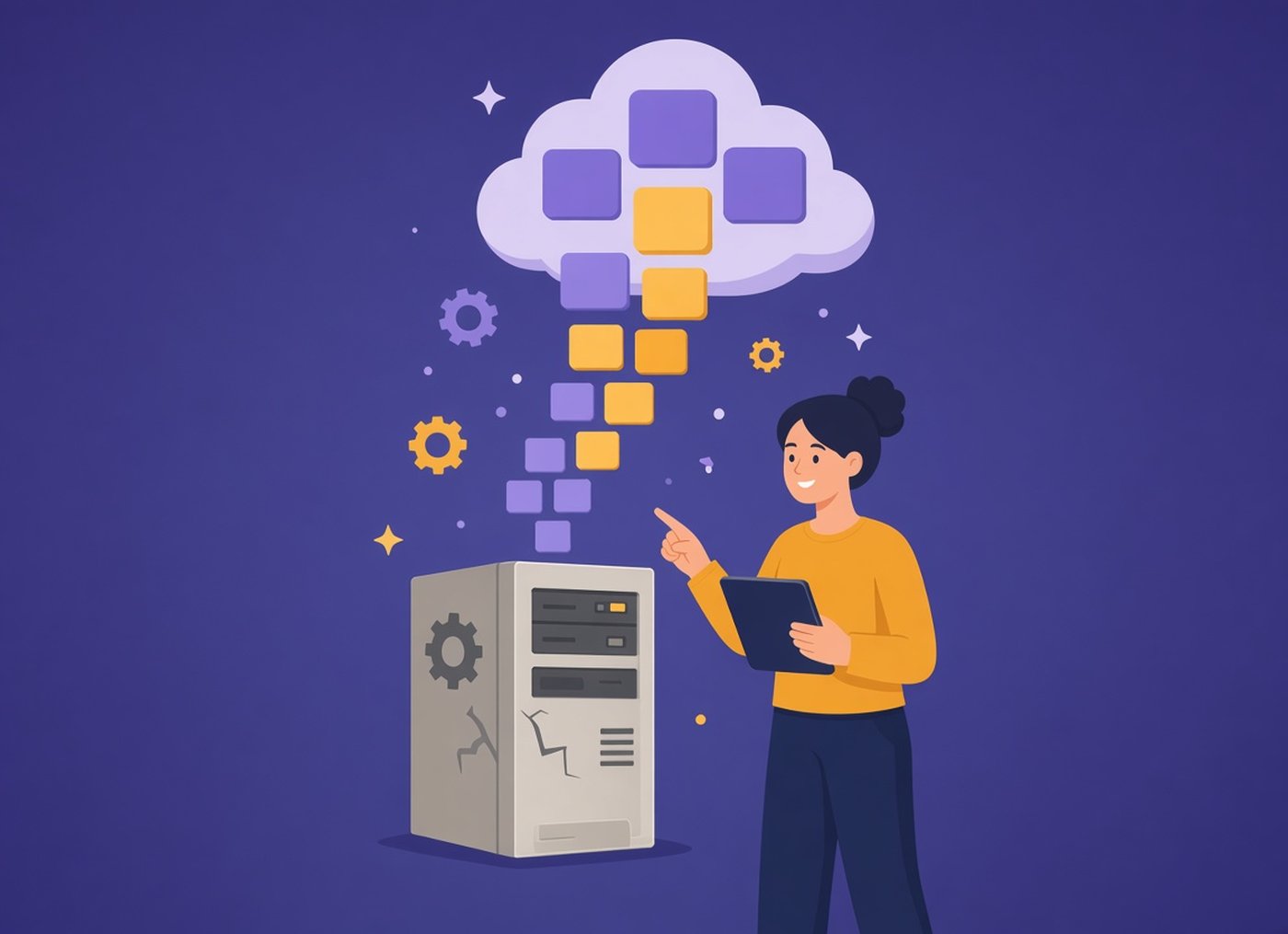
Application modernization is the process of improving an existing application so it is easier to change, cheaper to run and safer to operate. It can mean upgrading outdated frameworks and dependencies, adding automated tests, restructuring the code into clear modules, moving to cloud infrastructure or rebuilding parts of the system.

Alexandra Mazurava
Head of Growth, Softellar

Big tech companies have contributed manifold to software development technology over the years. The .NET framework invented by Microsoft has achieved all of this and more.

Alina Karapetava
Head of People, Softellar
Common questions about application modernization, timelines and costs.