
Softellar

React Development Company

React Development for Screens Where People Make the Call

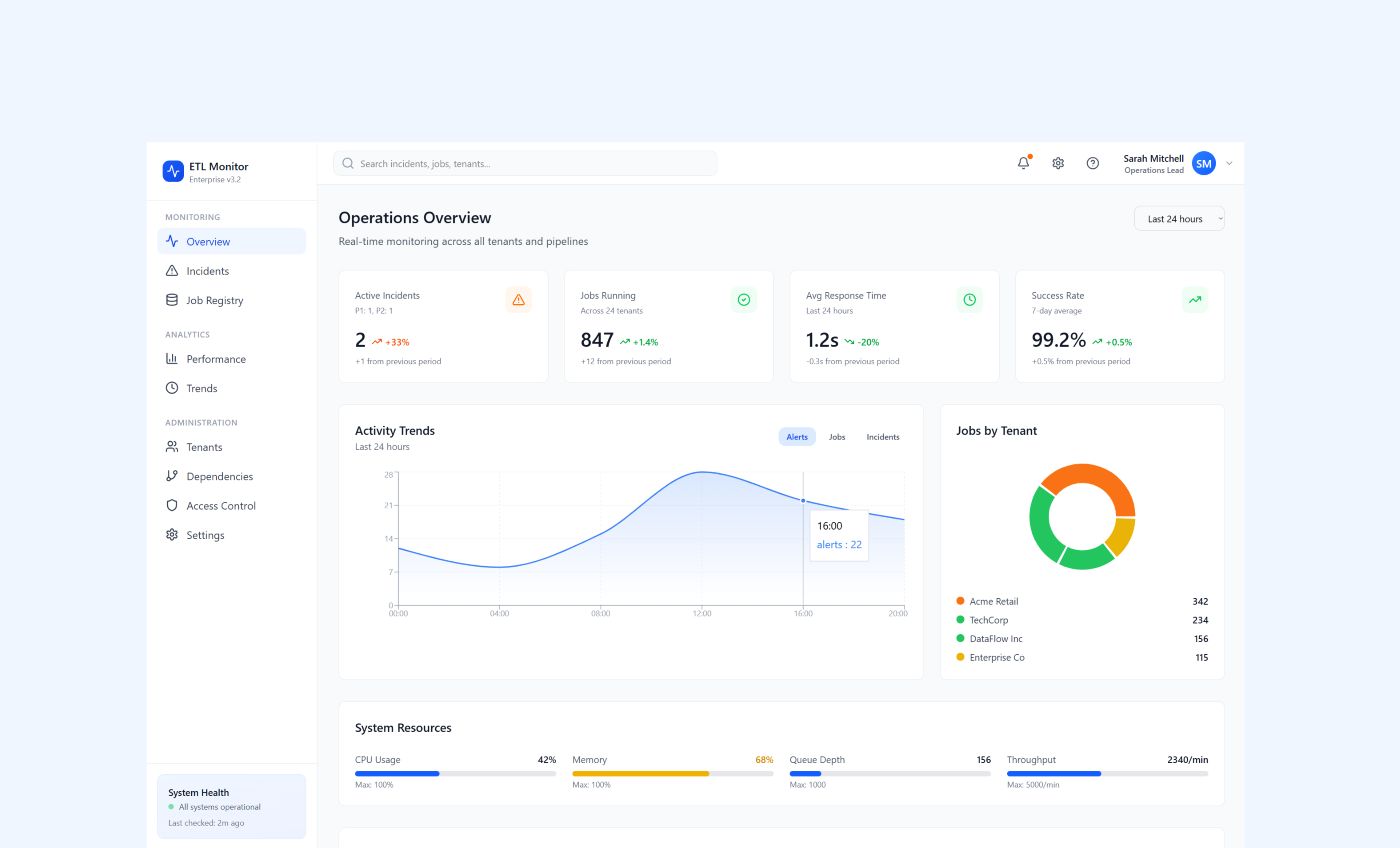
Most of the React we build sits on a system that does the heavy work, from an AI model to a rules engine. The screen is where a person checks the result and decides. We build it with the .NET API behind it, in one team, and the code is yours.

Discuss your React project

We reply within 24 hours

The system, then the person

What runs behind the screen, and who makes the call on it

Products in React or Next.js
7
On each product
3–18 months
Clutch rating, 12 reviews
5.0
Projects since 2021
70+

Companies we have built software for

  • Multi Radiance Medical
  • Loma Lux Laboratories
  • WellVu
  • Commercial Capital Group
  • Grand Auto
  • HostMy
  • Land Base
  • Auto Tuning

What Sits Behind Our React Screens

In our React products a system does the heavy work and a person makes the call. Five kinds of system, and the screen each one needed:

  1. 01Behind the screen

    An AI model

    Reads the key fields of an invoice, or names the likely root cause of a failed job.

    The person

    Checks what the model produced, then validates, corrects or overrides it before anything moves on.

    On the screen

    • OCR regions
    • Confidence scores
    • Extracted values
    • Root cause

    In React

    The scan and the extracted values side by side, with a field corrected by dropdown or by selecting it on the scan.
  2. 02Behind the screen

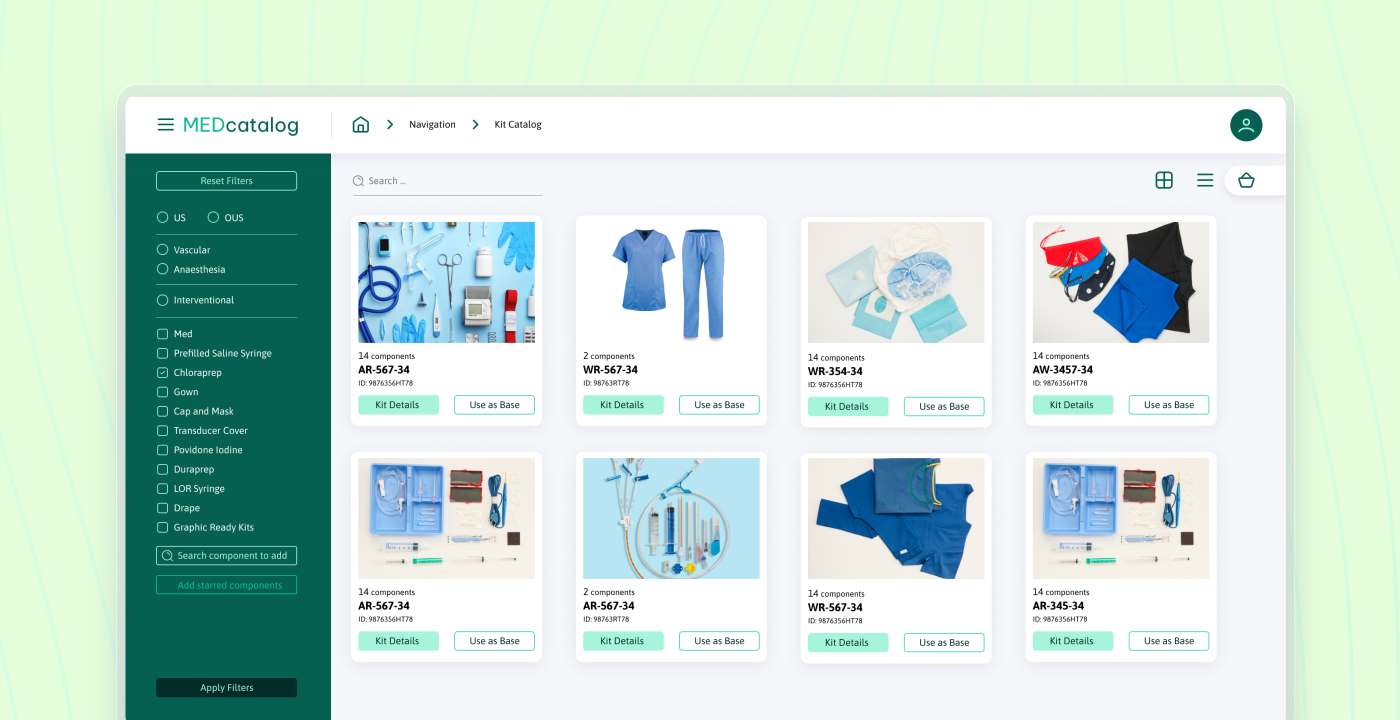
    A rules engine

    Checks every tray layout for spacing, orientation, tray size and fit, with stock read from live inventory.

    The person

    Drags, rotates and labels parts in the tray, and sees at once whether the layout is valid.

    On the screen

    • Live preview
    • Layout validity
    • Stock levels

    In React

    State held in the designer with React Hooks, so the preview redraws as each part moves, with no page refresh.

Not sure React is the right front end? We compared it with Angular and Next.js, product by product.

Angular, React or Next.js?

One Screen, Taken Apart

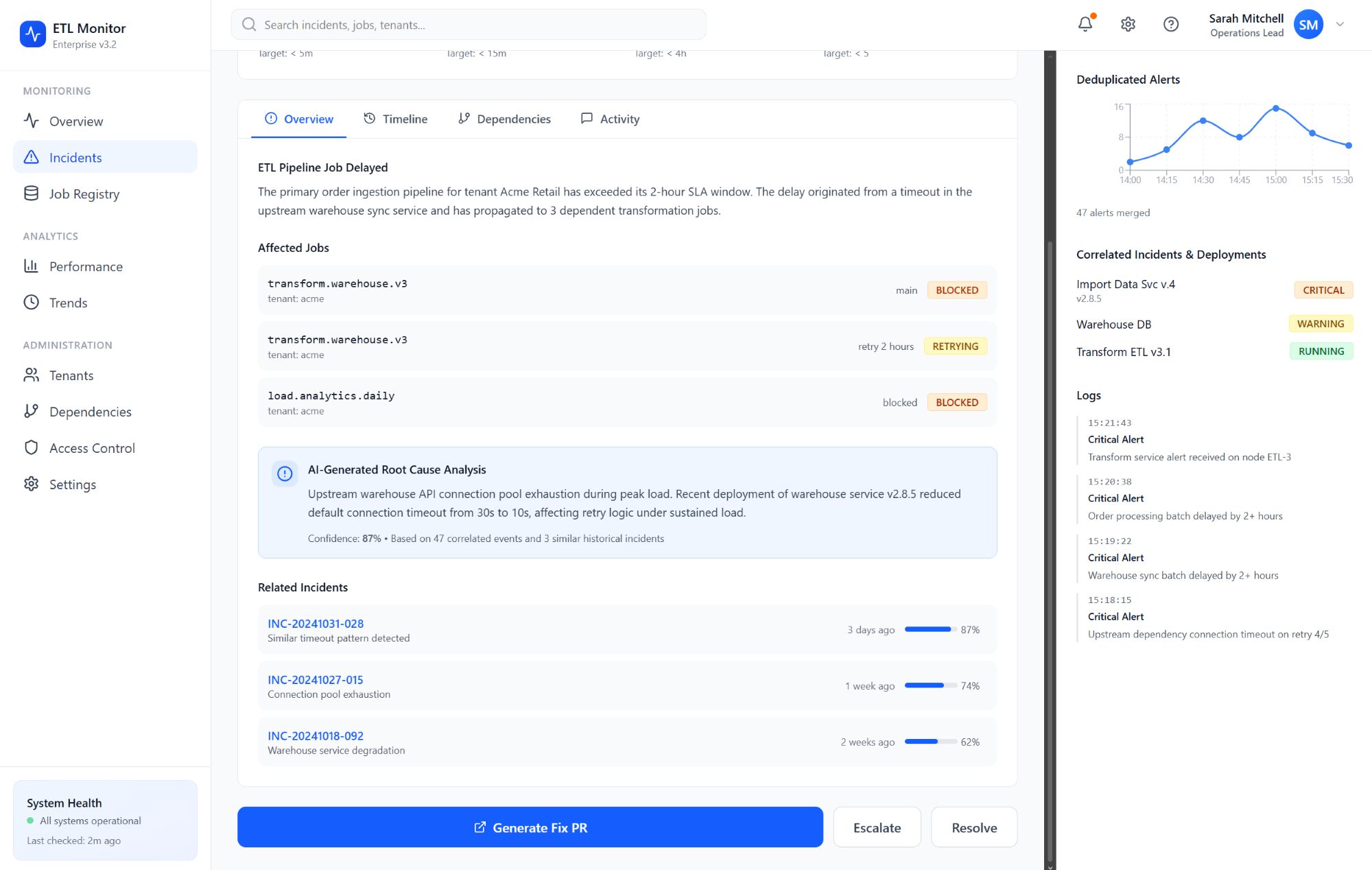
The incident screen of our ETL monitoring console. What the system put on it, and what the operator does with each part:

Incident overview tab with affected jobs, AI root-cause analysis, related incidents, deduplicated alerts chart, and Generate Fix PR
  1. 1

    Affected jobs

    One root failure, grouped by the dependency graph into one incident.

    Sees every blocked and retrying job in one place, instead of dozens of separate pages.

  2. 2

    Root-cause analysis

    An AI narrative of the likely cause, with its confidence.

    Weighs the confidence before acting on the cause.

  3. 3

    Related incidents

    Past incidents with a similar pattern.

    Checks how the same failure was handled before.

  4. 4

    Alerts, deployments and logs

    The deduplicated alert trend, correlated deployments and recent log lines.

    Confirms the cause against what changed and when.

  5. 5

    The decision

    A suggested fix, ready to open as a pull request.

    Opens the fix, escalates or resolves. The approval stays with a person.

Built in Next.js and TypeScript, on .NET APIs and workers.

ETL monitoring console case study

React Screens Over Real Systems

An AI that reads invoices, a monitoring platform, offer feeds, a rules engine and a mining fleet, each with a React screen on top.

United States

Invoice recognition SaaS on Azure AI

Outcomes

  • Invoice processing up to 80% faster
  • Over 60% fewer manual correction requests
  • Accurate extraction across 50+ invoice templates
  • .NET
  • React
  • Azure Cognitive Services
  • Azure Service Bus

Clients on the Screens We Built

The client of our React offer search portal first, then a client whose platform we built in Angular, on the same kind of .NET API.

What React Development Covers

Designing and building web apps in React, the JavaScript library for user interfaces from Meta: the screens, the components they share, the state behind them and the connection to the API. We build the .NET API in the same team, and hand over the code, the tests and the pipelines.

Our React products list TypeScript, Next.js, Redux Toolkit, React Testing Library, Playwright and Storybook, picked per product.

The goal

A screen where the person in front of it can trust what the system shows, and act on it.

A System With No Screen Yet?

Tell us what the system produces and who has to act on it, and we will suggest a first release.

We reply within 24 hours and can sign an NDA first.

Have files or a long brief? Use the full form

Where Is Your Front End Today?

Three places a React project starts from, what we did first on each, and the way of working that fits:

  1. 01

    No screens yet

    What we do first

    An MVP front end to preview the results, then filters, bookmarking, export and user roles.

    The MVP front end previewed offer matching, before filters and bookmarking were addedVehicle financing portal
  2. 02

    Screens in an older technology

    What we do first

    Desktop-only workflows rebuilt for the browser, with pilot firms running in parallel before the cutover.

    A desktop accounting suite moved to a React app accountants run in the browserCloud accounting suite
  3. 03

    A React app already

    What we do first

    Asked for unit tests, we restructured the app into components first, then moved it to TypeScript a module at a time.

    One Lead Frontend Developer refactored the app, then added tests and StorybookReact communication platform

What the React Screens Delivered

Less manual work, fewer errors downstream and screens that keep up. Six results from the products on this page:

  1. 01

    Less time on manual work

    An 80% reduction in manual processing time, so sales agents could focus on customers.

    Vehicle financing portal
  2. 02

    A portal that loads fast

    A responsive internal portal with sub-second load times, served from Azure CDN.

    Vehicle financing portal
  3. 03

    The cause seen early

    Faster incident leadership, because the primary cause and blast radius were visible early.

    ETL monitoring console
  4. 04

    No layout errors downstream

    Every submitted kit design checked against production rules, removing layout errors downstream.

    Medical kit configurator
  5. 05

    Screens without the lag

    React Suspense and virtual lists significantly reduced rendering lag in dashboards and admin views.

    React communication platform
  6. 06

    Knowledge that stays

    Storybook documentation for every component accelerated knowledge transfer.

    React communication platform

US Office, European Engineering

Headquartered in Warsaw, Poland, with a client office in New York. A European engineering team that works in your hours, with a US point of contact.

Headquarters

Warsaw, Poland

Engineering and delivery, and the main contact point for clients in Europe.

Client office

New York, United States

Kickoffs, contracts and account management for North American clients.

Shared hours with North America

Clients in Europe share the full working day with the team.

8 AM to 12 PM New York time, 2 PM to 6 PM in Warsaw.

A ReactJS Winner for 2025

TechBehemoths named us a ReactJS, Web Design and UX/UI Design winner, and Clutch named us a Champion.

Related reading

Read Before You Build in React

Guides from our team on React single-page apps, rendering on the server, and keeping a web app secure.

All Insights

Frequently Asked Questions

Questions companies ask before they build a React app.

Have a different question? Talk to our team

Who Makes the Call?

Tell us what the system does, who uses the screen and what they decide on it.

We reply within 24 hours, and we can sign an NDA before you share details.

Talk to the people who will scope your project