Overview
Welcome to our blog post, where we delve into the world of software testing and provide insights into how at Softellar we ensure the quality of our software products. In this comprehensive guide, we'll explore the hierarchy of testing approaches and shed light on the importance of different testing levels in achieving robust and reliable software. So let's dive in!
Understanding the Testing Hierarchy
Software testing follows a hierarchical structure known as the testing pyramid. This pyramid represents the distribution of tests across different levels, with the bulk of tests focused on the lower levels and fewer tests at the higher levels. The three primary levels of testing in the pyramid are:
- Unit Testing
At the base of the pyramid, we have unit testing, where individual components or units of code are tested in isolation. Unit tests are designed to verify the correctness of small, self-contained code units, such as functions or methods. They help identify bugs and ensure that each unit performs as expected. We employ a variety of unit testing frameworks and tools to automate these tests, allowing us to catch errors early in the development process. - Integration Testing
Moving up the pyramid, we come to integration testing. Here, we test the interactions and compatibility between different units or modules of the software. Integration tests ensure that the integrated components work seamlessly together and maintain the expected functionality. We leverage various techniques, such as top-down, bottom-up, and sandwich, to perform comprehensive integration testing and validate the smooth integration of software modules. - System or End-to-End Testing
Finally, at the top of the pyramid, we have system or end-to-end testing. This level of testing involves assessing the overall behavior of the complete system as it would be used by end-users. System tests focus on verifying that the software functions correctly as a whole, including interactions between various modules, databases, networks, and user interfaces. Through end-to-end testing, we ensure that the software meets the specified requirements and performs as expected in real-world scenarios.
Additional Testing Approaches and Techniques
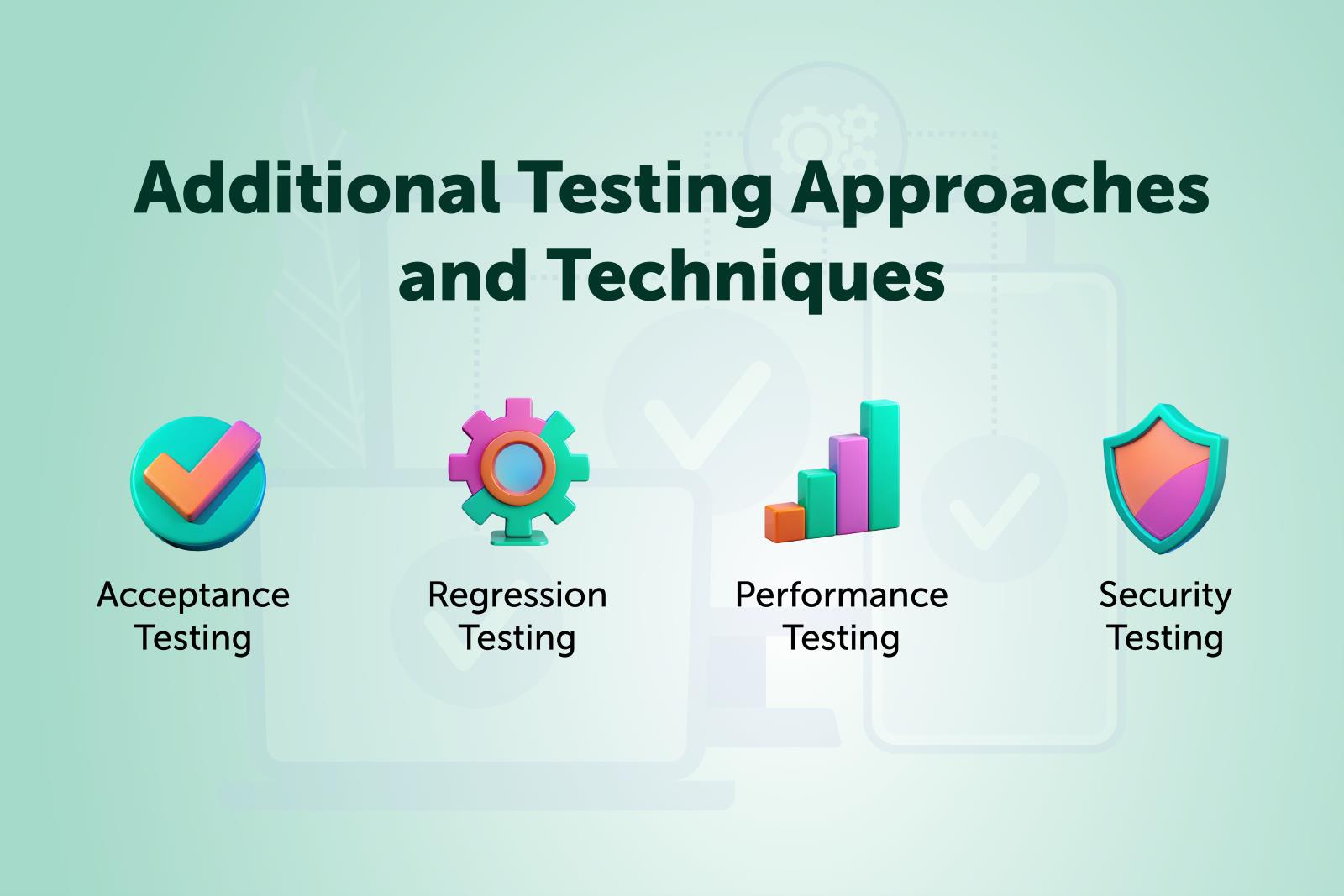
While the testing pyramid provides a general framework, there are other testing approaches and techniques that complement the hierarchical structure. Let's explore some of these approaches:
- Acceptance Testing
Acceptance testing involves validating whether the software meets the requirements and expectations of the end-users or stakeholders. It ensures that the software is ready for deployment and use in the intended environment. - Regression Testing
Regression testing is performed to ensure that changes or additions to the software do not introduce new defects or impact existing functionality. By retesting previously tested features, regression testing helps maintain the overall quality and stability of the software. - Performance Testing
Performance testing assesses the responsiveness, scalability, and stability of the software under varying workloads and stress conditions. It helps identify bottlenecks, measure system performance, and optimize the software to deliver smooth user experience. - Security Testing
Security testing aims to identify vulnerabilities and weaknesses in the software that may compromise its security. It includes techniques such as penetration testing, vulnerability scanning, and code analysis to mitigate security risks and protect sensitive data.
Our Approach to Testing
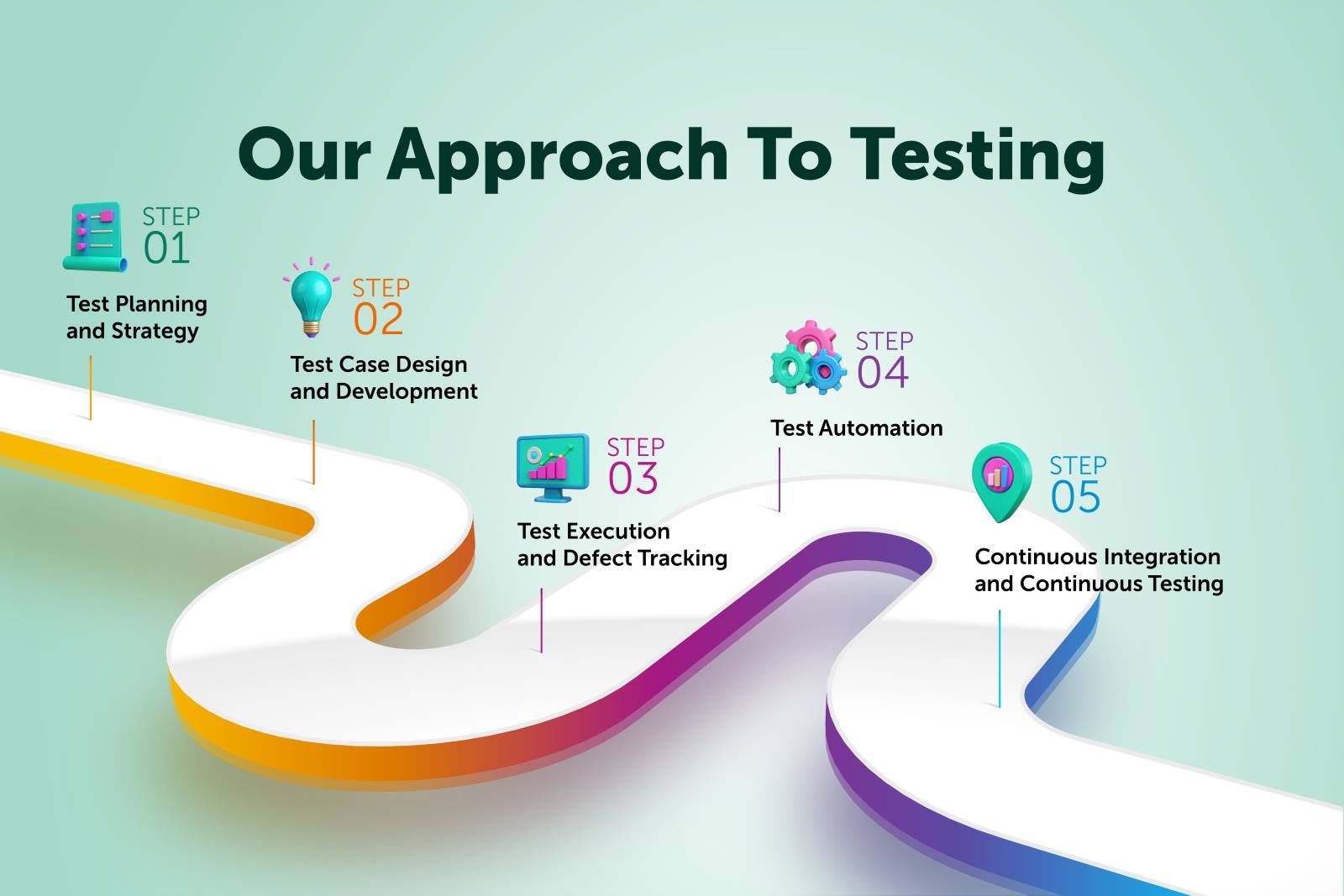
At Softellar, we take software testing seriously to deliver reliable and high-quality products to our clients. Our testing process encompasses the following steps:
- Test Planning and Strategy
We develop a comprehensive test plan that outlines the testing objectives, scope, and approach for each project. Our testing strategy considers the specific requirements, risks, and constraints of the software being developed. - Test Case Design and Development
Our experienced testing team designs and develops test cases that cover various scenarios and functionalities of the software. We create both manual and automated test cases to ensure thorough test coverage and efficient execution. - Test Execution and Defect Tracking
We execute the test cases, record test results, and track any identified defects using a robust defect tracking system. Our testers closely collaborate with developers to address and resolve issues in a timely manner. - Test Automation
Automation plays a crucial role in our testing process. We leverage industry-leading test automation frameworks and tools to automate repetitive and time-consuming tests, enabling faster and more efficient testing cycles. - Continuous Integration and Continuous Testing
To facilitate seamless integration and testing, we adopt continuous integration and continuous testing practices. This ensures that tests are executed consistently throughout the software development lifecycle, allowing us to identify and address issues early.
Conclusion
In this guide to software testing, we have explored the hierarchical structure of testing approaches and highlighted the significance of different levels of testing in ensuring software quality. At Softellar, we follow a rigorous testing process, leveraging a combination of automated and manual testing techniques to deliver robust and reliable software products to our clients.
By adhering to best practices, employing a range of testing approaches, and prioritizing quality throughout the software development lifecycle, we are committed to meeting the highest standards and exceeding customer expectations. Should you have any questions or require further information about our testing practices, feel free to contact us.