

Overview
Most companies that try nearshore software development already know what Agile is. Fewer have thought through what changes when you put the two together: a distributed team running iterative sprints, with substantially more working-hour overlap than a distant offshore team would provide.
That overlap matters. A fully offshore Agile team can still work effectively, but larger time-zone gaps may push ceremonies to inconvenient hours, increase reliance on asynchronous communication, and delay feedback that could otherwise be resolved in real time. Nearshore software development narrows that gap by keeping the team close enough in time zone and geography that Agile's core mechanics, daily communication, fast feedback, and frequent delivery, actually work the way they're supposed to.
This article looks at nearshore Agile software development as an operating model, not as a marketing pitch. It covers how the delivery cycle actually runs, what a nearshore Agile team looks like, which Agile frameworks fit distributed teams, the real benefits and the real challenges, how to structure engagement models and measure performance, and how to choose a nearshore development partner. The goal is a single practical question: how do you make nearshore Agile software development actually work?
Key Takeaways
- Nearshore and Agile solve different problems. Nearshore is a sourcing and delivery model; Agile is a development approach. They complement each other, but one doesn't guarantee the other.
- Time-zone overlap makes Agile ceremonies, standups, planning, reviews, retrospectives, easier to run live instead of asynchronously, which shortens feedback loops.
- A nearshore Agile team needs to be integrated into the product development process. Treating it as an isolated subcontractor that receives tickets and returns code undercuts most of the benefit.
- Scrum isn't the only option. Kanban, Scrumban, and other approaches often fit maintenance-heavy or support-driven work better than fixed sprints.
- Success depends on ownership, communication discipline, and engineering practices at least as much as it depends on where the team sits on a map.
- A nearshore Agile team should be evaluated on delivery outcomes and software quality, not on hours logged or velocity points.
- Nearshore Agile isn't the right fit for every project. Fixed-scope, one-off, or highly regulated work sometimes calls for a different model entirely.
What Is Nearshore Agile Software Development?
Nearshore Agile software development is the combination of two separate decisions: where the development team is located, and how the development process is run. It means working with an external software development team based in a nearby country or region, while that team follows Agile principles, iterative delivery, frequent releases, continuous feedback, and a shared backlog, rather than a fixed, sequential project plan.
The practical effect is a development process built around short cycles instead of long ones. Instead of a vendor disappearing for months and returning with a finished build, a nearshore Agile team plans in short iterations, demonstrates working software regularly, and adjusts priorities as the client's understanding of the product evolves. The team sits close enough in time zone that daily collaboration, standups, code reviews, quick clarifications, happens in real time rather than through overnight message exchanges.
It helps to keep the two halves distinct. Nearshore is a sourcing and delivery model: it answers where the team is and how it engages with the client. Agile is a development approach: it answers how work gets planned, built, and delivered. A company can hire a nearshore team and still run a rigid, Waterfall-style process. A company can also run Agile ceremonies with an offshore or fully in-house team. Nearshore Agile software development is what happens when both choices are made deliberately, and the location and the process are designed to reinforce each other rather than working against each other.
What Is Nearshore Software Development?
Nearshore software development means working with an external development team based in a country or region that is geographically close to the client, close enough for overlapping working hours, easier travel when needed, and often some degree of cultural and business proximity. A US company working with a team in Latin America, or a Western European company working with a team in Central or Eastern Europe, are both common nearshore arrangements.
Nearshore is a relative term, not a fixed one. There's no universal rule that defines it by a specific number of time zones or flight hours; what counts as nearshore for a company in Miami looks different from what counts as nearshore for a company in Berlin. The consistent element is proximity that meaningfully reduces the friction offshore engagements often introduce, mainly around scheduling and real-time communication, without the higher costs typically associated with onshore hiring in the client's own country.
What Is Agile Software Development?
Agile software development is an approach built around iterative development, incremental delivery, and continuous stakeholder feedback. Instead of defining the entire product upfront and building it in one long sequence, an Agile team breaks work into smaller increments, builds and tests them, gets feedback, and adjusts the backlog based on what's learned. Cross-functional teams, developers, QA, product, and often design working together are central to how that cycle runs.
A few distinctions are worth making explicit, because they're where a lot of confusion starts. Agile isn't the absence of planning; teams still plan sprints, releases, and roadmaps, just in shorter horizons with more frequent checkpoints. Agile also isn't a license to change scope without any control; a flexible backlog is not the same thing as an unmanaged one. And Agile isn't automatically Scrum. Scrum is one specific framework built on Agile principles, but Kanban, Scrumban, Extreme Programming, and other approaches are equally valid implementations of the same underlying philosophy.
Why Nearshoring and Agile Work Well Together
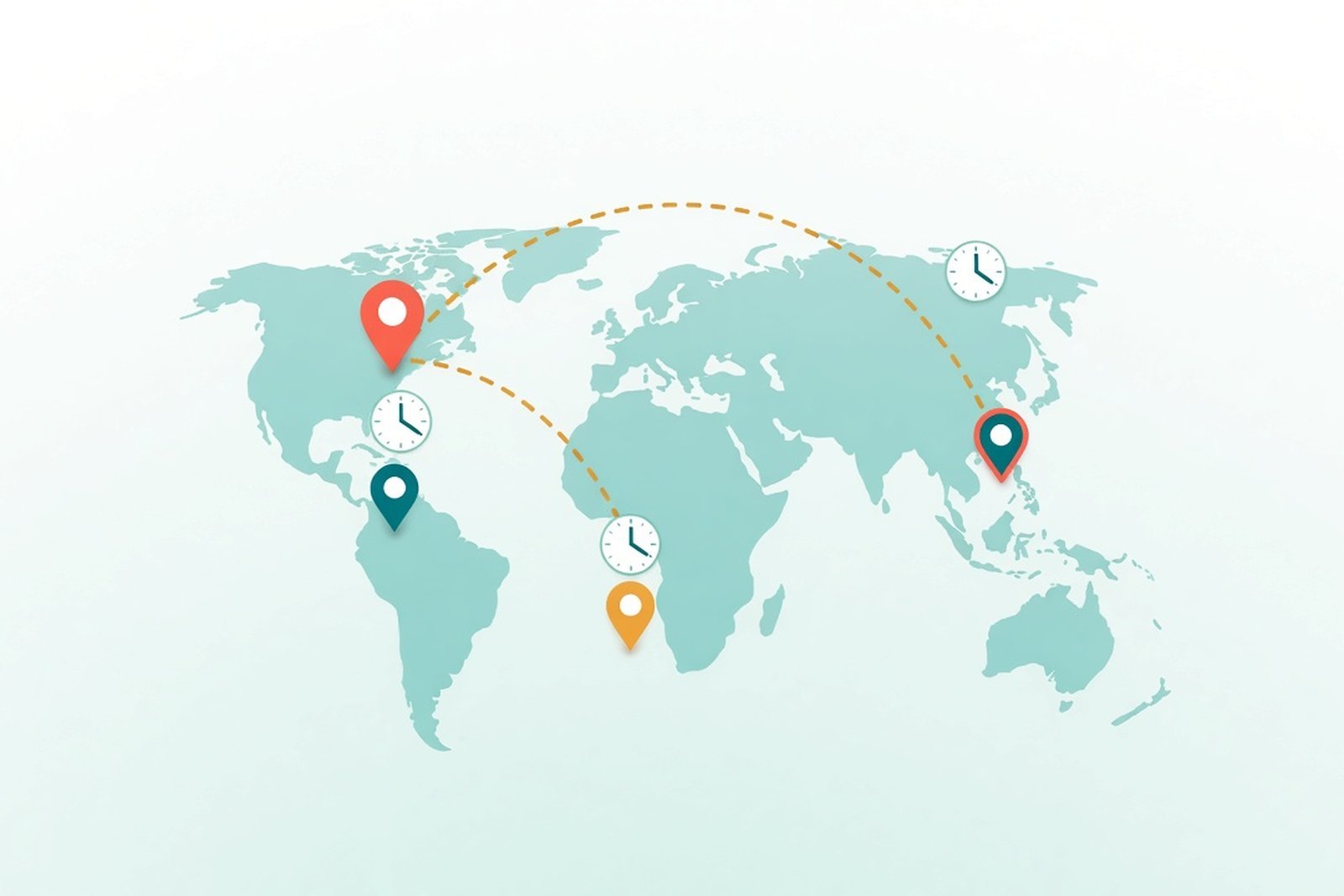
Agile depends on tight feedback loops: standups, backlog refinement, sprint reviews, and quick clarification of requirements. All of that is easier when the people involved can talk to each other during overlapping working hours instead of coordinating across a 10- or 12-hour gap. That's the core reason nearshore and Agile pair well: nearshore software development teams typically share enough working hours with the client that Agile ceremonies can run live, in real time, rather than being reformatted into asynchronous updates.
The practical benefits follow from that overlap. Questions about a user story get answered the same day instead of the next one. A stakeholder can join a sprint review instead of watching a recording. A blocked developer can ask a client-side architect a quick question over chat and keep working. None of this requires nearshore specifically, but nearshore makes it easier to sustain without pushing meetings to inconvenient hours for one side of the relationship.
It's worth being precise about what this proximity does and doesn't do. Time-zone proximity improves the conditions for collaboration, but it does not replace good communication practices. A nearshore team with no clear backlog owner, no defined communication cadence, and no shared definition of done will still struggle, just during more convenient hours. The location advantage is real, but it's an enabler, not a substitute for the discipline that makes Agile delivery work in the first place.
How Does Nearshore Agile Software Development Work?
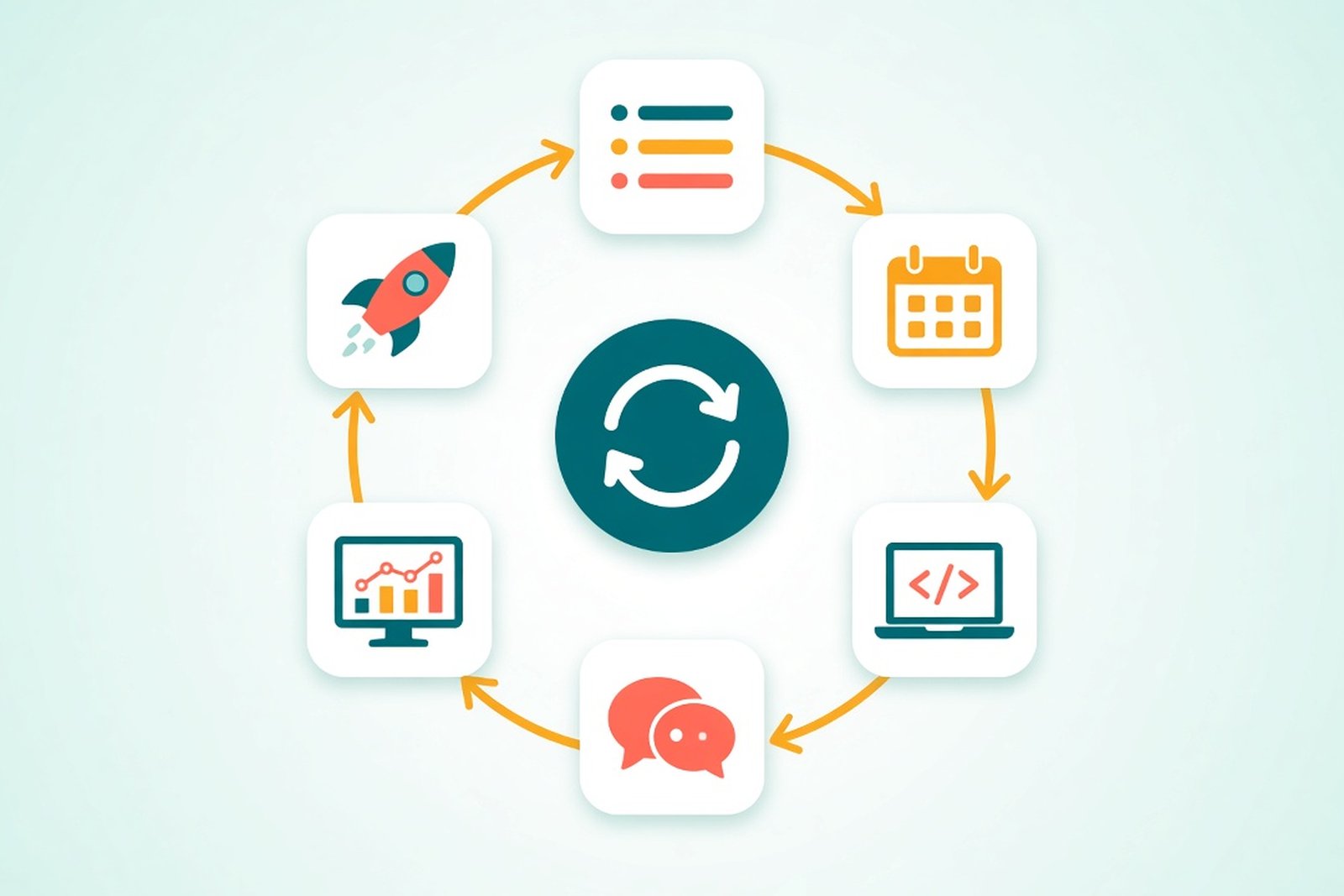
"The team works in sprints" doesn't say much on its own. What actually makes a nearshore Agile engagement function is a repeating cycle with clear ownership at each stage, running continuously rather than as a one-time kickoff.
Product Goals and Backlog
Everything starts with a backlog tied to a product vision and business objectives, broken down into epics and user stories with acceptance criteria attached. This backlog needs a clear owner, usually a Product Owner on the client side, sometimes shared with a nearshore counterpart, who decides what matters most and why. Without that ownership, a nearshore team ends up guessing at priorities or working from whatever request arrived most recently.
Sprint Planning
At the start of each iteration, the team sets a sprint goal and pulls backlog items into the sprint based on capacity, dependencies, and acceptance criteria. Sprint length varies by team and project; there's no rule that every nearshore Agile team has to run two-week sprints. Some run one-week cycles for fast-moving product work, others run three or four weeks when the work involves heavier testing or coordination across systems. A sprint boundary also isn't the same thing as a release: a team with a mature CI/CD pipeline can ship multiple times within a single sprint, while another team might batch several sprints' worth of work into one coordinated release.
Development and Testing
QA isn't a phase that happens after development finishes, and it isn't limited to someone manually clicking through a feature before it ships. It typically includes automated testing, exploratory testing, performance checks, and security checks alongside manual verification, and code review, integration checks, and those QA activities all happen inside the delivery cycle, alongside the coding itself, rather than being bolted on right before a release. A nearshore team that treats testing as something to worry about later tends to produce a backlog full of untested code and a QA bottleneck at the end of every sprint.
Daily Collaboration
Standups, quick technical discussions, and blocker resolution happen through the same channels the client's own engineers use, Slack or Teams for messaging, Jira, Linear, or Azure DevOps for tracking work. A standup is a coordination tool for the team, not a status report delivered upward to a manager. When it turns into the latter, it stops surfacing the blockers and dependencies it's meant to catch.
Sprint Review and Demo
At the end of each sprint, the team demonstrates a working increment to stakeholders, not a slide deck describing what was built, but the software itself. This is where assumptions get tested against real feedback, and where the backlog gets adjusted based on what stakeholders actually see rather than what was originally specified.
Retrospective
The retrospective looks at how the team worked, not just what it built: communication issues, process bottlenecks, delivery problems, anything slowing the team down. Treated as a formality, a retrospective produces a list of vague observations that nobody acts on. Treated seriously, it produces specific changes the team commits to trying in the next iteration.
Continuous Delivery and Feedback
Continuous integration, continuous delivery, and continuous deployment aren't interchangeable, even though they're usually grouped together as "CI/CD." Continuous integration means merging and testing code changes frequently so problems surface early. Continuous delivery keeps those tested changes in a releasable state at all times, while continuous deployment goes one step further and automatically releases qualifying changes to production. A team can integrate and deliver continuously while still gating the final production release behind a manual approval. CI/CD pipelines, staging environments, and automated testing let code move from a developer's branch to a reviewable, testable build frequently, often multiple times a sprint rather than once at the end. That frequent integration is what keeps the backlog update at the end of the cycle grounded in something real: working software the client has actually seen, not a status update based on planned progress.
Benefits of Nearshore Agile Software Development
The benefits of nearshore Agile development are easiest to evaluate one at a time, because they show up in different parts of the delivery process and matter to different stakeholders.
Real-Time Collaboration
Working-hour overlap means the client team and the nearshore team can be online and responsive at the same time, rather than one side waiting for the other to start their day. That overlap is what makes daily standups, quick Slack exchanges, and same-day pull request reviews possible without anyone working unusual hours.
Faster Feedback Loops
Questions about requirements, UI details, architecture decisions, or reported bugs get resolved faster when both sides can talk in real time. A clarifying question that would take a full day to resolve across a 12-hour offshore gap can often be closed within the hour when the teams share several working hours.
Access to Specialized Engineering Talent
Nearshore engagements can open access to specialists, particular frameworks, cloud platforms, or domain experience, that are harder or slower to hire locally, especially in tight regional labor markets. This matters most for teams running complex, custom software development work rather than a simple template build. This isn't a claim that nearshore talent is inherently better than local talent; it's an argument about access and speed of hiring, not about average skill level.
Faster Team Scaling
Adding developers, QA engineers, DevOps specialists, or data and cloud engineers to a nearshore team is typically faster than running a full local hiring cycle, as long as the nearshore partner has the capacity and bench strength to support it. This matters most when a roadmap shifts and a team needs additional capability within weeks rather than months.
Flexibility
An Agile backlog lets priorities shift between iterations as the business changes its mind or learns something new from users. That flexibility is bounded, not unlimited: a well-run backlog absorbs new priorities by re-sequencing work, not by letting scope grow without anyone tracking the cost.
Better Visibility and Control
Because the team works from a shared backlog and delivers in short cycles, the client can see sprint progress, demos, releases, and blockers directly, through the same project management tools the team uses, rather than relying on periodic status reports written after the fact.
Potential Cost Efficiency
Nearshore engagements can offer real cost advantages over local hiring, but the size of that advantage depends heavily on the specific country, seniority level, technology stack, engagement model, and vendor, and it isn't a fixed, predictable percentage. Two nearshore vendors in the same region can price similar roles very differently depending on how they staff and manage delivery. Any specific savings figure needs a defined methodology behind it to mean anything, which is why this article avoids quoting one.
Faster Time to Market
Faster hiring, iterative releases, and the ability to run some workstreams in parallel with a client's in-house team can shorten the path from idea to shipped feature. This isn't automatic. A nearshore team bolted onto a slow internal review process, or one dependent on a single client-side approver, won't move faster just because it's nearshore.
Looking to Scale Your Engineering Team?
Softellar provides nearshore engineers and dedicated Agile teams that integrate into your existing process, tools, and ceremonies.
Nearshore Agile vs Offshore Agile Development
Nearshore and offshore Agile development aren't a better-model-versus-worse-model comparison. They trade off differently, and the right choice depends on what a project actually needs.
| Factor | Nearshore Agile | Offshore Agile |
|---|---|---|
| Time-zone overlap | Usually high | Often lower |
| Real-time communication | Easier | May require schedule adjustments |
| Feedback cycles | Often faster | Can involve delays |
| Travel | Usually easier | Often longer |
| Cultural proximity | Often higher | Varies |
| Talent access | High | Very high |
| Cost advantage | Moderate to high | Can be higher |
| Async processes | Useful | Often essential |
Offshore development still has real strengths: larger talent pools, potentially lower rates in some markets, follow-the-sun development where work continues around the clock across time zones, and outsourcing markets that have matured over decades. Offshore Agile teams that build strong asynchronous processes, detailed written specs, recorded demos, structured handoff documentation, can run effective sprints even with minimal overlap. Offshore tends to make more sense when cost optimization is the primary driver, when a project needs access to a very large talent pool, or when a team already has mature async workflows in place.
Nearshore vs Onshore vs Offshore Agile Development
Adding onshore to the comparison fills out the full picture of engineering-team sourcing options.
| Factor | Onshore | Nearshore | Offshore |
|---|---|---|---|
| Location | Same country as client | Nearby country or region | Distant country or region |
| Time-zone overlap | Full | Usually high | Often low |
| Cost | Typically higher | Often lower than onshore | Can offer the lowest rates |
| Talent pool | Limited to local market | Regional, often broader | Global, largest |
| Communication | Easiest | Easy, mostly real-time | Often requires async processes |
| Travel | Simplest | Usually manageable | Often difficult |
| Scaling speed | Slower, limited by local market | Often fast | Can be fast, larger pool |
| Best suited for | Highly regulated, in-person-critical work | Ongoing product development needing real-time collaboration | Large-scale, cost-sensitive, or follow-the-sun work |
There's no universally best model here. Onshore generally minimizes time-zone, travel, and cross-border communication friction, but usually costs the most and limits access to talent to the local market. Offshore maximizes access to talent and often minimizes cost but demands strong asynchronous processes to work well. Nearshore sits between the two, trading some of offshore's cost advantage and talent-pool size for time-zone overlap and easier real-time collaboration. Many companies use more than one model at once: an onshore core team, a nearshore dedicated team for ongoing product work, and offshore specialists for specific workstreams.
Agile Frameworks for Nearshore Software Development
Agile isn't one process; it's a set of principles that different frameworks implement in different ways. Choosing the right one for a nearshore team matters more than defaulting to whichever framework is most commonly mentioned in outsourcing marketing.
| Framework | Best For | Key Characteristic |
|---|---|---|
| Scrum | Product development | Time-boxed sprints |
| Kanban | Continuous flow | Work-in-progress limits |
| Scrumban | Development plus support | Scrum/Kanban hybrid |
| Extreme Programming (XP) | Engineering-intensive projects | Strong technical practices |
| Scaled approaches | Multiple teams | Cross-team coordination |
Scrum
Scrum organizes work into fixed-length sprints with defined planning, review, and retrospective events. The 2020 Scrum Guide defines a Sprint as a fixed-length event of one month or less. Teams commonly choose shorter cycles based on the nature of the product and delivery process. Scrum fits products with an evolving roadmap, where a Product Owner is actively prioritizing a backlog and stakeholders expect regular demos of new functionality.
Kanban
Kanban visualizes work as it moves through stages and limits how much work is in progress at any point, rather than batching it into fixed-length sprints. It fits continuous flow work well: production support, maintenance, DevOps tasks, and any context where new priorities arrive unpredictably and waiting for the next sprint boundary would slow things down.
Scrumban
Scrumban combines Scrum's planning structure with Kanban's continuous flow and WIP limits. It suits nearshore teams juggling both new feature development and an ongoing stream of bugs or support requests, where a pure Scrum sprint would get disrupted by urgent, unplanned work. A team handling continuous product support, a steady flow of bug reports, small improvements, and support tickets rather than a discrete feature roadmap, often finds Kanban or Scrumban a better fit than committing to fixed Scrum sprints.
Extreme Programming (XP)
XP adds a set of technical practices on top of Agile's iterative structure: pair programming, test-driven development, continuous integration, frequent small releases, and ongoing refactoring. It fits engineering-intensive projects where code quality and technical discipline are the main risk, more than backlog management or stakeholder communication.
Scaled Agile Approaches
When a nearshore engagement grows into multiple teams working on the same product, coordinating dependencies and shared architecture decisions becomes its own problem. Scaled approaches, frameworks like SAFe or LeSS, address that cross-team coordination. This is worth knowing exists rather than diving into deeply; most nearshore Agile engagements, even fairly large ones, don't need a full scaled-framework rollout to function well.
What Does a Nearshore Agile Team Look Like?
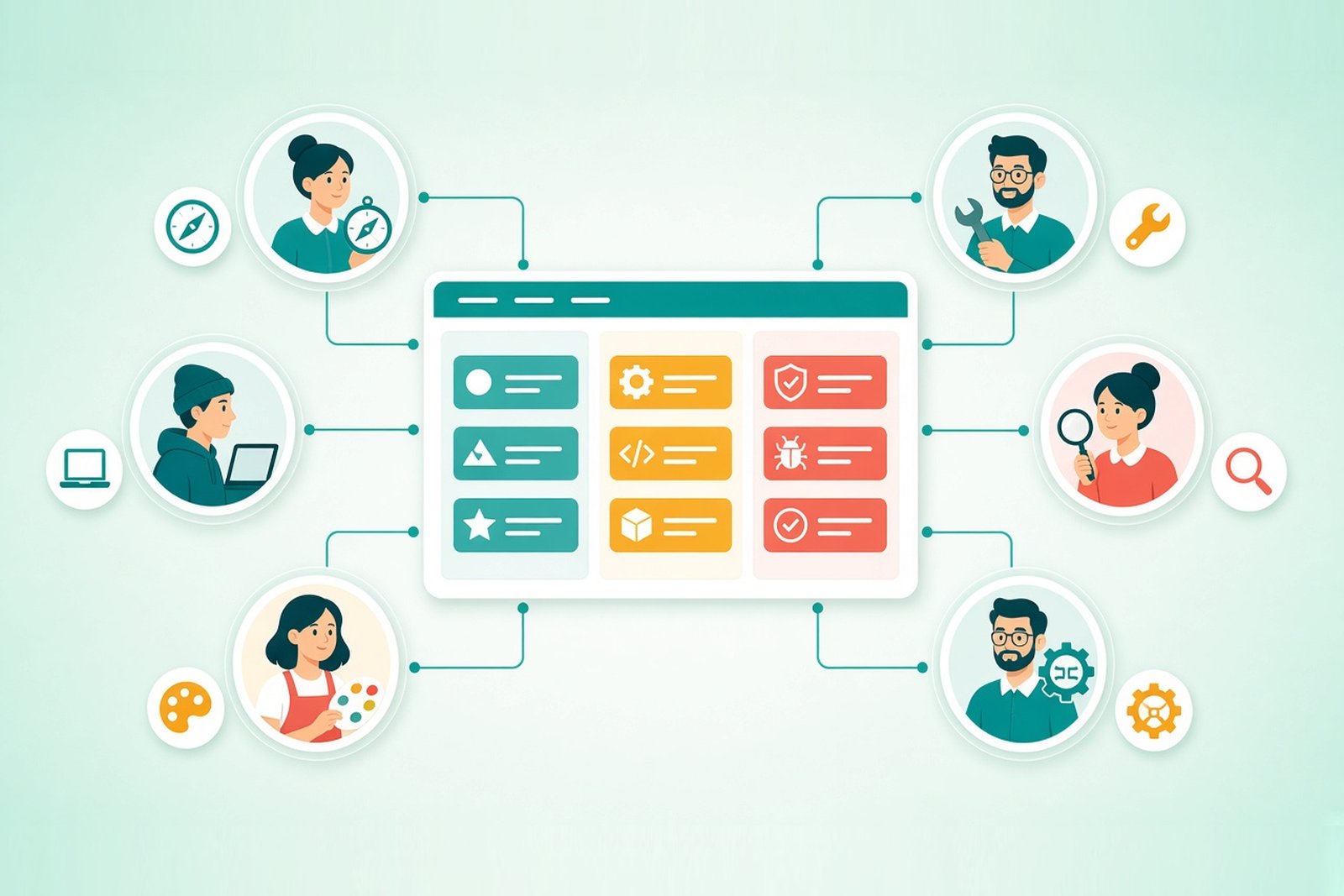
A nearshore Agile team isn't necessarily a full, self-contained unit that replaces every client-side role. It's more often a mix of client and nearshore roles, structured around whichever gaps the client actually needs filled.
| Role | Primary Responsibility |
|---|---|
| Product Owner | Product priorities and value |
| Delivery / Project Manager | Coordination and delivery |
| Tech Lead | Technical direction |
| Software Engineers | Product development |
| QA Engineers | Quality assurance |
| UX/UI Designer | User experience |
| DevOps Engineer | Infrastructure and delivery |
| Business Analyst | Requirements, where needed |
Not every role has to come from the nearshore vendor. It's also worth separating the DevOps Engineer role from DevOps as a practice: DevOps describes a set of practices and a culture around collaboration between development and operations, continuous integration, infrastructure automation, that a whole team shares, not a job title that makes one person solely responsible for it. A common structure looks like this: the client keeps the Product Owner and the lead architect in-house, where product judgment and system-level decisions stay closest to the business, while the nearshore team supplies developers, QA engineers, and sometimes a shared DevOps function. A SaaS company scaling an existing product, for example, might keep product strategy and ownership in-house while a nearshore dedicated team handles frontend, backend, and QA, with a shared backlog and a demo at the end of every sprint. What matters isn't matching this exact split, it's making sure every role in the team, on either side, has a clear owner and no gaps fall through the cracks between the two.
Nearshore Agile Engagement Models
"Outsourcing" is the broad umbrella term for working with an external provider; a dedicated team is one specific way to structure that relationship, not a synonym for it. How a nearshore team is structured commercially, staff augmentation, a dedicated team, or managed development, changes how much control the client keeps and how much responsibility sits with the partner.
| Model | Client Control | Partner Responsibility | Best For |
|---|---|---|---|
| Staff Augmentation | Very high | Low to moderate | Adding skills or capacity |
| Dedicated Team | High | High | Long-term products |
| Managed Development | Moderate | Very high | End-to-end delivery |

Staff Augmentation
Staff augmentation adds individual nearshore specialists, developers, QA engineers, DevOps, directly into the client's existing team and processes. The client retains full control over priorities, architecture, and process; the nearshore engineers essentially work as extensions of the in-house team. This fits well when an internal team has a defined process already and just needs more hands, particular skills, or short-term capacity. An internal Java team supplementing its backend and QA capacity with nearshore engineers, for instance, is closer to staff augmentation than to a fully separate dedicated team.
Dedicated Agile Team
A dedicated team is a nearshore group assigned specifically to one client's product, often for an extended engagement, running its own sprint cadence but working from a shared backlog and reporting into the client's product organization. The client keeps high-level control over priorities and product direction, while the nearshore partner takes more responsibility for how the team is staffed, coordinated, and delivered against sprint goals. This model fits long-term products with an evolving roadmap, where continuity and deep product knowledge matter more than flexible, short-term capacity.
Managed Software Development
Managed development shifts more responsibility to the nearshore partner, who owns end-to-end delivery against agreed outcomes rather than just supplying staff. The client still sets business objectives and reviews progress through the same Agile ceremonies, sprint reviews, demos, backlog visibility, but delegates more of the day-to-day technical and delivery management. This fits situations where a client wants a defined outcome delivered without running the engineering management themselves, though it requires more trust upfront and clearer contractual definitions of what "done" means.
Softellar offers staff augmentation and dedicated team models for companies that need additional engineering capacity without restructuring how their product team already works.
Challenges of Nearshore Agile Development
Nearshore reduces some of the friction associated with outsourcing, but it doesn't eliminate the challenges that come with any distributed engineering arrangement. Being upfront about these is more useful than pretending nearshore solves everything offshore struggles with.
Communication Still Requires Structure
Time-zone overlap makes real-time conversation possible, but it doesn't automatically produce good communication. Teams still need defined channels for different types of communication, a meeting cadence that doesn't turn into meetings for their own sake, an escalation path for blockers, and enough documentation that context isn't trapped in one person's head.
Unclear Product Ownership
Every backlog needs one decision-maker for priorities. When ownership is split, or worse, absent, between a client stakeholder who's too busy to engage and a nearshore team that doesn't have the authority to make product calls, the backlog drifts and the team ends up guessing.
Cultural Differences
Nearshore proximity can narrow cultural gaps compared to more distant offshore arrangements, but it doesn't erase them. Differences in communication style, directness, hierarchy, and expectations around feedback still show up and still need to be actively managed, not assumed away because the team is in a nearby time zone.
Documentation Gaps
Agile doesn't mean skipping documentation. Architecture decisions, API contracts, acceptance criteria, and onboarding materials all still need to exist somewhere durable. A team that relies entirely on tribal knowledge and Slack threads eventually loses that knowledge when someone leaves or takes time off.
Scope Management
Agile is built to accommodate changing requirements, which is different from accommodating unlimited scope inside a fixed budget or timeline. Without active backlog management, "we're Agile, so we can add this" becomes a way to avoid saying no to scope creep that a fixed-price or fixed-deadline engagement can't actually absorb.
Engineering Standards
Coding standards, code review requirements, branching strategy, testing expectations, and a shared architecture approach need to be defined and enforced, not assumed to be consistent just because everyone is nominally following "Agile." A clear Definition of Done is what keeps these standards from becoming optional under deadline pressure.
Security and IP
Nearshore engagements need the same access management discipline as any external team: NDAs, clear IP ownership terms, least-privilege access to systems and code, and secure development practices. Data-location and regulatory requirements vary by industry and jurisdiction and need to be addressed specifically, not assumed to be covered by a standard contract template.
Scaling Challenges
As a nearshore team grows from a handful of engineers to multiple squads, new problems appear: cross-team dependencies, coordination overhead, the need for clearer architecture governance, and more deliberate release management. What worked for a single five-person team doesn't automatically work at three times the size.
Best Practices for Managing a Nearshore Agile Team
These practices come up repeatedly across nearshore Agile engagements that work well, regardless of the specific framework or engagement model.
Define Roles and Responsibilities
Every function, product decisions, technical direction, delivery coordination, QA sign-off, needs an owner both sides agree on. A simple RACI breakdown for key decisions is often enough to prevent the ambiguity that causes delays later.
Establish a Communication Cadence
Daily standups, sprint ceremonies, periodic technical syncs, and stakeholder reviews all need a defined rhythm. The goal is enough structure that nothing important falls through the cracks, without adding meetings that exist only because a calendar template says they should.
Define Working-Hour Overlap
Rather than assuming "nearshore means we're in a similar time zone," pin down the actual overlap between the Product Owner, the Tech Lead, and the development team. A two-hour overlap window supports different working patterns than a six-hour one.
Maintain One Shared Backlog
A single backlog, not a client backlog and a separate vendor backlog that get reconciled periodically, keeps priorities consistent and avoids the nearshore team quietly optimizing for a different set of goals than the client is tracking.
Establish a Clear Definition of Done
Code complete, reviewed, tests passing, acceptance criteria met, documentation updated, deployed to the agreed environment, spelled out explicitly rather than left to individual interpretation. Without this, "done" tends to drift toward whatever gets a ticket closed fastest.
Integrate QA Into Every Iteration
QA that only shows up right before a release becomes a bottleneck and a source of last-minute surprises. Testing needs to run alongside development throughout the sprint, not as a separate phase at the end of it. Some clients bring in nearshore QA engineers specifically to embed testing into every iteration rather than treating it as an afterthought.
Use CI/CD and Automated Testing
Automated builds, testing, and deployments with quality gates catch problems earlier and reduce the manual overhead of shipping frequently. Depending on the team structure, a nearshore DevOps or platform engineer may take primary responsibility for maintaining the pipeline, while delivery quality stays a shared engineering responsibility across the team. This doesn't mean chasing 100% test coverage as a goal in itself; coverage should track where the risk actually is; but it does mean the pipeline should stop broken code before it reaches production.
Document Architecture and Decisions
Architecture Decision Records, diagrams, and API specs give a nearshore team the context to make good day-to-day decisions without escalating every question. This documentation also protects the client from losing critical context if the team composition changes.
Run Meaningful Retrospectives
A retrospective that produces the same three vague observations every sprint isn't doing its job. Retrospectives should identify specific, actionable changes, and someone should be checking, a sprint or two later, whether those changes actually happened.
Treat Nearshore Engineers as Part of the Product Team
The "client sends tickets, vendor executes" model wastes most of what nearshore Agile offers. Engineers who understand the product goals behind a user story make better technical decisions and catch problems a purely execution-focused team would miss. Including nearshore engineers in product discussions, not just sprint planning, is what makes that understanding possible.
How to Measure the Performance of a Nearshore Agile Team
Hours logged, lines of code written, and raw ticket counts are all easy to measure and mostly useless as performance indicators. They reward busywork and volume over actual outcomes. A more useful measurement approach looks at delivery, quality, engineering health, and product results together.
| Category | What It Covers |
|---|---|
| Delivery Metrics | Lead time, cycle time, throughput, sprint goal success, release frequency |
| Quality Metrics | Escaped defects, defect trends, production incidents, rework |
| DORA Metrics | Change lead time, deployment frequency, change fail rate, failed deployment recovery time, deployment rework rate |
| Product Metrics | Feature adoption, conversion, retention, user satisfaction, business outcomes |
Delivery Metrics
Lead time, cycle time, throughput, how often sprint goals are actually met, and release frequency all describe how consistently and predictably the team moves work from idea to production.
Quality Metrics
Escaped defects, defect trends over time, production incidents, and how much rework a feature requires after it's marked complete all indicate whether speed is coming at the expense of stability.
DORA Metrics
DORA (DevOps Research and Assessment), maintained by Google Cloud, currently tracks five software delivery metrics: change lead time, deployment frequency, failed deployment recovery time, change fail rate, and deployment rework rate. The first three describe throughput; change fail rate and deployment rework rate describe stability, and a team that ships fast but breaks production often isn't performing well by DORA's own framework.
Product Outcomes
Feature adoption, conversion, retention, user satisfaction, and business outcomes ultimately matter more than any internal engineering metric. A team can hit every delivery and quality target and still ship features nobody uses; product metrics are the check against that.
Why Velocity Is Not a Productivity KPI
Velocity, the amount of backlog a team completes per sprint, is a planning tool for a single team to forecast its own capacity over time. It isn't a productivity measure, and it shouldn't be used to compare different teams or individual developers against each other. Velocity numbers aren't standardized between teams (a story point means whatever a specific team calibrated it to mean), so a higher velocity on one team says nothing about whether it's outperforming another.
How to Choose a Nearshore Agile Development Partner
This is usually where the decision turns commercial. A handful of factors separate a partner who will genuinely integrate with a client's product team from one who will operate as a disconnected ticket queue.
Technical expertise. The partner needs real depth in the required stack, architecture patterns, cloud platforms, and any domain-specific technology the product depends on, not a generic claim of full-stack capability.
Agile maturity. This is about actual delivery process, backlog management discipline, whether retrospectives lead to real change, how planning and demos are run, not a wall of certification logos. Certifications can indicate training investment, but they don't substitute for evidence of a working process.
Communication. English proficiency, communication style, and response times matter for both day-to-day technical exchanges and stakeholder-facing conversations. A team that communicates well technically but struggles to explain trade-offs to a non-technical stakeholder creates friction in a different place.
Time-zone overlap. Verify the actual number of overlapping working hours between key roles, not a general claim of being "in a nearby time zone." Two hours of overlap and six hours of overlap support very different working patterns.
Engineering practices. Ask specifically about code review process, CI/CD setup, automated testing, architecture review, security practices, and documentation standards. These are the practices that determine long-term code quality, not just initial delivery speed.
Transparency. A partner should be comfortable giving the client direct access to the project management system, the backlog, repositories, documentation, and delivery status, rather than mediating all of that through periodic reports.
Team stability. Ask about retention, what happens when a team member leaves, and how knowledge transfer works during a replacement. A team that turns over frequently loses product context repeatedly, regardless of how skilled each individual hire is.
Security. Access management policies and a secure development lifecycle matter more than a list of certifications. A certification is not the same thing as a genuinely secure vendor; it's worth asking how access is actually managed day to day.
Scaling capability. Ask how quickly the partner can add specialists if the roadmap changes, and what that process actually looks like, not just whether they claim they can scale.
Relevant experience. Case studies and references matter more when they reflect similar architecture or product complexity, not just the same industry. A team that's built complex data pipelines for a healthcare company has more relevant experience for a data-intensive fintech product than a team that's only built healthcare marketing sites.
Questions to Ask a Nearshore Agile Development Company
A short, direct set of questions surfaces more than a generic capabilities pitch does.
- How much working-hour overlap will we actually have with the team?
- Who owns delivery, and who's accountable when a sprint goal is missed?
- How will the team integrate with our existing engineers and tools?
- Which Agile framework do you recommend for this kind of project, and why?
- How do you handle code reviews?
- What does your Definition of Done include?
- How do you measure delivery performance?
- How do you manage security and access to our systems and code?
- Who owns the source code and documentation once the engagement ends?
- How do you handle team member replacement and knowledge transfer?
- How quickly can the team scale if our roadmap changes?
- How are architecture decisions documented?
- How do you handle production incidents?
- What access will we have to repositories and project management tools?
When Is Nearshore Agile Development a Good Fit?
Nearshore Agile development tends to work best where the product itself is evolving and the team needs sustained, iterative collaboration rather than a one-time handoff.
| Situation | Fit |
|---|---|
| Long-term SaaS product | Strong |
| Product with an evolving roadmap | Strong |
| Need to scale an engineering team quickly | Strong |
| Continuous modernization of an existing platform | Strong |
| One-off, isolated task lasting a week | Limited |
| Completely fixed, unchanging process | Depends |
The common thread across the strong-fit cases is a need for ongoing collaboration and feedback, not a single deliverable handed off once. A company scaling a SaaS product, modernizing a legacy platform incrementally, or needing extra capacity without a lengthy local hiring process is a good candidate. A company with fast, expensive, or slow local hiring options for the skills it needs also tends to benefit, as does one that needs specialized talent it can't easily find nearby and values regular, structured communication over an extended engagement.
When Nearshore Agile Development May Not Be the Right Choice
Nearshore Agile isn't automatically the wrong fit for regulated or safety-critical work, but a few situations call for a different approach entirely.
A completely fixed scope with no room for iteration doesn't get much value from Agile's adaptive planning; a traditional fixed-price, fixed-scope engagement may be simpler and cheaper to manage. A very small, one-off task, a few days of work, rarely justifies setting up sprint ceremonies, a shared backlog, and ongoing collaboration processes. Projects with heavy physical hardware dependencies, where most of the work happens on-site with equipment, don't benefit much from a distributed software team regardless of time zone.
Some safety-critical or highly regulated environments add process overhead that changes how Agile gets applied, more formal documentation, stricter change control, additional compliance checkpoints, but this doesn't mean Agile is unusable there; it means the framework needs to be adapted to the regulatory context rather than applied off the shelf. Finally, if there's no available Product Owner able to make timely priority decisions, or if the organization isn't ready to integrate an external team into its actual workflow, nearshore Agile development will struggle regardless of how good the nearshore partner is.
How to Start a Nearshore Agile Software Development Project
Define business and product objectives. Start with what the business needs to achieve, not with a headcount number. "We need to reduce checkout abandonment" leads to a different team and plan than "we need three developers."
Identify required skills. Map out the actual roles needed, frontend and web development, backend, mobile, QA, DevOps, based on the objectives above, rather than defaulting to a generic full-stack team.
Choose the engagement model. Decide between staff augmentation, a dedicated team, or managed development based on how much control the organization wants to retain versus how much delivery responsibility it wants to hand off.
Select the nearshore partner. Apply the evaluation criteria covered earlier: technical expertise, Agile maturity, communication, time-zone overlap, engineering practices, transparency, stability, and security.
Define roles and governance. Clarify upfront who makes product decisions, who makes technical decisions, who owns delivery, and who owns security and compliance calls.
Establish tools and access. Set up repository access, project management tools, communication channels, and cloud environment access before the team starts, not during the first sprint.
Build and prioritize the initial backlog. Get enough backlog ready to start meaningful work, without trying to plan out an entire year of detailed tickets in advance.
Establish engineering standards. Agree on a Definition of Done, testing expectations, code review process, and CI/CD setup before the first line of code gets written.
Run the first iteration. Treat the first sprint as a calibration point, not a benchmark for how fast every future sprint should go. Teams typically need a few iterations to find a stable rhythm together.
Measure and improve. Use retrospectives and real delivery metrics, not gut feel, to adjust the process as the engagement continues.
If you're mapping out what a nearshore Agile engagement would actually look like for your product, from team structure to engagement model to delivery approach, Softellar can walk through that scoping with you before any commitment is made.
Does Agile Make Nearshore Development Less Predictable?
This is a common concern, and it's reasonable on the surface: if requirements can change between sprints, how can anyone forecast budget or timeline? The short answer is that Agile doesn't remove planning; it changes the planning horizon and adds real data to it.
A backlog with estimated items, defined sprint goals, and a team's historical throughput supports release planning and capacity forecasting the same way a traditional project plan would, just updated more frequently and grounded in actual delivery data rather than an upfront estimate that doesn't get revisited. Longer-horizon forecasts naturally carry more uncertainty than near-term ones, that's true of any planning approach, Agile or not, but a mature Agile team with reliable historical throughput, cycle-time data, and a well-refined backlog can produce useful delivery forecasts. What Agile can't do is guarantee delivery on a fixed date and fixed budget regardless of what's learned along the way; no responsible team should promise that.
What Affects the Cost of Nearshore Agile Development?
Nearshore Agile development cost depends on several factors together, not on a single "nearshore rate" that applies everywhere. The country or region matters, rates vary meaningfully across Latin America, Central and Eastern Europe, and other nearshore markets. Seniority level matters just as much within any single region; the gap between a junior and a senior engineer often exceeds the gap between regions. Technology stack, team size, the specific mix of roles, the chosen engagement model, project complexity, security and compliance requirements, and contract duration all factor in as well.
The most important point here isn't a number; it's that hourly rate is not the same thing as total development cost. A lower hourly rate that comes with more rework, heavier management overhead, missed deadlines, or a higher defect rate can end up costing more overall than a higher rate attached to a team that delivers cleanly the first time. Evaluating a nearshore partner on rate alone, without considering delivery quality and process maturity, is how that gap shows up months into an engagement.
Softellar Approach to Nearshore Agile Software Development
A nearshore Agile team should function as an integrated engineering capability inside the client's product organization, not as an external "ticket factory" that receives requirements and returns code with no real visibility into why the work matters. That principle shapes how Softellar structures its nearshore engagements.
Softellar works through two primary engagement models: staff augmentation, where pre-vetted engineers join a client's existing team and follow its established process, and dedicated teams, where a complete team works exclusively on one client's product. The choice usually comes down to how much delivery structure the client already has in place: companies with an established process and clear technical leadership tend toward staff augmentation, while companies that want a self-sufficient delivery unit with its own coordination typically choose a dedicated team.
Integration happens inside the client's existing toolchain rather than in a parallel one. Softellar engineers work from the client's backlog in the client's project management system, Jira, Azure DevOps, or whatever the team already uses, communicate through the client's channels such as Slack, Microsoft Teams, or Zoom, and join the client's existing ceremonies, daily standups, sprint planning, reviews, and retrospectives, instead of running a separate reporting process on the side.
On frameworks, Softellar follows the client's established Agile process where one exists, most commonly Scrum, and helps define a pragmatic cadence, Scrum, Kanban, or a hybrid, where one doesn't. The framework is chosen per project based on how the work actually flows, not imposed as a one-size-fits-all methodology.
Softellar's engineers are based in Europe and work with clients across Europe and the United States, either in the client's preferred time zone or with significant working-hour overlap, so that ceremonies and day-to-day collaboration run live rather than through overnight message exchanges.
Engineers are vetted before they're ever proposed to a client, and onboarding follows a structured path, documentation review, team introductions, environment setup, and gradual task assignment, designed to make a new engineer productive within the first weeks rather than months. Dedicated teams include a project manager who handles coordination and reporting, and knowledge-transfer practices are in place so product context survives any later change in team composition.
Is Nearshore Agile Software Development Right for Your Business?
Nearshore Agile software development is a strong fit for companies that need external engineering talent, real-time collaboration, and the flexibility to adjust product direction as they learn, without giving up visibility into how the work gets done. It's a weaker fit for one-off, fixed-scope work where iteration adds overhead rather than value.
Location alone doesn't determine success. A nearshore team with a nearby time zone and a mediocre process still struggles; a nearshore team with clear product ownership, disciplined communication, solid engineering practices, real transparency into delivery, and sound technical governance tends to perform close to an in-house team, at a different cost structure and with different scaling options. The model is worth evaluating seriously, but the partner and the process matter as much as the map.
If you're weighing whether nearshore Agile development fits your next project, Softellar's team is available to talk through what would actually make sense for your product and team, without a sales pitch attached to it.