
Case Study: Microsoft Azure-Powered SaaS Invoice Recognition System
Seamless Microsoft Azure migration with zero downtime, improving performance and scalability for intelligent business operations.

Client
SaaS provider focused on intelligent automation
Location
United States
Platform
Web-based SaaS (React frontend, .NET backend, Azure Cloud)
Engagement Model
Dedicated Team
Team Size
5 specialists
Duration
8 months
Industries
Technologies
About The Customer
The Customer is a fast-growing B2B SaaS provider focused on intelligent automation. Their core product is a cloud-based invoice recognition platform designed to reduce manual data entry, speed up financial workflows, and integrate seamlessly into enterprise systems, helping other businesses optimize their operations.
Key Highlights
- Built a cloud-native invoice recognition platform from scratch, taking its place as a core solution on Microsoft Azure
- Achieved high OCR accuracy across diverse invoice layouts and formats
- Enabled manual review and override of extracted values
- Integrated custom training per client to boost precision
- Reduced manual corrections by over 60% across live clients
- Designed a scalable microservices architecture for multi-tenant SaaS, ensuring efficient data handling
The Challenge
The Customer needed a robust and intelligent system that could automatically extract structured data from unstructured invoice PDFs across a wide variety of layouts. This included parsing headers, line items, tax details, and totals. Accuracy was critical - even small misreadings could trigger downstream financial errors.
These requirements defined the key project goals: to allow per-client training for specific invoice templates and provide a fallback mechanism when fields were missed or ambiguities occurred. In short, the challenge was to balance automated data extraction using AI with flexibility for human review - all while ensuring scalability and performance in a SaaS context.
Project Team Composition
- 1 Senior .NET Backend Developer (microservices, OCR engine integration, API layer, and implementation)
- 1 Frontend Developer (React UI for validation workflows and document rendering)
- 1 ML/OCR Specialist (invoice structure training, model fine-tuning)
- 1 QA Engineer (data accuracy tests, integration flows)
- 1 Project Manager (delivery coordination, documentation, backlog grooming)
Our Solution
Softellar delivered a full-stack SaaS platform leveraging Azure Cognitive Services for OCR and document understanding. The backend was developed using .NET and structured as microservices deployed to Azure Service Fabric. The services communicated via Azure Service Bus, which provided a decoupled, scalable architecture for handling document ingestion, recognition, review, and export pipelines.

The frontend, built with React and TypeScript, offered users an intuitive document viewer and manual correction interface. It allowed users to highlight, review, and edit fields if the automated recognition failed or returned ambiguous results.
The system provided specialized vendor-based training using machine learning techniques and intelligent document processing. This helped the engine learn recurring layout structures and field mappings, improving precision for each new invoice format. Each client could upload invoice samples for custom training sessions, enhancing their model accuracy without affecting others.
To enable fallback and correction, the UI supported OCR-powered manual key/value mapping - allowing users to click on raw text fields in the document and assign them to missing attributes like Invoice Number or Tax Total. This tight integration between backend extraction and frontend validation delivered a powerful hybrid intelligence loop.
Microservice-Based Backend
The system was built using .NET microservices hosted in Azure Service Fabric. Each service was designed around a single responsibility, such as file ingestion, data extraction, validation processing, and export. Services communicated through Azure Service Bus, allowing scalability and fault isolation. The microservice design also enabled rapid onboarding of new features and simplified multitenant deployment.
Azure Cognitive Services & Custom Model Layer
Azure Form Recognizer and OCR APIs were the foundation for parsing PDF and scanned invoices. For greater accuracy, custom logic was layered on top to match recognized fields with expected semantic targets (e.g., detecting invoice totals vs. line item subtotals). Machine learning models were trained per client to learn invoice template styles, improving extraction performance.
Intelligent Document Review Interface
The React frontend enabled users to interactively validate or override recognized data. A visual invoice viewer displayed OCR regions, confidence scores, and extracted values, helping users quickly identify discrepancies. Users could correct field mappings via dropdowns and drag-to-select tools. Validation feedback looped into retraining logic for continual learning.
Manual Key-Value Extraction Layer
For unstructured or poorly scanned invoices, users could manually assign keys and values using OCR-powered suggestions. The backend allowed fallback workflows where the OCR engine output was post-processed by the user before the record was finalized. This ensured that the platform handled edge cases without sacrificing automation quality.
Secure SaaS Architecture
The platform was built to support secure multi-tenant operation, with tenant-specific training, storage isolation, and access control as part of its core risk management. Audit logs and data flow tracing were implemented to meet compliance requirements. All components were deployed in Azure under a controlled resource group model.
Our Approach
Softellar followed a five-phase delivery process tailored to cloud-native AI solutions:
- Discovery & Architecture
Analyzed target invoice formats, business needs, and user roles
Designed SaaS-ready architecture with multi-tenant support
Made the strategic choice of the optimal Azure OCR stack and model integration strategy - MVP Development & Setup
Built invoice ingestion, processing, and review pipeline
Integrated Azure Cognitive Services into document flow
Developed frontend for manual validation and correction - Intelligent Training & Model Optimization
Collected client-specific samples for custom model training
Fine-tuned ML recognition models for line-item and tax field accuracy
Validated output quality across multiple templates and vendors - Deployment & Testing
Deployed platform to Azure using Service Fabric and App Services
Conducted functional QA, OCR performance checks, and regression validation as part of the comprehensive quality assurance process.
Simulated document load scenarios to test system scalability - Production Rollout & Support
Onboarded pilot clients with tailored templates
Monitored usage and fine-tuned feedback loop
This way, the system continuously improved, supported by delivered documentation and platform training for client teams
Results & Impact
The new SaaS platform allowed the Customer to launch a scalable and accurate invoice recognition product for their B2B clients, delivering immediate benefits. It significantly reduced manual workload while enabling clients to fine-tune recognition logic as needed.
Business Outcomes
- Reduced invoice processing time by up to 80%
- Improved customer satisfaction and onboarding due to custom training support
- Cut manual data entry costs and reduced downstream errors
- Enabled launch of new revenue stream through invoice recognition SaaS
Technical Outcomes
- High accuracy of key field extraction across 50+ invoice templates
- Over 60% reduction in manual correction requests
- Stable processing at scale using Service Fabric and Azure Bus
- Custom per-tenant model support and intelligent fallback workflows
Tools & Technologies
.NET, C#, React, TypeScript, Azure Service Fabric, Azure Service Bus, Azure Cognitive Services, OCR, Machine Learning
Transform Your Infrastructure with Azure Cloud
Migrate to Azure for better performance and scalability.
Related Case Studies
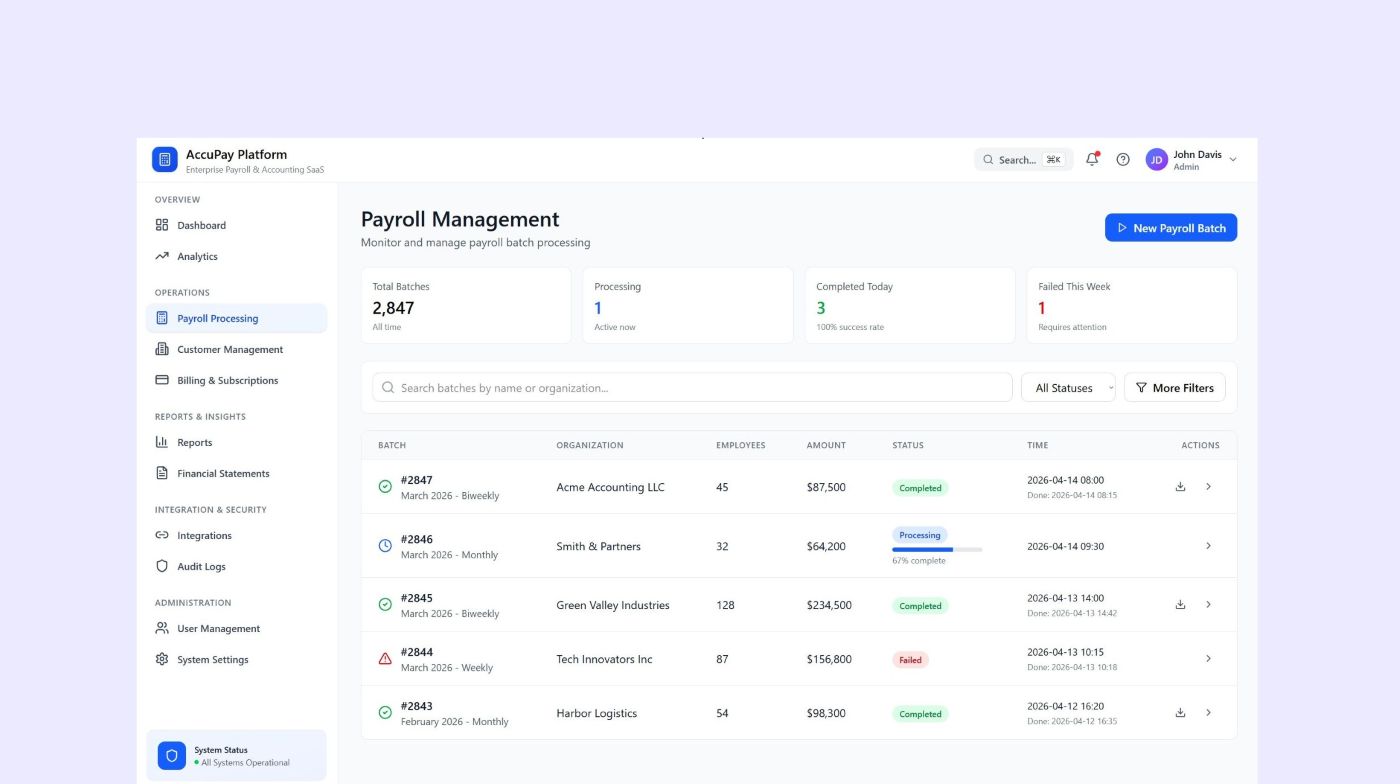
Accounting Platform Modernization: Cloud-Native SaaS for a U.S. Payroll Software Provider
Industries:
Technologies:

Fintech Cloud Case Study: AI Lending Platform on Azure for U.S. Private Credit
Industries:
Technologies:
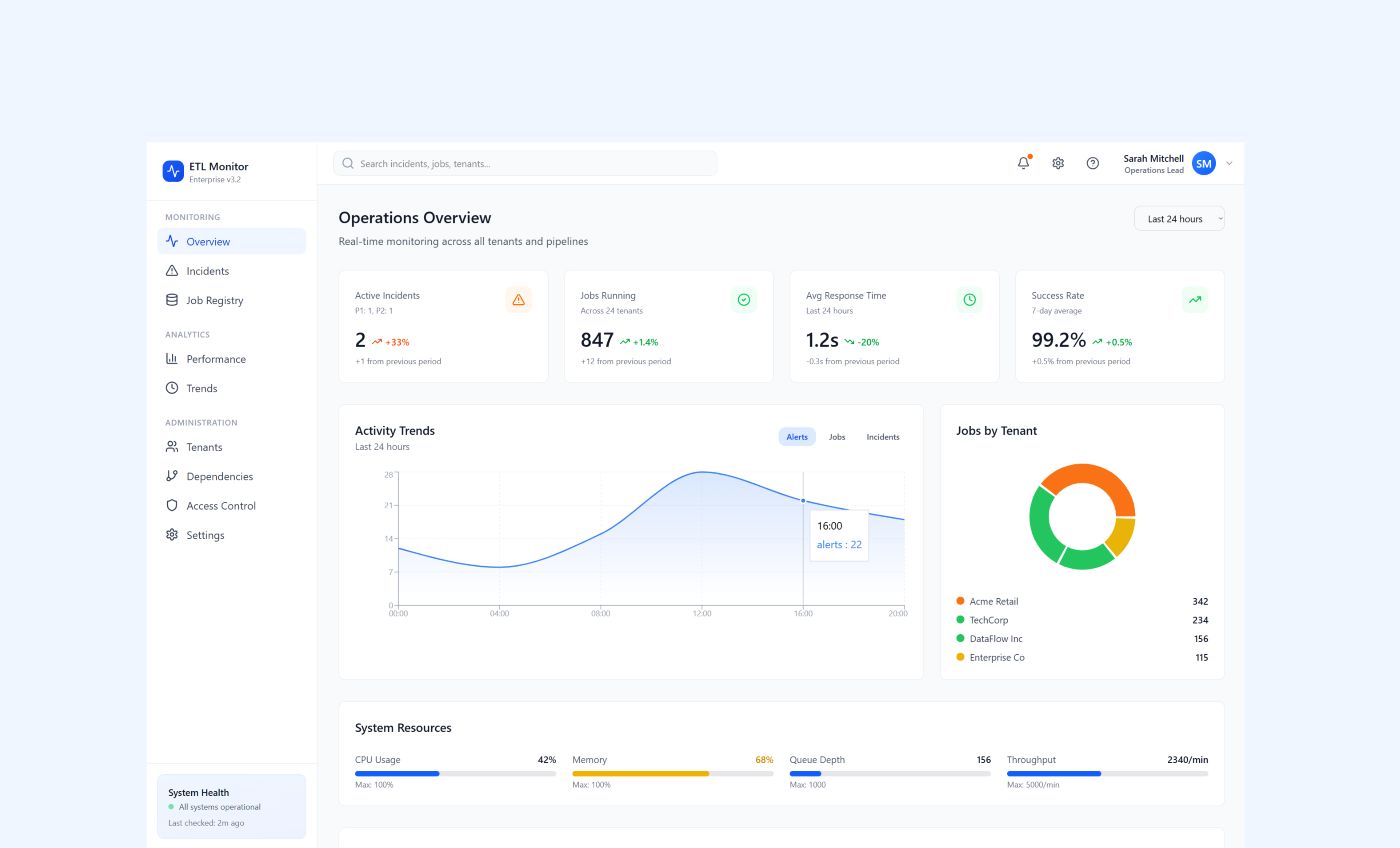
ETL Monitoring and Observability Platform for a Multi-Tenant Data Provider
Industries:
Technologies: