Overview
Building software with an outside partner used to mean picking one of two boxes: hire a freelancer for a few weeks, or hand the whole project to an agency and hope for the best. The dedicated team model sits in between those two options, and for a lot of companies, that middle ground turns out to be exactly where they needed to be all along.
A dedicated development team is a group of specialists - software developers, QA engineers, a project manager, sometimes a technical architect - who work only on your product, full-time, for as long as the engagement runs. Not shared with three other clients. Not swapped out every sprint. The same people, every day, learning your codebase the way an in-house team would, minus the six months of recruiting it usually takes to build one from scratch.
The short version, if you're skimming: a dedicated team model works best for long-term projects where the scope is likely to shift, it typically costs 30 - 60% less than hiring the same roles locally, and it's a poor fit for a two-week bug fix or a project with a fixed, unchanging spec. The rest of this guide walks through why, with actual numbers, a full breakdown of team structure, what it costs in 2026, how it stacks up against staff augmentation and fixed-price contracts, and - because it would be strange to publish a 2026 guide without addressing it - where AI tools fit into all of this.
We also recorded an audio version of this guide if you'd rather listen on your commute. Link's at the bottom of the page.

What Is a Dedicated Team Model?
At its core, the dedicated team model is an outsourcing strategy where a client hires an external group of full-time specialists who work exclusively on that client's project, usually for a period measured in months or years rather than weeks. The team gets folded into the client's own workflows - its sprint cadence, its Slack channels, its stand-ups - so that from a day-to-day perspective, it behaves like an extension of the client's in-house team rather than a separate contractor.
The service provider (that's the agency or outsourcing company supplying the talent) handles recruitment, payroll, HR, and most of the administrative overhead that comes with employing people. The client keeps the parts that actually matter to the product: setting priorities, defining what gets built, and directing the day-to-day work. That division of labor is really the whole point of the model. You get the control of an in-house team without the twelve weeks of interviewing, background checks, and onboarding paperwork that come with hiring one.
Engagements under this model typically run 12 to 24 months, sometimes longer. Short stints happen, but they're the exception. If you're looking for someone to patch a bug over a long weekend, this isn't the model you want - more on that below.
Dedicated Team vs In-House: Who Actually Wins?
Neither, really, and that's the honest answer. An in-house team gives you people who are physically present, deeply loyal, and permanently embedded in company culture. It also takes months to build, costs more in most markets, and leaves you exposed every time someone quits. A dedicated team trades some of that physical presence for speed of assembly, access to a much larger pool of specialized skills, and a lower monthly bill. Which one wins depends entirely on what you're building and how fast you need to start.
How a Dedicated Development Team Works
The mechanics are simpler than they sound. The client outlines the project scope and the specific roles needed - say, two backend developers, one QA engineer, and a project manager. The service provider then sources and assigns professionals matching that criteria, drawing on its own bench of vetted talent rather than starting a search from zero.
Once the team is assembled, the client takes over day-to-day direction: setting priorities, reviewing work, deciding what ships next. The vendor stays involved in the background, handling contracts, replacing anyone who leaves, and managing the administrative overhead of employment so the client doesn't have to. It's worth repeating because people miss this part: the vendor manages the people; the client manages the work.
Most engagements follow a similar arc. First comes a discovery phase, where the provider gets a deep understanding of the client's project, existing technology stack, and goals. Then hiring and onboarding, which for an established provider with a ready talent pool can take two to six weeks rather than the ten-plus weeks typical of direct local hiring. Then the actual work begins, with the team gradually building the kind of contextual knowledge that only comes from staying on one product long enough to see its rough edges.
Team Composition: Who's Actually on a Dedicated Team
A dedicated development team structure varies by project, sized and staffed to match the technical expertise the work actually calls for. Most include some combination of the following.
- Developers - the core of the team, writing the actual code. Depending on project needs, this might be two people or twenty.
- QA and testing engineers - responsible for catching problems before your users do. Quality doesn't happen by accident.
- A project manager - keeps delivery on schedule, removes blockers, and is usually your main point of contact.
- Technical architects - often part-time or shared across projects, brought in for complex architectural decisions rather than day-to-day coding.
- DevOps engineers and UI/UX designers - added when the project calls for them, not by default.
Small dedicated teams might be three or four people. Larger ones supporting ongoing product development across multiple workstreams can run into the dozens. Team size should track the actual complexity of the work, not some arbitrary staffing template a vendor happens to have on the shelf.

When a Dedicated Software Development Team Makes Sense
This model earns its keep on long-term projects with evolving or unclear requirements - the kind where you know roughly where you're headed but the exact route is going to change six times along the way. Product companies iterating on a live platform. Startups scaling development capacity as they grow past their first hire. Enterprises running digital transformation initiatives that touch a dozen systems at once.
It also fits when a client lacks specific in-house expertise and needs it fast, without the six-month runway of a traditional hire.
Good candidates for a dedicated team:
- Projects expected to run many months, with no clean end date in sight
- Products where the scope will keep shifting as user feedback comes in
- Startups that need to scale engineering capacity during a growth phase without the overhead of a large internal team
- Digital transformation work spanning multiple systems, where the discovery process alone can reshape the plan
Where it doesn't fit:
- A short, tightly scoped project with a fixed deliverable and a known end date
- Work with a genuinely small budget and no room for a monthly retainer
- A one-off task that a freelancer could knock out in a week
You'll see a stat floating around outsourcing blogs claiming a specific percentage of digital product teams will run on hybrid or distributed delivery by 2027, usually credited to Gartner. We went looking for the original report and couldn't pin it down, so we're not going to repeat a number we can't verify. What's not in question is the direction: distributed and hybrid delivery setups keep showing up more often, not less, as companies rebuild how they staff product teams. Dedicated teams are one of the more mature ways to do that well.
Key Dedicated Team Advantages
Specialized Expertise Without the Hiring Marathon
Hiring a senior specialist locally can take weeks, sometimes months, especially for niche skills. A dedicated team provider already has that specialized expertise sitting on the bench - machine learning engineers, security specialists, people who've shipped fintech platforms before. You get access to a global talent pool instead of whoever happens to be job-hunting in your city this quarter.
Complete Control Over Priorities
Unlike a black-box agency engagement, the client retains complete control over what the team builds and in what order. You set priorities, you review the work, you decide what ships. The provider handles the employment side; you handle the product side. It's your roadmap, executed by people who work for you in every way that matters, even if payroll runs through someone else's books.
Team Stability and Deep Domain Knowledge
This is the one people underestimate. A dedicated team stays on your project long enough to build a genuinely deep understanding of your codebase, your users, and the weird edge cases that never make it into the documentation. That continuity compounds. Continuous engagement with the same team also cuts onboarding and knowledge-transfer costs, since nobody has to re-explain the architecture every three months to a new contractor.
Compare that to staff augmentation or freelance rotations, where you're re-explaining the same context to a new face every few months. Research and industry case studies generally associate team stability with better continuity and delivery performance. How big that effect actually is varies a lot by organization, project type, and how you measure it, so treat any single headline number here with some skepticism. The mechanism is the believable part: people who aren't relearning the codebase every quarter get more done.
Cost Efficiency, in Real Numbers
Cost efficiency is usually the first thing people ask about, so let's be direct. Dedicated teams typically reduce development costs by 30 - 60% compared to hiring the same roles locally in North America or Western Europe, largely because you're tapping into regions like Central and Eastern Europe, Latin America, or parts of Asia where skilled professionals cost less to employ without a corresponding drop in quality. The model also removes recruitment fees, onboarding costs, and the HR overhead that comes with direct employment, since the outsourcing company absorbs all of that.
Scalability That Actually Moves Both Directions
Client's project needs rarely stay flat. A dedicated team can scale up when a launch is looming and scale back down once things stabilize, without the layoffs-and-rehiring cycle an in-house team would go through. That flexibility is one of the more practical, less glamorous reasons companies stick with the model long-term.
Faster Delivery and Fewer Coordination Gaps
Because the team works exclusively on one project instead of juggling five, focus goes up and coordination overhead goes down. Some companies using dedicated teams for digital transformation initiatives report cutting delivery timelines by up to 40%, largely by eliminating the constant context-switching that plagues shared resources.
Risk Mitigation
Spreading responsibility across an established provider - one with existing processes for replacing sick or departing staff, backup infrastructure, and a track record with other clients - reduces the risk that a single person leaving derails your entire roadmap.
Ready to Build Your Dedicated Team?
Get expert developers, DevOps engineers, and IT specialists to accelerate your projects and scale with confidence.
The Trade-offs Nobody Puts on the Homepage
No model is free of downsides, and anyone telling you otherwise is selling something. Here's what actually goes wrong, or can.
Higher upfront costs compared to a single freelancer, at least in the first month or two, before the efficiency gains kick in. External dependence - you're relying on another company's hiring and retention practices, which is a real risk if that company cuts corners. Cultural misalignment, especially early on, before the team has learned how you communicate and what "done" means to you. Underutilization during slower project phases, when you're still paying for a team that temporarily has less to do. And scope creep, which honestly happens with every engagement model, but stings more when you're paying a retainer regardless of output.
Time zone differences and communication barriers deserve their own mention. A team eight hours ahead of you can be a huge asset for round-the-clock progress - or a source of constant scheduling friction, depending on how well both sides adapt. Worth asking about upfront, not after signing.
Dedicated Team vs Staff Augmentation, Fixed Price, and Time & Materials
People use "dedicated team" and "staff augmentation" almost interchangeably, and they shouldn't. They solve different problems.
Dedicated Team vs Staff Augmentation
Staff augmentation adds individual specialists into an existing internal team, usually to plug a temporary skills gap or cover a busy stretch. Those added team members report into your existing structure and typically rotate out once the gap is filled. A dedicated team, by contrast, is a self-contained unit that works as its own team, with its own internal coordination, rather than slotting individuals into someone else's.
The practical difference shows up in continuity. Staff augmentation gives you flexibility to add or remove specific skills fast. A dedicated team gives you team continuity - the same core group sticking around long enough to actually know your product cold. If your internal teams already have solid technical leadership and just need extra hands, augmentation probably wins. If you need a whole functioning team and don't have the internal capacity to direct individual contributors, go dedicated.
A quick warning on terminology, because this trips people up more than it should: vendors don't all use these labels the same way. Some describe a "dedicated team" as a complete, self-directed squad. Others use the same phrase for individual specialists allocated full-time to one client but still managed inside the client's own structure - which is closer to what most people mean by staff augmentation. When you're comparing providers, ask about the actual operating model instead of trusting the label on their pricing page.
Dedicated Team vs Extended Team
"Extended team" is basically a cousin of staff augmentation - additional team members bolted onto your core team, usually for a defined stretch of work rather than a long engagement. It's cheaper and faster to spin up than a dedicated team, and it works well when your existing internal team just needs backup. It's a weaker fit for genuinely complex projects that need their own dedicated leadership and processes, which is where a fully dedicated setup tends to do better.
Dedicated Team vs Fixed Price Contracts
Fixed price contracts lock in scope, cost, and timeline before a single line of code gets written. Great for well-defined, short-term projects. Terrible the moment requirements change, because every adjustment triggers a renegotiation - and in software, requirements almost always change. Dedicated teams offer more flexibility here, since the team's capacity, not a fixed deliverable list, is what you're paying for.
Dedicated Team vs Time & Materials
Time and materials bills you for actual hours worked, which sounds flexible until the invoices start arriving and nobody can predict next month's total. Budget unpredictability is the main complaint here. A dedicated team's monthly retainer, by comparison, is a known number you can actually plan around.
One clarification worth making explicitly, because a lot of guides blur it: "dedicated team" and "time and materials" aren't strictly opposites. Dedicated team describes how the people are allocated - a fixed group working only on you. T&M describes how the work gets billed - by the hour. A dedicated team can technically run on T&M billing, and some providers structure it exactly that way. In practice, though, most package a dedicated team as a flat monthly capacity commitment, which is why the two get talked about as if they're competing options.
| Model | Continuity | Cost Predictability | Best For |
|---|---|---|---|
| Dedicated Team | High - same team long-term | High - flat monthly rate | Long, evolving projects |
| Staff Augmentation | Low to medium - individuals rotate | Medium | Filling specific skill gaps |
| Extended Team | Medium | Medium | Temporary capacity boosts |
| Fixed Price | N/A - project-based | High, until scope changes | Short, well-defined projects |
| Time & Materials | Varies | Low | Highly flexible, uncertain scope |
Which Model Actually Fits Your Situation?
All the definitions above are useful, but most people reading this just want to know what to pick. Here's the short version.
| Your situation | Best fit |
|---|---|
| You need one or two specialists to slot into a strong existing engineering team | Staff augmentation |
| You need a stable, cross-functional team for 6 - 24+ months on evolving work | Dedicated team |
| Scope is fixed, well-documented, and unlikely to change | Fixed price |
| Scope is uncertain and workload swings from month to month | Time & materials |
| You need a permanent strategic capability and can afford to wait several months to build it | In-house hiring |
If you land on more than one row, that's normal. Plenty of companies run a small in-house core alongside a dedicated team for everything that core can't absorb.
What a Dedicated Team Costs in 2026
Here's where most guides get vague, so let's not, though we'll say upfront that published benchmarks in this space vary more than any single vendor's blog post tends to admit. Treat every number below, ours included, as a data point rather than a guarantee.
As a rough scale: a small team of two or three specialists sourced from Eastern Europe often lands somewhere in the $9,000 - $18,000 monthly range. A mid-size team of four or five running ongoing product development more commonly falls between $25,000 and $40,000 a month from that same region. Larger or more senior-heavy teams, especially in regulated industries, push well past that, into $75,000 - $150,000 or more. As one concrete, named example rather than an anonymous average: Kultprosvet has publicly priced a five-person Eastern European dedicated team at around $19,100 a month under its own pricing model. That's a real number from a real vendor, worth knowing, but it's one provider's rate card, not a market median - other providers quote noticeably more for a similarly sized team, which is exactly why the $9k - $150k range above is wide.
Four things move that number:
- Team composition and seniority. A team heavy on senior engineers and architects costs more than one built around mid-level developers, for obvious reasons.
- Project complexity. Cutting-edge tech stacks or highly regulated industries (healthcare, finance) usually mean higher rates, since the specialized skills involved are scarcer.
- Geographic location. North America and Western Europe sit at the top of the cost curve. Central and Eastern Europe, Latin America, and parts of Asia sit meaningfully lower, often 40 - 60% below equivalent local hiring, without a quality trade-off.
- Engagement duration. Longer commitments sometimes unlock better rates, since the provider is trading a bit of margin for predictable, long-term revenue.
One more thing worth knowing: because the outsourcing company handles HR, benefits, office space, and compliance, dedicated teams also reduce operational overhead that doesn't show up on a simple per-hour comparison but absolutely shows up on your books at the end of the year.
Choosing the Right Dedicated Team Provider
Not all providers are equal, and the wrong one can undo every advantage described above. A few things worth checking before signing anything.
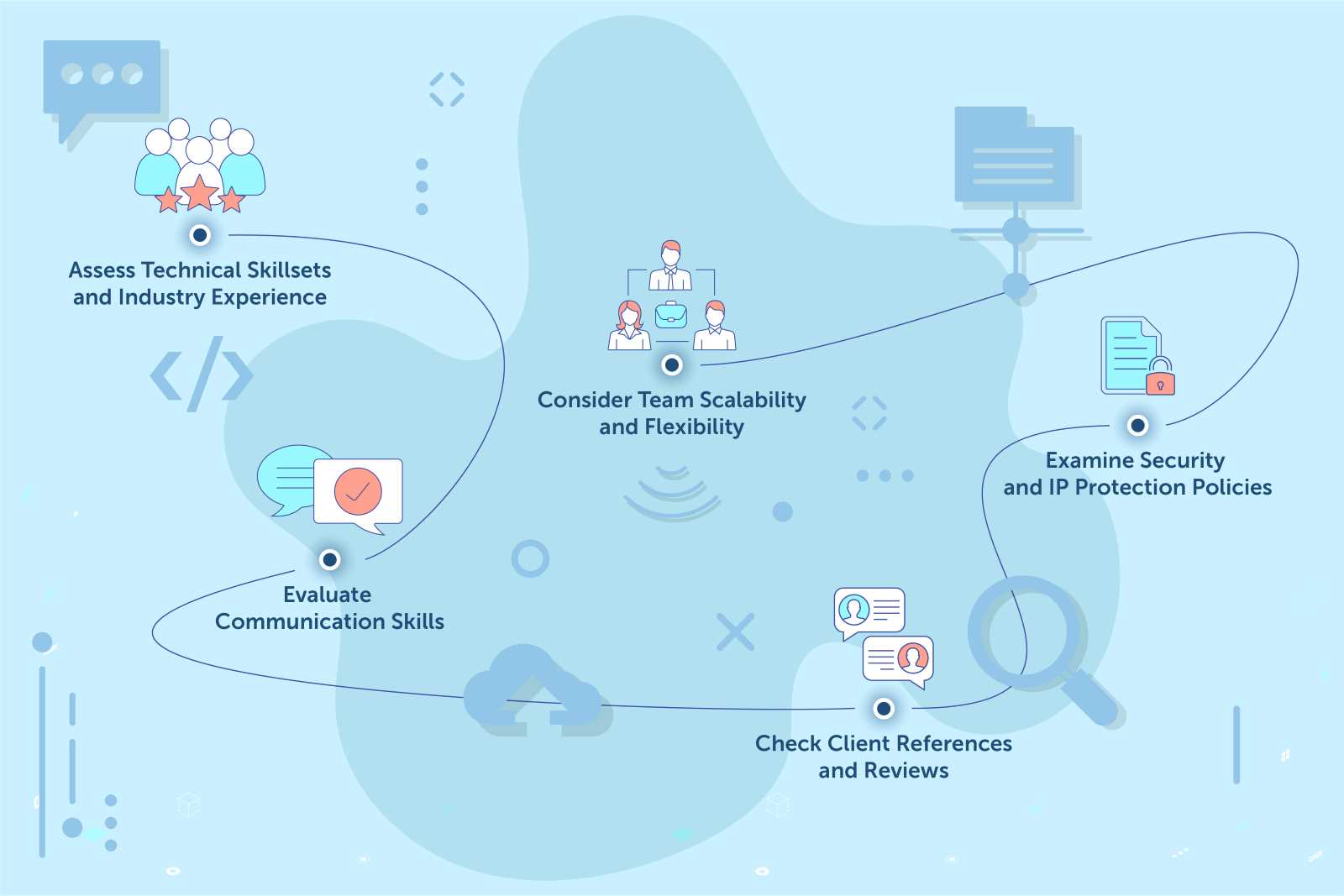
Ask how the provider vets its developers - not "we have a rigorous process," but the actual steps. Ask what happens if someone on your team quits mid-project (a real replacement guarantee matters more than it sounds like it should). Ask for references from clients running similarly long engagements, not just logos on a homepage. And ask how much English-language communication ability factors into hiring, because a technically brilliant developer who can't clearly explain a blocker in your daily stand-up will cost you time you didn't budget for.
Regional reputation matters too. Central and Eastern Europe has built a strong track record for technical education and software development services generally, which is part of why so many outsourcing companies source from the region. That's a reasonable starting point, not a guarantee - due diligence on the specific provider still matters more than the region they're hiring from.
Hiring a Dedicated Team: Step by Step
1. Define the scope internally first. Before talking to any provider, get clear internally on what you're building, what skills the work requires, and roughly how big the team needs to be. Vague requirements produce vague proposals.
2. Shortlist and vet providers. Look at technical case studies in your industry, not just generic testimonials. Ask pointed questions about their vetting and replacement process.
3. Interview the actual people, not just the sales team. You're hiring individuals who'll be on your product for a year or more. Talk to them directly.
4. Agree on communication cadence before day one. Daily stand-ups, weekly demos, whatever fits - decide it upfront, not three weeks in when things already feel disorganized.
5. Onboard like they're employees, because functionally, they are. Give them the same documentation, access, and context you'd give a new in-house hire. Skipping this step is the single most common reason dedicated team engagements start slow.
A Few Interview Tips That Actually Help
Ask candidates to walk through a real problem from a past project, not a whiteboard puzzle disconnected from real work. Pay attention to how they communicate uncertainty - "I'm not sure, let me check" is a far better answer than confident guessing. And loop in whoever will manage the team day-to-day, not just a technical lead reviewing resumes; the working relationship matters as much as the raw technical skills.
AI and the Dedicated Team Model in 2026
This part didn't exist in outsourcing guides even two years ago, and now it's unavoidable.
AI coding assistants can cut real time off repetitive work: boilerplate, test scaffolding, first-draft documentation, digging through an unfamiliar part of the codebase. That hasn't shrunk dedicated teams so much as shifted what they spend time on. Less time on repetitive code, more time on architecture, code review, and the judgment calls a model still can't make reliably. How much faster any given developer gets is genuinely all over the map. It depends on the task, how senior the developer already is, and how messy or well-documented the codebase is to begin with, so we won't pretend there's one clean number that applies to every team.
What it hasn't done is remove the need for people who understand your product. AI tools are only as useful as the context and prompting behind them, and that still requires humans who know the codebase, the business logic, and the ten reasons a "textbook correct" suggestion would actually break something in your specific system. If anything, that argues for team continuity, not against it - an AI assistant is more valuable in the hands of someone who's been on your project for a year than someone parachuted in last week.
A few practical shifts worth knowing about heading into 2026:
- Some dedicated teams now include a dedicated QA/AI-tooling specialist whose job is partly making sure AI-assisted code actually meets your standards, not just that it compiles.
- Technology stack decisions increasingly factor in how well a given framework or language plays with current AI tooling, since that affects delivery speed in a way it didn't five years ago.
- Providers who've invested in AI-assisted workflows can sometimes deliver the same scope with a slightly smaller team, which is worth asking about directly during vendor selection rather than assuming.
None of this replaces the fundamentals covered above. It just changes the shape of the work a little.
Legal, Data Security, and Contract Basics
A quick, non-exhaustive checklist worth working through with your legal team before signing anything, especially if your product handles sensitive data.
Make sure IP ownership is explicit in the contract: code written by the dedicated team should belong to you, not the provider, and this needs to be stated plainly rather than assumed. NDAs should cover both the company and, ideally, named individuals on the team. If you operate in or serve customers in the EU, confirm the provider's data handling practices align with GDPR, particularly around where data is stored and who can access it. And get clarity on what happens contractually if someone leaves mid-project or decides to end the engagement early - notice periods and transition support should be spelled out, not improvised later.
Remote Team Management That Actually Works
Getting the contract signed is the easy part. What happens next, the actual team management, determines whether this works.
Set expectations clearly from day one: what "done" looks like, how blockers get raised, who has final say on priorities. Build a reliable communication rhythm; daily async check-ins plus a weekly video call cover most needs without turning into meeting overload. Invest a little in team culture even across a distance. A five-minute non-work chat at the start of a call does more for long-term collaboration than people expect. Use a shared project management tool religiously, so nothing lives only in someone's inbox. And stay flexible. The plan you wrote in week one will not survive contact with month three, and that's fine - it's exactly why you chose this model over a fixed price contract in the first place.
Softellar Case Studies
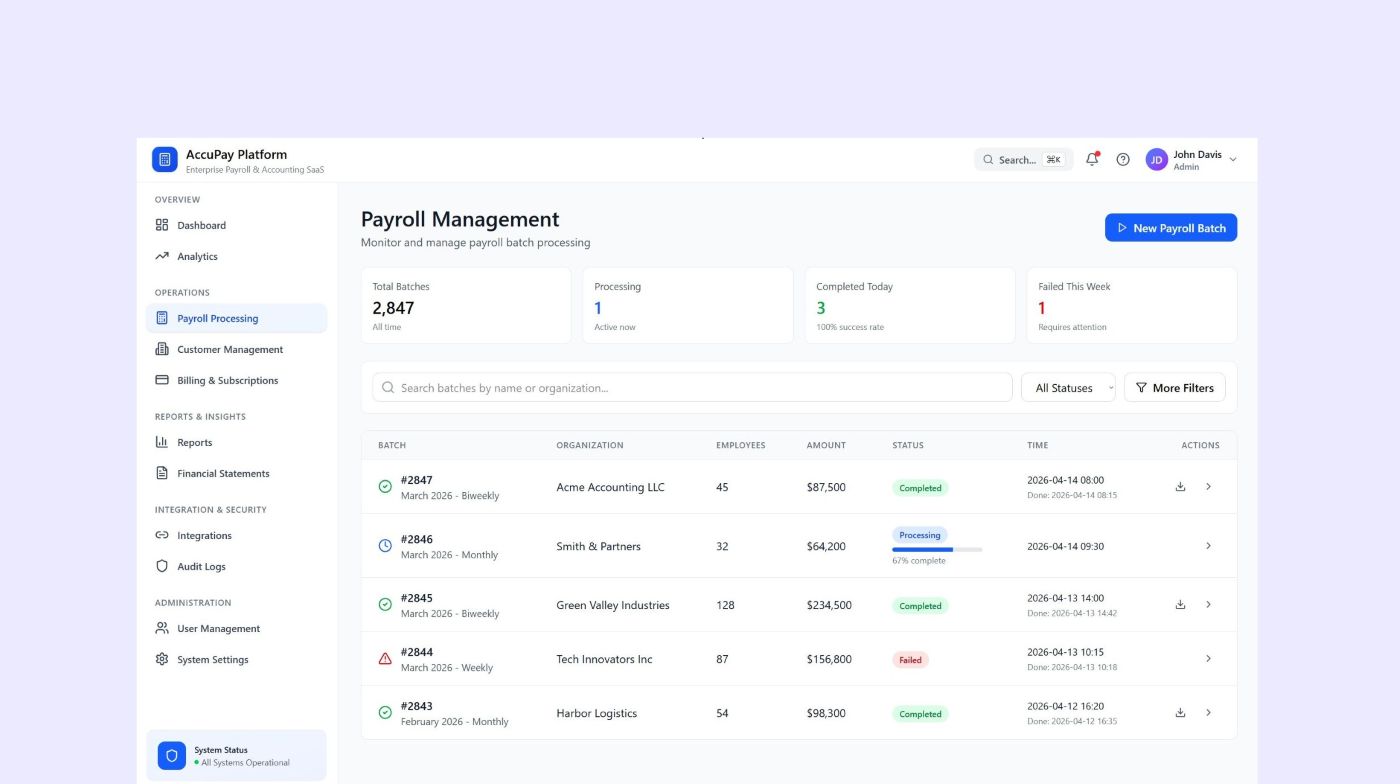
View All Case StudiesA few examples of how companies build and ship software with Softellar's dedicated engineering teams:

Conclusion
A dedicated development team model isn't the right fit for every project, and anyone claiming otherwise is oversimplifying. But for long-term, evolving work - the kind most growing companies actually deal with - it offers a rare combination: the control of an in-house team, the cost efficiency of outsourcing, and a level of continuity that staff augmentation and freelance rotations simply can't match. The trade-off is real too: it takes weeks to spin up, it costs more than a single freelancer in month one, and it demands genuine management attention rather than a hands-off, set-it-and-forget-it relationship.
Get the provider selection right, get the scope reasonably clear before you start, and stay involved once the team is running. Do those three things and the model tends to pay for itself many times over.