

Softellar

Dedicated Node.js Developers

Hire Node.js Developers for Both Ends

Developers from our in-house team in Europe write the server in the language your screens already use, so one team builds the API, the jobs and the front end in one repository, with QA and DevOps seats beside them.

Plan your Node.js team

We reply within 24 hours

One repository, both ends

  • apps/web The store’s screensOwned by the Front-end developer
  • apps/api Routes the screens callOwned by the Node.js developer
  • apps/worker Jobs off the request pathOwned by the Node.js developer
  • packages/schema Rules both ends importOwned by the Node.js developer
  • tests End-to-end journeysOwned by the QA engineer
One feature across every folder
Clutch rating, 12 reviews
5.0
Projects since 2021
70+

Companies we have built software for

  • Multi Radiance Medical
  • Loma Lux Laboratories
  • WellVu
  • Commercial Capital Group
  • Grand Auto
  • HostMy
  • Land Base
  • Auto Tuning

One Feature, One Pull Request

With Node.js on the server, the screens and the API share a language, so a feature ships as one change. Here is one on an online store:

A delivery date on every order5 files
  1. packages/schema/delivery-date.ts

    The rule: order date plus handling days, skipping weekends. Written once.

    Node.js developer

  2. apps/api/orders.ts

    GET /orders/:id returns the date, worked out by the shared rule.

    Node.js developer

  3. apps/worker/send-invoices.ts

    The send-invoices job prints the same date on each invoice.

    Node.js developer

  4. apps/web/order-page.tsx

    The order page shows the date, and checkout previews it with the same rule.

    Front-end developer

  5. tests/delivery-date.spec.ts

    One journey: place an order, then find the same date on the page and on the invoice.

    QA engineer

  • The rule written once, imported by the API, the job and the screen
  • One pull request, one review, one release

The same feature with two languages

  1. 01The rule written twice, once per language, and kept in step by hand
  2. 02The API contract updated so the screens can read the new field
  3. 03Two pull requests, reviewed by two groups
  4. 04A release order to agree: the API first, then the screens

A team on one language skips these steps for every feature that touches both ends.

Need one Node.js developer, not a team? Staff augmentation adds one engineer to the team you already run.

Node.js staff augmentation

Back Ends Our Dedicated Teams Built

Integrations, a queue pipeline, live telemetry and a full-stack seat, the work a Node.js team takes on.

North America

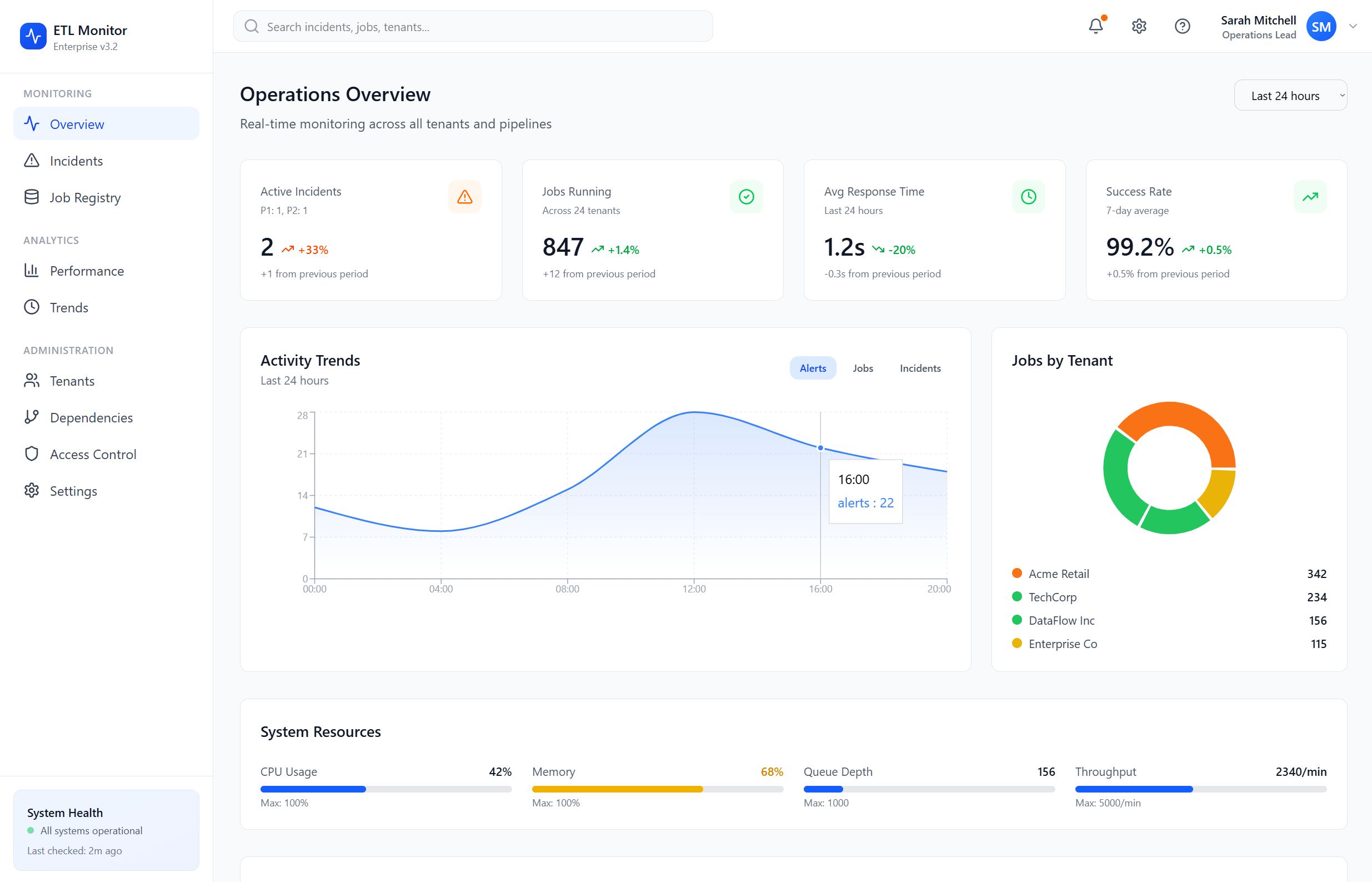
ETL monitoring console: a Next.js admin UI over .NET services, built by a dedicated team of 7

Outcomes

  • Materially faster incident triage
  • Strong reduction in alert noise
  • Shorter time-to-first-dashboard for new tenants
  • Next.js
  • TypeScript
  • RabbitMQ
  • PostgreSQL

What Stays Out of Node.js

Node.js suits work that waits on a database or another service. Work that keeps the processor busy runs beside it, as in these products:

In Node.js

Work that waits

  • Requests from the screens
  • Live updates
  • Webhooks
  • Queued jobs
Six kinds of Node.js work

Beside Node.js

Work that computes

  • Payroll engines

    Calculations checked against known results, with their own tests.

    • .NET
    • xUnit

    Payroll engines ported with golden comparisons, and xUnit on the calculation contracts

  • Reading scanned documents

    OCR over PDFs and scans, then rules that match what was read.

    • .NET
    • OCR
    • Azure Cognitive Services

    OCR APIs as the base for parsing PDF and scanned invoices, behind a .NET OCR engine integration

  • Image streams, frame by frame

    Every frame analyzed as it arrives from the device.

    • Java SE
    • OpenCV

    A processing engine in Java SE and OpenCV over real-time thermal image streams

The hand-off

Node.js puts the job on a queue and answers the request at once. The service beside it picks the job up.

What Team Clients Told Us

Clients of our dedicated teams, including the team behind the thermal imaging engine above.

What a Dedicated Node.js Team Is

A dedicated Node.js team is in-house developers who build the server and the screens of one product: yours.

The goal

Features that reach users in one release, front to back.

How the team works with you

  1. 01

    Our lead runs the work

    The lead plans the sprints, assigns the tasks and runs the standups against the goals you set.

  2. 02

    You see it working every week

    Working software at a demo every week. You agree what goes into each sprint and accept the work.

  3. 03

    Decisions are written down

    Technical decisions are documented as the team goes, so the knowledge stays when people change.

  4. 04

    The team follows the roadmap

    The lead suggests adding or removing seats as the roadmap moves, and you decide.

What Should Run in Node.js?

Tell us what the server has to do, and a Node.js engineer will say what fits the runtime and what runs beside it.

We reply within 24 hours and can sign an NDA first.

Have files or a long brief? Use the full form

Who Works Where in the Repository

A team of five on the repository from the top of the page. Each folder has one owner, and reviews cross the line between the server and the screens:

For an online store

Every pull request

1 owner, 1 reviewer

The owner of the folder writes it, and someone from the other end of the stack reviews it.

A seat on both ends

Senior Full Stack Developer

API integrations and front-end and back-end feature alignment, on this team:

Travel booking portal

Starting a Node.js Team

The first weeks get the repository building and ship the first feature as one pull request. This is what the team needs to get there.

What the Node.js team needs from you

  1. 01

    The Node.js version in production, if code exists

  2. 02

    The repository and how it deploys

  3. 03

    The services and third-party APIs it calls

  4. 04

    One person who decides the first release

Trial: the first 2 weeks, before any long-term commitment. Enough time to see the first feature go out as one pull request before you decide.

How a dedicated team starts

Every step and the full agreement
  1. 012–5 business days

    Tell us the product and the goals

  2. 022–3 business days

    We propose the team

  3. 03

    You meet the lead and the engineers

  4. 04

    Sign the order

  5. 053–7 business days

    The team starts

  6. 06

    Grow, shrink or hand over

Rate
A monthly rate for the team, invoiced in US dollars
Trial
The first 2 weeks, before any long-term commitment
Replacement
Within 48 hours, at no extra cost
Notice
One month to scale up or down, with no penalties
IP
Full ownership assigned to you under the MSA
Working hours
Standups and reviews from 2 to 6 PM CET, the US morning

US Office, European Engineering

Headquartered in Warsaw, Poland, with a client office in New York. A European engineering team that works in your hours, with a US point of contact.

Headquarters

Warsaw, Poland

Engineering and delivery, and the main contact point for clients in Europe.

Client office

New York, United States

Kickoffs, contracts and account management for North American clients.

Shared hours with North America

Clients in Europe share the full working day with the team.

8 AM to 12 PM New York time, 2 PM to 6 PM in Warsaw.

Listed for Software Development

TechReviewer for 2026 and TopDevelopers for 2024 listed us among top software developers. Clutch named us a Champion and a Global Leader.

Related reading

Read Before You Hire Node.js Developers

Guides from our team on code review, the OWASP top ten web security risks, and managing a dedicated team.

All Insights

Frequently Asked Questions

Questions companies ask before they hire Node.js developers as a dedicated team.

Have a different question? Talk to our team

One Language or Two?

Tell us what your screens run on and what the server has to do.

We reply within 24 hours, and we can sign an NDA before you share details.

Talk to the people who will scope your project