United States
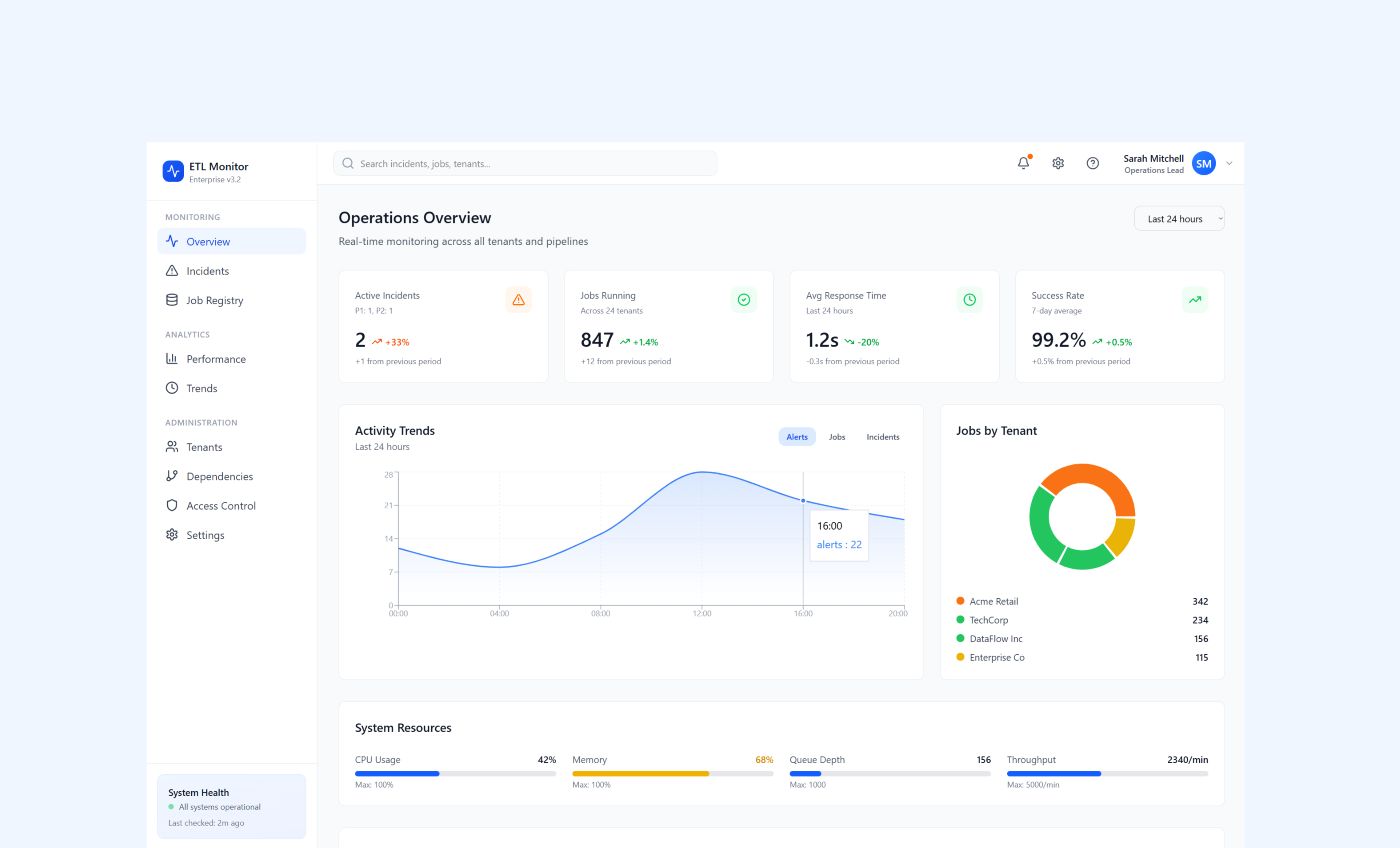
Invoice recognition SaaS on Azure AI
Outcomes
- Invoice processing up to 80% faster
- Over 60% fewer manual correction requests
- Accurate extraction across 50+ invoice templates
- .NET
- React
- Azure Cognitive Services
- Azure Service Bus


AI Consulting & Readiness Assessment
We find where AI pays back in your business and where it does not. You get a written report on the use cases, your data, the architecture, the risks and the cost, before anyone writes code.
We reply within 24 hours
Candidates, ranked
1Supplier invoice entryStart here
Value 5 of 5, feasibility 4 of 52Support reply drafts
Value 4 of 5, feasibility 3 of 53Weekly sales forecast
Value 3 of 5, feasibility 1 of 5Invoice entry first: many layouts, hours of typing and a person who checks every total.
 Multi Radiance Medical
 Loma Lux Laboratories
 WellVu
 Commercial Capital Group
 Grand Auto
 HostMy
 Land Base
 Auto Tuning
A report in five parts, written before any code. Pick a part to see a sample page, the question it answers and what we look at to answer it.
| Workflow | Value | Feasible |
|---|---|---|
| 1. Supplier invoice entryStart here | 5 of 5 | 4 of 5 |
| 2. Support reply draftsNext | 4 of 5 | 3 of 5 |
| 3. Contract clause reviewAfter data work | 4 of 5 | 2 of 5 |
| 4. Weekly sales forecastPlain code | 3 of 5 | 1 of 5 |
The question it answers
Which workflow should get AI first, and which should not get it at all?
What we look at
InvoicesShared mailbox
Supplier listERP
ApprovalsEmail threads
The question it answers
Is the data behind the top candidate complete, reachable and allowed to reach a model?
What we look at
The question it answers
Where does the model sit in your systems, and do you build it, buy it or use a platform?
What we look at
May reach a model
NeverBank details
Who approves
Logged
The question it answers
What may the model see, who approves what it suggests, and what is kept on record?
What we look at
To buildDrivers
To run, per invoiceDrivers
The question it answers
What does the first feature take to build, and what does each request cost once it is live?
What we look at
Invoice recognition, a lending platform and ETL monitoring, each scoped with AI in mind before the build, then data analytics and car financing.
United States
Outcomes
Real tasks from platforms we built, and the call made on each. Some got a model first, some got one with a person signing off, and some got none.
High value, input a model reads well and a person who checks the result.
Key fields read from supplier invoices
Many layouts, hours of typing and a review screen for the rest.
invoice recognition productKey fields extracted across 50+ invoice templatesLikely root causes ranked for each incident
Engineers asked the same questions in the first half hour of every incident.
ETL monitoring platformRoot-cause hypotheses ranked for the engineer on callWorth building, but a wrong answer costs money or trust, so nothing counts until someone signs off.
Loan options explained to borrowers
Useful to the borrower, as long as nobody mistakes it for an offer.
lending platformLoan option explanations, always labeled as guidancePricing and term suggestions
A wrong number costs money, so a person approves every one.
lending platformHuman-in-the-loop on every pricing or term suggestionFixes for known pipeline failures
Drafted by the model, merged only after code review.
ETL monitoring platformFixes raised as branches and pull requests, never applied to productionRules do the job faster and cheaper, so no model sits in the path.
Ingestion and deduplication
Speed and volume matter here, and every case can be written as a rule.
ETL monitoring platformModel latency never blocks ingestion or deduplicationRisk scoring for each application
Lenders need the same answer every time, with reasons they can show.
lending platformScores from bureau data and policy tables versioned per cohortScored on value
Scored on feasibility
And the model came last
In both platforms, the AI features shipped in the final phase, once the system around them worked.
A data platform planned first, an imaging product scoped against its regulations and a migration run in phases, each linked to its project.
Their innovative solutions helped us streamline our processes and gain valuable insights that have positively impacted our business.
Max Kanarsky(LinkedIn profile, opens in a new tab)
CEO, Multi Radiance Medical
The team was very responsive, communicated effectively, and were always available to address any questions or concerns we had.
Josh Robertson
VP of Sales, WellVu
They are one of the most customer-focused teams.
Robert Ozersky
Project Manager, Loma Lux Laboratories
AI consulting services decide where AI is worth building in your business before anyone writes code. Our AI readiness assessment looks at your workflows, the data behind them and the rules around that data, then ranks the candidates and works out the architecture, the risks and the cost for the first one. You keep a written report your own engineers can build from.
The goal
A budget spent on the one AI feature that pays back, and a clear no for the ones that would not.
The checks depend on the kind of data behind the candidate. Each gap we find becomes a line in the report, with the work it leads to.
Invoices, contracts, forms, scans
What we check
How many layouts there are, the scan quality, and whether past documents have the right values on record.
invoice recognition productClient-specific samples collected before any model was trainedWhat a gap means
Few labeled samples means collecting them first. Poor scans mean a review step on every field.
A custom extraction model starts from five examples of a formDocument Intelligence custom modelsERP, CRM, core and partner systems
What we check
Whether one customer or case has the same identifier everywhere, and who may read which fields.
car financing platformOne loan data schema for formats that differed by partnerWhat a gap means
Mismatched identifiers or formats mean a mapping layer before any model reads them.
Spreadsheets, BI reports, warehouse tables
What we check
Where each figure comes from, what is fixed by hand and which source people trust.
Multi Radiance analytics platformReporting processes and pain points assessed before the target stateWhat a gap means
Figures assembled by hand mean consolidating the sources before AI adds anything.
Job logs, alerts, tickets
What we check
Whether each event carries a job, a tenant and a time, and which parts hold secrets.
ETL monitoring platformOnly log fragments that passed redaction may reach a promptWhat a gap means
Raw logs mean a redaction step and a schema before a model sees any of them.
Help content, wikis, policies, threads
What we check
Whether there is one current version of each page, who owns it and who may read it.
lending platformLong lender threads summarized, with missing stipulations flaggedWhat a gap means
Duplicated or stale pages mean a cleanup and an owner before answers come from them.
Data spread across too many places? When the gaps are bigger than one use case, we design the data platform first.
Data architecture servicesSend us the tasks your team wants AI for. We will say which one we would look at first and what the assessment would need from your side.
We reply within 24 hours and can sign an NDA first.
Each question your legal, security or compliance team will ask gets a line in the register: what we checked, what was decided and who owns it.
Security asks
What we check
Where the model runs, how it is reached and what the provider does with prompts.
Decision recorded
A deployment in your own tenant, reached over a private endpoint.
Reached from your virtual network over Private LinkPrivate endpoints for Azure AI servicesOwner
Security leadCompliance asks
What we check
Every field the use case needs, against your data classification.
Decision recorded
An allow-list of fields, with full documents left out and identifiers hashed.
Prompts and outputs are not used to train the modelsAzure OpenAI data privacyOwner
Data ownerLegal asks
What we check
Which outputs change money, terms or customer records.
Decision recorded
A named role signs off each of those before it counts.
Owner
Process ownerOperations asks
What we check
The cost of a wrong answer and the cost of no answer.
Decision recorded
A fallback for each, and a correction queue instead of silent errors.
Owner
Engineering leadInvestors and partners asks
What we check
What is logged, for how long, and who can read it.
Decision recorded
Audit logging and retention set to your data classification.
Owner
Compliance leadNeed the whole system reviewed, not only the AI part? We run threat modeling and security reviews across the platform.
Security consultingThe architecture part of the report compares the ways to meet the need, with what each leaves you to run. Here is one need, worked through.
The needRead the totals, dates and line items from supplier invoices
Option 1
A prebuilt extraction model, configured
Option 2
A general model, prompted with a schema
Option 3
A custom model per invoice layout
The calls we made in systems we built
A platform OCR stack, with recognition models tuned for each client’s templates
Document Intelligence for extraction, and a private Azure OpenAI deployment for explanations
A private model behind a small .NET gateway, skipped entirely on hot paths
Weighing more than the AI part? Technology strategy puts the same build, buy or leave-out question to every part of your system.
Technology strategy consultingSix steps from a list of ideas to a decision. Each one names the people we need from your side and what we ask them for.
We collect the tasks people find slow, error-prone or impossible today.
Each candidate is walked through with the people who do it.
We look at the sources behind each candidate and how complete they are.
Every candidate gets a value and a feasibility score, and the top one is chosen.
For the top candidate we draw the architecture, write the risk register and estimate the cost.
We walk you through all five parts and the decision they point to.
Three ways the report can end
The people who ran the assessment join the build, so nothing is explained twice.
Each part names the systems, the data and the decisions, so your engineers can start the build from it.
When plain code, a data cleanup or no change is the better answer, the report says so.
Want a first read before the full assessment? Answer a few yes-or-no questions on the AI transformation page and see where we would likely begin.
Try the short versionHeadquartered in Warsaw, Poland, with a client office in New York. A European engineering team that works in your hours, with a US point of contact.
Headquarters
Engineering and delivery, and the main contact point for clients in Europe.
Client office
Kickoffs, contracts and account management for North American clients.
Clients in Europe share the full working day with the team.
8 AM to 12 PM New York time, 2 PM to 6 PM in Warsaw.
Independent rankings for the team that runs our assessments and the builds that follow, each next to the service it relates to.

Top Software Developers 2026
TechReviewer

Champion, Fall 2024
Clutch

Global Leader, Fall 2024
Clutch

Best Company to Work With
GoodFirms

App Modernization 2024
The Manifest
Top Software Developers 2024
TopDevelopers

Top Healthcare Software 2025
SuperbCompanies

ReactJS Winner 2025
TechBehemoths
Related reading
Guides from our team on consulting versus extra engineers, the stages of a software project and building in-house versus outsourcing.
35 min readAudio version available
Learn the systems development life cycle (SDLC): definition, phases in order, a diagram, and how it differs from the software development life cycle
14 min readAudio version available
In-house vs outsourcing software development: compare total cost, control, hiring speed, and knowledge retention, and see when a hybrid team fits best
11 min readAudio version available
Staff augmentation vs consulting often blurs for IT decision-makers. This comparison reveals when to choose each approach for maximum project success.
Questions teams ask before they commit budget to AI.
Have a different question? Talk to our team
Tell us the workflows you are weighing and who owns the data behind them.
We reply within 24 hours, and we can sign an NDA before you share details.
Talk to the people who will scope your project